Device fingerprinting characterizes a device through attributes such as its operating system, browser, hardware signatures, language settings, and time zone. In fraud detection, these signals contribute behavioral and relational transaction metadata used to detect active manipulation. section 7.4.2
Figure 7.7 A conceptual illustration of the data assets layer for fraud detection. This diagram doesn't represent a fixed architecture or specific tech stack, but rather emphasizes the importance of organizing diverse internal and external data sources—such as transactions, behavioral logs, device fingerprints, and risk signals—into a coherent asset layer. Real-world implementations vary significantly across fintech, traditional banking, and e-commerce platforms, but the foundational goal remains the same: to make rich, timely, and relational data readily available for downstream fraud detection models and logic.
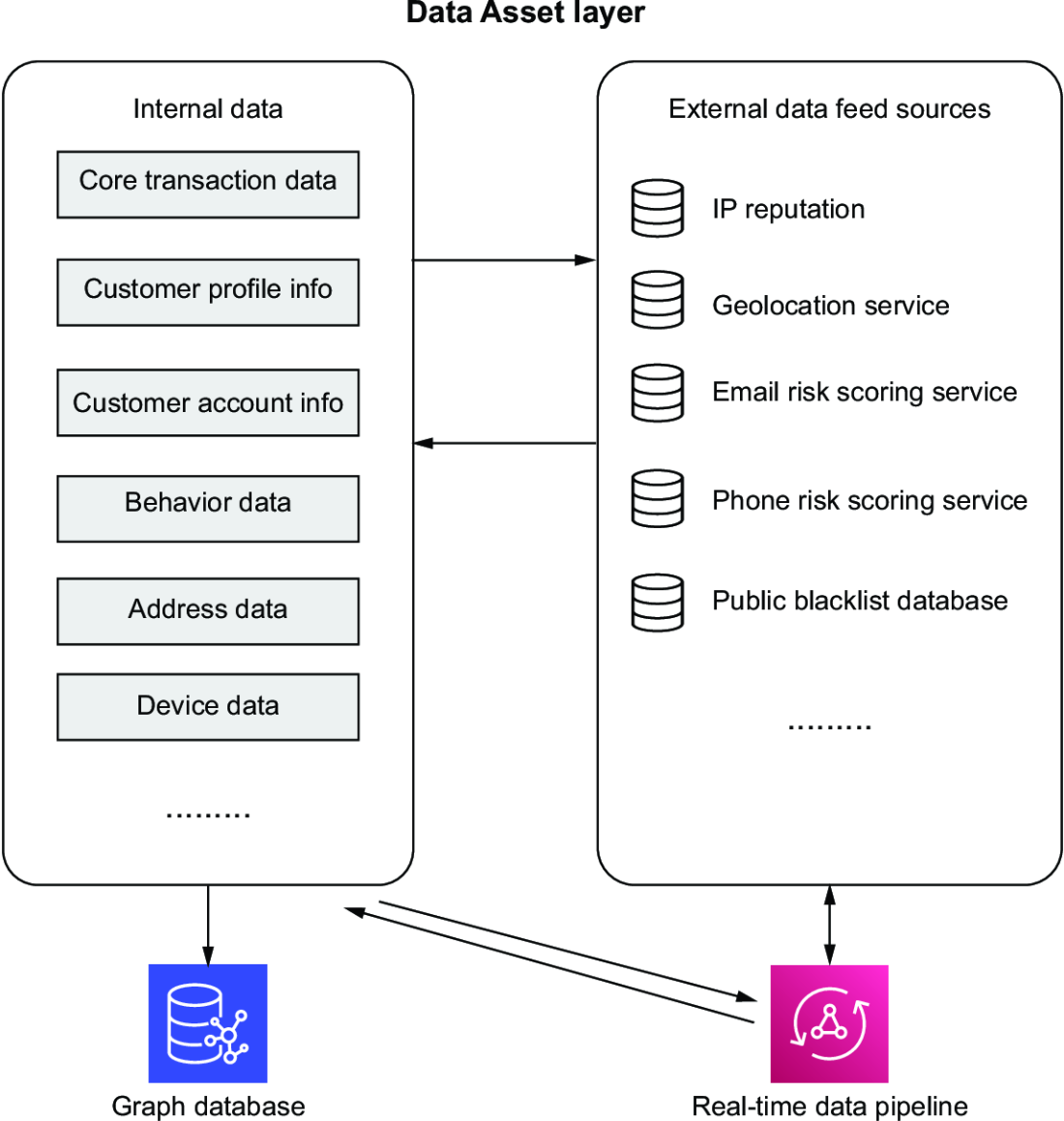
See how device fingerprints fit alongside transaction, behavioral, and risk data in a fraud-detection data asset layer. section 7.4.2


