liveBook · Manning

Differentiation

As explained in Architecture Modernization: Socio-technical alignment of software, strategy, and structure

A market strategy or capability characteristic that makes an offering more attractive by meeting user needs better or differently than competitors.

Differentiation makes an offering more attractive by meeting user needs better or differently than competitors. It can shape a market play or reveal where technology should support strategic business advantage. section 5.5.3 section 10.1.2

Use these attributes to look for differentiation opportunities:

  • Customer service, variety, shipping speed or price, location, aesthetics, usability, exclusive features, and customization. section 5.5.3
  • Wardley Mapping helps locate domains where differentiation is likely to be high and where IT may contribute significantly. section 10.1.2
  • Core Domain Charts assess differentiation together with complexity, helping communicate which subdomains deserve strategic attention. section 10.2.5

Attribute-led differentiation

Airbnb improved its listings with professional-quality images, a change associated with major growth. Zalando used a 100-day return policy, while T-Mobile USA offered tourists an eSIM before arrival. section 5.5.3 section 5.5.3
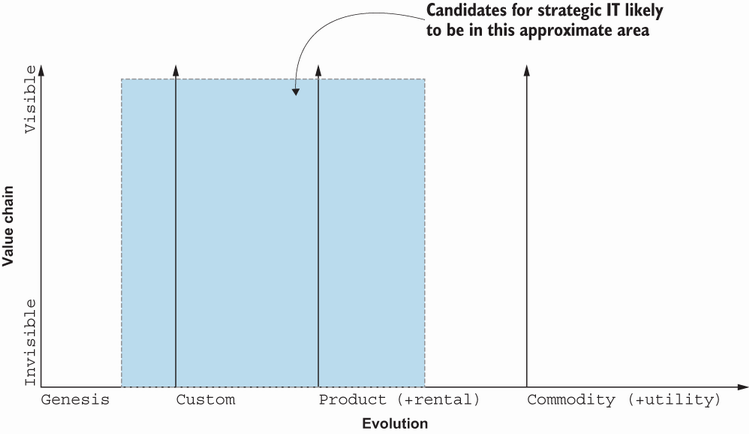
Figure 10.3 Identifying strategic IT candidates on a Wardley Map

Use the Wardley Map view to identify areas where differentiation and IT contribution may justify strategic investment. section 10.1.2

Differentiation is temporary: competitors can erode it, while neglect can make a subdomain less differentiating and more complex. Investment may therefore preserve a position as well as create new capabilities. section 10.2.3

How Architecture Modernization: Socio-technical alignment of software, strategy, and structure covers it

How deep it goes
Explains differentiating attributes, strategic candidates, and erosion over time without prescribing a universal investment rule.
Examples
Uses Airbnb imagery, Zalando returns, and T-Mobile eSIM access as concrete differentiating attributes.
What it assumes
Assumes familiarity with business capabilities and introduces mapping-based ways to assess their strategic value.
What you can do after
Evaluate offerings and architecture areas for differentiation, strategic importance, and continuing investment needs.
How it connects
Connects market plays, Wardley Mapping, strategic IT, Core Domain Charts, complexity, and evolution stages.

Related concepts

This explainer was generated by Manning's knowledge graph from the text of Architecture Modernization: Socio-technical alignment of software, strategy, and structure. The section links point to the parts of the book it draws on.