A digital signature lets someone check that a document has not changed and that it was signed using a particular private key. It also supports non-repudiation: when the key belongs only to the signer, the signer cannot credibly deny signing. A signature does not hide the document; confidentiality requires encryption. section 14.2.5 section 14.2.2
Signing and verification use a private–public key pair:
- The signer calculates a hash—a short digital fingerprint—of the document and uses their confidential private key to create a signature from that hash. The document and signature can then be sent or stored together. section 14.2.5
- The verifier uses the signer’s public key to check the signature, calculates a fresh hash of the received document, and compares the two hash values. A match indicates that the document has not changed since signing and that the corresponding private key created the signature. section 14.2.5
Figure 14.4 Illustration of digital signing and verification of a document
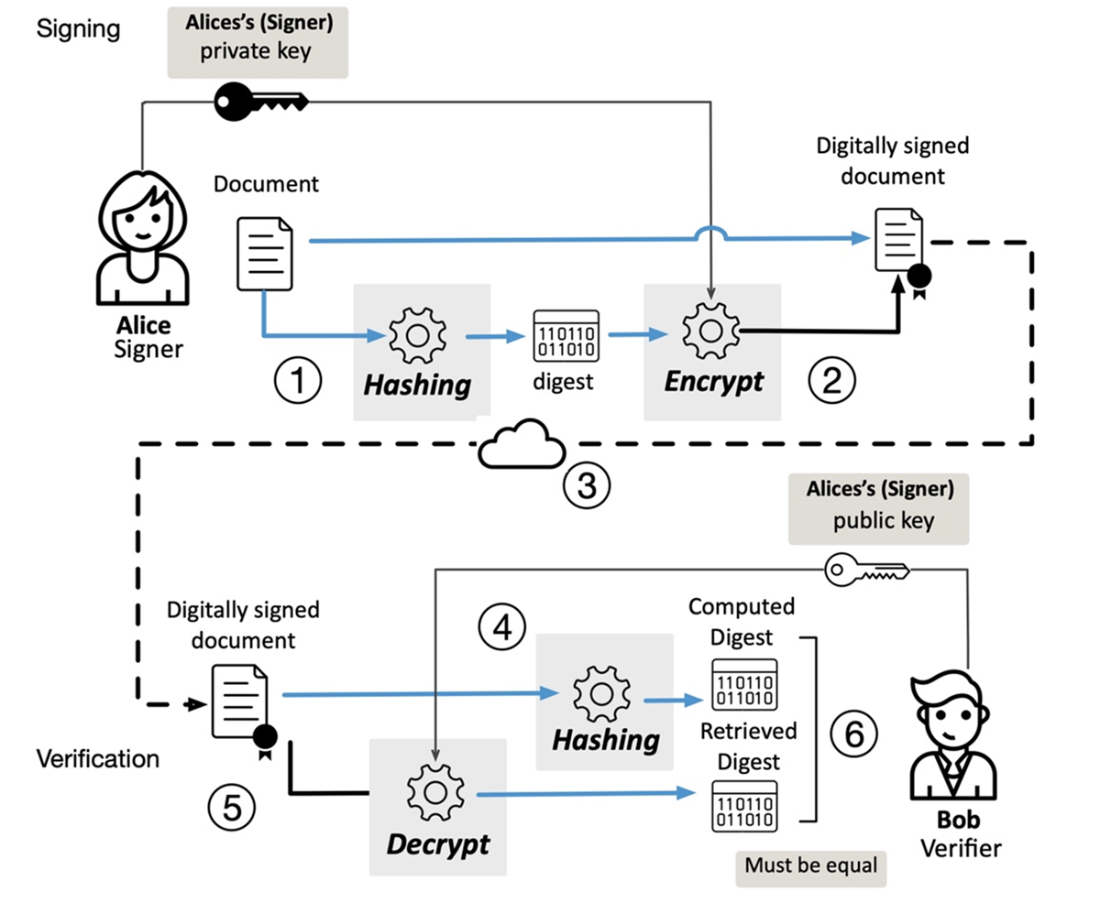
Follow the document, signature, and two hash values through signing and verification. section 14.2.5
Signing is not secrecy
To send a message that is both verifiable and confidential, a sender first signs it with their private key, then encrypts it with the recipient’s public key. The recipient decrypts it with their private key and verifies the signature with the sender’s public key. section 14.2.2
Verification also depends on trusting the public key. Public key infrastructure (PKI) uses digital certificates to link keys to verified identities; otherwise, an attacker could substitute a key and impersonate a sender. A compromised private key can likewise enable forged signatures. In an organization, signatures can help analysts detect altered security logs, while certificate authorities use them to vouch for certificates. section 14.2.6 section 12.6.3