Distributed mode runs Kafka Connect with multiple workers coordinating connector tasks across a cluster. It suits production environments because work can run in parallel and recover from worker failures. section 5.3
A distributed Kafka Connect deployment separates these responsibilities:
- Workers provide the Connect runtime and receive server-level configuration such as converters, plugin paths, and cluster identifiers. section 5.3
- Connector configurations define individual integrations and can override worker defaults, including key and value converters. section 5.3
- Tasks are spread across connector instances instead of remaining on one worker, enabling cluster-level parallelism and fault tolerance. section 5.3
Starting a source connector
A JDBC source connector can be started through the Connect REST API with a PostgreSQL connection, timestamp-based polling, JSON value conversion, and a maximum task count. section 5.3
Figure 5.4 Connect in distributed mode; tasks get spread around to other connector instances.
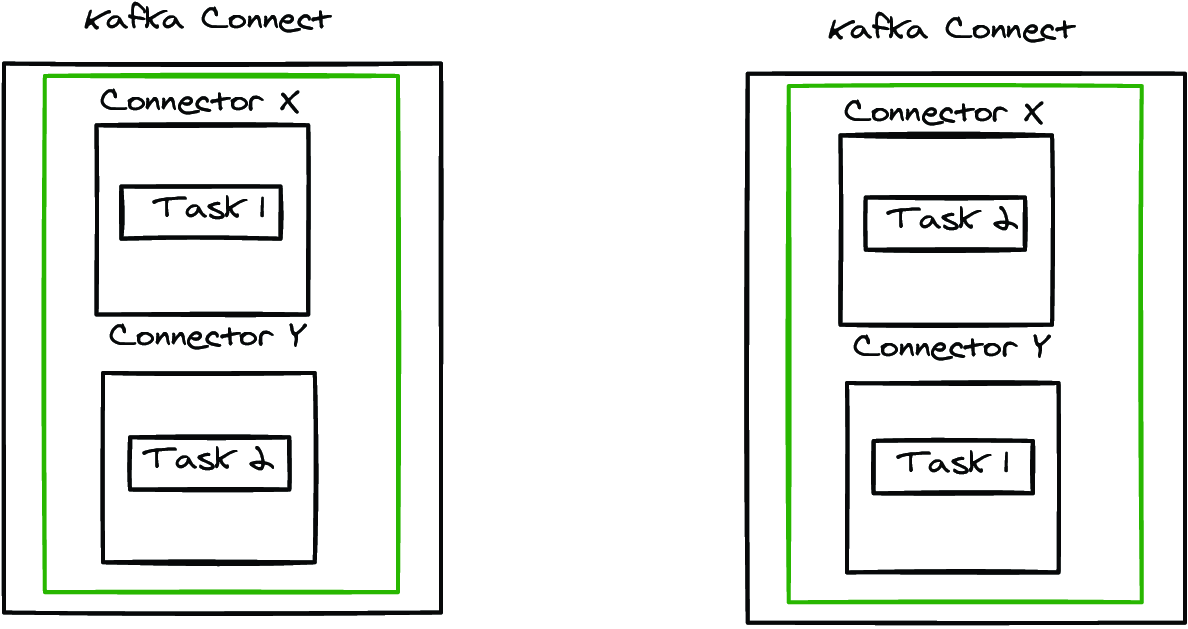
Shows how distributed mode spreads connector tasks across Connect instances. section 5.3
Figure 5.5 Connect in distributed mode provides fault tolerance.
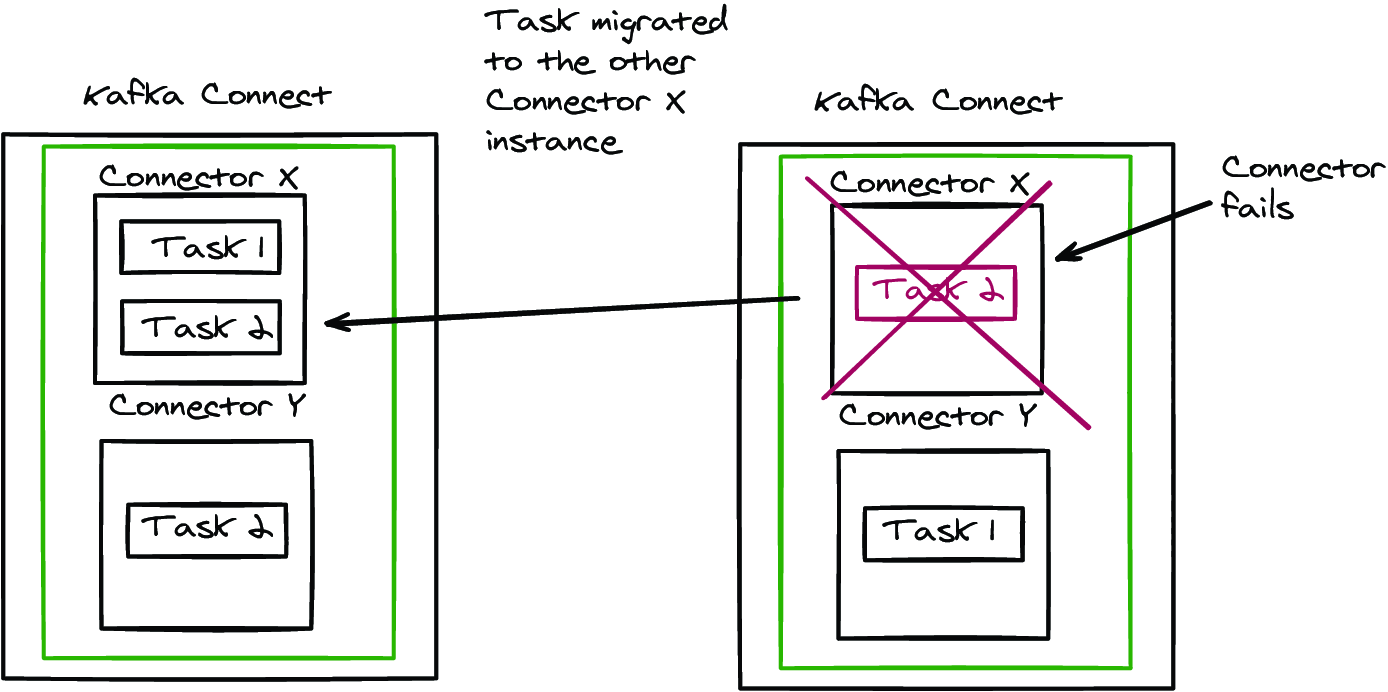
Shows the fault-tolerance benefit of distributed task execution. section 5.3
