A dividend stock is a share of a company that distributes part of its earnings to shareholders. Mature companies with stable profits and limited reinvestment needs often pay regular dividends, making them relevant to passive-income portfolios. Utilities are a common example: infrastructure can create an economic moat and support predictable cash flow, although limited competition can also mean limited growth. section 5.1 section 5.5
Evaluate dividend stocks with several complementary measures rather than yield alone:
- Dividend yield indicates the income paid relative to the share price. section 5.5
- Annual payment shows the cash distributed over a year. section 5.5
- Dividend growth rate tracks whether distributions have increased over time. section 5.5
- Payout ratio helps assess distributions alongside company earnings. section 5.5
- Compare the income approach with growth and value investing according to risk profile, return goals, and time horizon. section 1.3.4
Screening and calculating dividend growth with Python
A practical workflow can retrieve company symbols, inspect market capitalization and dividend yield, and calculate annual dividend growth. Resample dividend payments by year, compare the first and last annual amounts, and compute compound annual growth when multiple years are available. Treat the result as an analysis input, not a return guarantee. section 5.1
Figure 5.1 The BCG Growth-Share Matrix as a reference for picking dividend-paying companies that are likely cash cows (© https://productfolio.com/growth-share-matrix/)
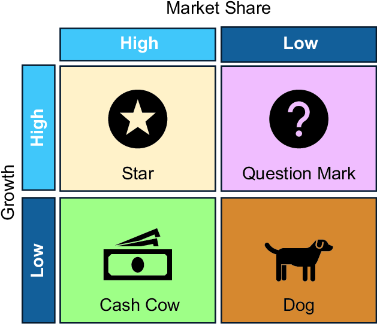
Use the BCG Growth-Share Matrix to view the dividend-paying company archetype as a cash cow: stable profits, limited reinvestment, and surplus cash for shareholders. section 5.1
