A domain platform is a shared business capability serving multiple products or verticals. Centralizing repeated capabilities can create economies of scale, but an inaccessible or slow platform can become a bottleneck. section 6.1.4
The key architectural choice is deciding what to centralize and what each vertical should build independently. The answer depends on user experience, prioritization, funding, dependencies, domain knowledge, efficiency, and time-to-market. section 6.3.6
Use these questions when shaping a domain platform:
- Will users move across verticals, creating a need for consistent experiences? section 6.3.6
- How will competing requests from multiple verticals be prioritized and funded? section 6.3.6
- Will shared dependencies and required domain knowledge create excessive coordination or cognitive load? section 6.3.6
- Would duplicated functionality improve time-to-market enough to justify its additional maintenance cost? section 6.3.6
Uber fulfillment
Uber extracted fulfillment from individual products into an enterprise-wide platform as the company expanded beyond a single product. The platform orchestrates ongoing orders and user sessions across products, services, and markets. section 6.1.4
BBC horizontal domains
The BBC identified horizontal domains such as Articles, Search, and Topics while modernizing its WebCore. Audience-facing verticals such as news could then use those shared capabilities instead of repeatedly implementing cross-cutting features. section 9.2.5
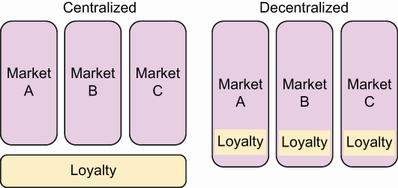
Compare centralized and decentralized macrostructures when exploring where shared capabilities should live. section 6.3.6

