A driven adapter lets business logic make requests to external systems. In hexagonal architecture, it implements an outbound port, keeping the business logic independent of the adapter. section 3.3.2
A driven adapter can:
- Access a database through a data access object implementing a repository-like port. section 3.3.2
- Invoke a remote service through a proxy or publish events. section 3.3.2
FTGO integrations
FTGO uses outbound adapters to access its MySQL database and invoke cloud services such as Twilio and Stripe. section 2.1.1
Figure 3.16 An example of a hexagonal architecture, which consists of the business logic and one or more adapters that communicate with external systems. The business logic has one or more ports. Inbound adapters, which handles requests from external systems, invoke an inbound port. An outbound adapter implements an outbound port and invokes an external system.
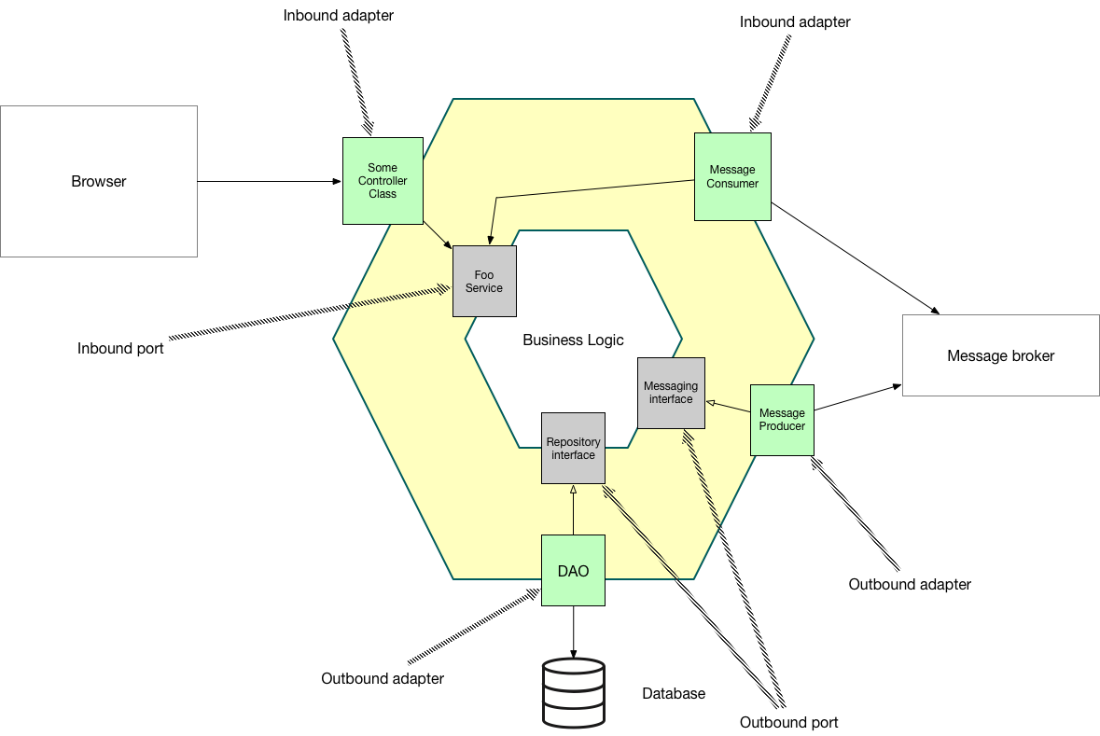
The diagram shows business logic, outbound ports, and adapters invoking external systems. section 3.3.2


