Edge case
An edge case is an unusual or boundary condition in a system’s expected domain that may produce behavior different from ordinary cases.
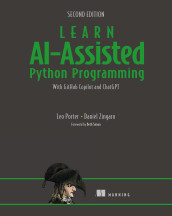
Learn AI-Assisted Python Programming, Second Edition
An edge case is a software-testing scenario involving an uncommon, boundary, or otherwise exceptional input that may expose defects.
- How it is used
- Uses unusual and boundary inputs to expose defects and verify detailed behavioral rules.
- How deep it goes
- Explains identification, construction, execution, and debugging of edge-case tests, while deferring exceptions.
- Examples
- Uses longest-word ties and empty strings, classroom row boundaries, missing players, negative values, and mixed-type averages.
- What you can do after
- Diagnoses and improves code by writing targeted tests, interpreting failures, debugging assumptions, and rerunning complete suites.
Read how Learn AI-Assisted Python Programming, Second Edition explains edge case →

Vibe Engineering
An edge case is an input or operating condition at the boundary or an unusual region of a system's expected domain.
- How it is used
- Uses edge cases to assess production readiness and verify AI-generated code beyond the happy path.
- How deep it goes
- Provides a practical workflow for exploring boundaries, specifying expected behavior, and checking test effectiveness.
- Examples
- Uses ISBN-13 validation and markup parsing to illustrate invalid inputs, formatting variants, and unexpected feature combinations.
- What you can do after
- Practice identifying boundary and failure conditions, then encode expected behavior in tests.

Architecture Modernization: Socio-technical alignment of software, strategy, and structure
An edge case is an uncommon or exceptional scenario that occurs outside the primary expected path of a process.
- How it is used
- Uses edge cases to reveal domain complexity while preserving the primary business narrative during EventStorming.
- How deep it goes
- Models alternative scenarios as timeline branches and zooms into selected events with Example Mapping.
- Examples
- Uses cancellation after warehouse dispatch, Cancellation Denied, voucher scenarios, and branches beneath an EventStorming timeline.
- What you can do after
- Practice/perform scenario mapping that uncovers alternative outcomes and hidden domain complexity around selected events.

The AI Pocket Book
A rare or unusual situation that falls outside common patterns seen during training or testing.
- How it is used
- Frames rare failures in AI training, autonomous operation, and validation-driven software development.
- How deep it goes
- Defines the long tail, gives concrete failures, and outlines testing responses without explaining model internals.
- Examples
- Uses beach cows, flying umbrellas, an unusual book-title query, and a wrongly predicted towed pickup truck.
- What you can do after
- Diagnose/debug with it by identifying uncommon failure modes, writing targeted tests, and weighing coverage against improbable scenarios.

Unit Testing Principles, Practices, and Patterns
A boundary or unusual condition in a business scenario that may require distinct behavioral verification.
- How it is used
- Guides the allocation of business-scenario error checks between unit and integration tests.
- How deep it goes
- Defines errors as edge cases and explains their placement in a Test Pyramid, without detailing individual test implementations.
- Examples
- Uses business scenarios, successful paths, and project-complexity variations as test-allocation examples.
- What you can do after
- Apply the Test Pyramid by placing most business-scenario errors in unit tests and exceptional cases in integration tests.
Read how Unit Testing Principles, Practices, and Patterns explains edge case →

Shipping Go: Develop, deliver, discuss, design, and go again
An edge case is a rare or extreme input or operating condition that can expose unexpected software behavior.
- How it is used
- Uses edge cases to drive incremental testing and prevent unexpected behavior from slipping into a small service.
- How deep it goes
- Defines rare conditions and demonstrates tests, implementation, refactoring, and sanitization without exhaustive anticipation.
- Examples
- Uses unsupported languages, unknown words, capitalization, whitespace, strange characters, and extreme numeric values as test scenarios.
- What you can do after
- Diagnose/debug with it by adding failing scenarios and implementing focused behavior for rare or extreme inputs.
Read how Shipping Go: Develop, deliver, discuss, design, and go again explains edge case →
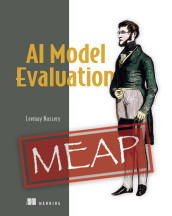
AI Model Evaluation
An edge case is an uncommon or boundary-condition input or situation that can expose unusual model behavior.
- How it is used
- Uses edge cases to expose hidden model failures before and during online experiments.
- How deep it goes
- Tests rare segments and extreme conditions, then translates detected risks into monitored watchpoints and alerts.
- Examples
- Uses niche movie preferences, new users, and users in specific geographic regions as evaluation cohorts.
- What you can do after
- Diagnose with targeted cohorts and monitor known risks during live experiments.

Software Engineering for Data Scientists
An edge case is an unusual, boundary, or exceptional input or operating condition that may expose incorrect program logic.
- How it is used
- Uses targeted tests to verify behavior for unusual inputs, missing data, alternate branches, and error-handling paths.
- How deep it goes
- Defines edge cases and gives input and control-flow examples, but stops short of prescribing a complete testing procedure.
- Examples
- Uses an implausible customer age, a string-valued age, an empty database result, and unexecuted conditional lines.
- What you can do after
- Diagnose/debug missing test paths by testing unusual inputs and inspecting coverage reports for unexecuted lines.
Read how Software Engineering for Data Scientists explains edge case →
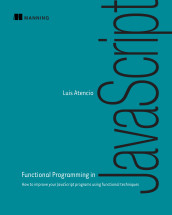
Functional Programming in JavaScript
- How it is used
- Uses unit tests to build fences around boundary conditions that may cause code to fail.
- How deep it goes
- Explains boundary conditions through unit tests, control-flow paths, coverage, and invalid-input behavior.
- Examples
- Uses null input with showStudent and compares imperative and functional coverage results.
- What you can do after
- Diagnose/debug with unit tests and coverage analysis to find untested boundary conditions and add tests.
Read how Functional Programming in JavaScript explains edge case →
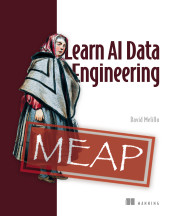
Learn AI Data Engineering
An edge case is an unusual, extreme, or boundary condition that can expose limitations or failures in a system or process.
- How it is used
- Uses unusual or incomplete inputs to harden API parsing, schema design, data cleaning, and AI-assisted development workflows.
- How deep it goes
- Explains defensive access, diverse-record testing, structure inspection, and logging, but stops short of a formal testing framework.
- Examples
- Uses missing JSON fields, null nested objects, inconsistent lists, baseball event ambiguities, and defensive coordinate extraction.
- What you can do after
- Diagnose fragile parsing and schema assumptions by testing varied records, adding fallbacks, inspecting structures, and validating generated output.

The Coder Cafe
An edge case is an input or operating condition at an extreme boundary of a problem domain that can expose unusual software behavior.
- How it is used
- Improves software testing by exposing scenarios that manually designed tests may omit.
- How deep it goes
- Defines edge cases through testing limitations and concrete examples, while pointing toward property-based testing for broader input coverage.
- Examples
- Uses unsorted, sorted, one-element, and empty arrays, alongside unexpected inputs.
- What you can do after
- Apply it via unit tests or TDD by identifying boundary scenarios before implementation and checking them explicitly.

The Art of Code
An edge case is an input or operating condition at an unusual or boundary value where software behavior may differ from the typical case.
- How it is used
- Uses boundary and unusual inputs to make unit-test behavior and defensive programming decisions explicit.
- How deep it goes
- Demonstrates edge cases through a Java converter and tests, but does not develop a general edge-case discovery method.
- Examples
- Uses zero pounds as a boundary test and negative pounds as an exception test in a pounds-to-kilograms converter.
- What you can do after
- Apply via JUnit by writing focused tests for boundary values and expected failures.
LLM Customization and Fine-Tuning
An uncommon or difficult input situation that tests whether a model behaves correctly beyond routine scenarios.
- How it is used
- Prioritizes scarce, high-risk scenarios when planning model-adaptation data.
- How deep it goes
- Quantifies a hard-variant sampling rule and dataset coverage, but does not specify a collection workflow.
- Examples
- Uses financial compliance queries, reporting thresholds, and incident threads with missing or contradictory information.
- What you can do after
- Apply a sampling ratio to plan scenario coverage in an adaptation dataset.
Read how LLM Customization and Fine-Tuning explains edge case →
Also covered in
- Bug BashIn early access (MEAP)
- ASP.NET Core in Action, 3e
- Platform Engineering on Kubernetes
- Machine Learning Platform Engineering
- Coding with AI
- Human-in-the-Loop Machine Learning: Active learning and annotation for human-centered AI
- Investing for Programmers
- Regular Expression Puzzles and AI Coding Assistants
- Bootstrapping Microservices, Second Edition: With Docker, Kubernetes, GitHub Actions, and Terraform
- API Design Patterns
- C# Concurrency: Asynchronous and multithreaded programming
- Authorization in Action
What to know first
- language modelA language model is a computational model that represents patterns in linguistic sequences to assign probabilities, predict, generate, or evaluate language.
- software testingSoftware testing is the systematic evaluation of software under specified inputs or conditions to assess its behavior against expected results or requirements and identify defects.
- accuracyAccuracy is the degree to which a result agrees with a specified truth, reference, or criterion, commonly measured as the proportion of evaluated predictions that are correct.
- exceptionAn exception is a runtime signal or value representing an abnormal condition that interrupts ordinary program flow and can be handled or propagated.
Related concepts
- software testingused by · Software testing is the systematic evaluation of software under specified inputs or conditions to assess its behavior against expected results or requirements and identify defects.
- happy pathcontrasts with · A happy path is the expected sequence of steps in which normal conditions and valid inputs lead to a successful outcome without exceptional handling.
- asynchronous programmingproduced by · Asynchronous programming structures operations so that the initiating execution can continue or yield control without synchronously waiting for each operation to complete.
- error handlingaddressed by · Error handling is the practice of detecting, representing, propagating, and responding to failures that arise during software execution or operation.
- synthetic dataused by · Synthetic data is artificially generated data designed to represent selected characteristics, scenarios, or distributions of a target domain or process.
Questions about edge case
What is edge case?
An edge case is an unusual or boundary condition in a system’s expected domain that may produce behavior different from ordinary cases.
Which Manning books explain edge case?
Learn AI-Assisted Python Programming, Second Edition, Vibe Engineering, Architecture Modernization: Socio-technical alignment of software, strategy, and structure, The AI Pocket Book, Unit Testing Principles, Practices, and Patterns, Shipping Go: Develop, deliver, discuss, design, and go again, AI Model Evaluation, Software Engineering for Data Scientists and 5 more.
What should I know before learning edge case?
Manning books that teach edge case usually introduce language model, software testing, accuracy and exception first.
What is the difference between edge case and happy path?
An edge case is an unusual or boundary condition in a system’s expected domain that may produce behavior different from ordinary cases. A happy path is the expected sequence of steps in which normal conditions and valid inputs lead to a successful outcome without exceptional handling.
What is edge case also called?
Edge case is also called corner cases.
These guides are generated from the text of Manning books by Manning's knowledge graph and link to the sections they draw on. The full books are available on liveBook and at manning.com.