liveBook · Manning

Egress control

As explained in Google Anthos in Action

Egress control governs outgoing traffic from a service mesh to external services or networks.

Egress control secures and governs traffic leaving a service mesh for external services or networks when regulations or customer requirements demand outbound control. section 4.5.3

Implement outbound control through:

  • Routing HTTP or HTTPS traffic through a dedicated Egress gateway. section 4.5.3
  • Using an external HTTPS proxy when TLS origination is required. section 4.5.3
  • Providing TLS credentials through SDS or file mounting. section 4.5.3

Controlled external HTTPS access

Configure Anthos Service Mesh to route service-mesh traffic to an external HTTPS service through an Egress gateway or proxy, performing TLS origination as required. section 4.5.3
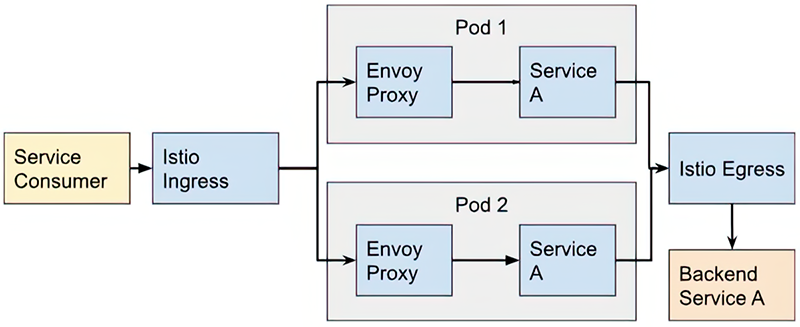
Figure 4.10 Istio egress control example
04-10

Use the egress-control architecture figure to trace traffic from the service mesh through the outbound gateway toward external services. section 4.5.3

How Google Anthos in Action covers it

How deep it goes
Explains gateway and proxy routing plus TLS origination options, but stops short of configuration commands or deployment procedures.
Examples
Uses HTTP and HTTPS external services, dedicated Egress gateways, external HTTPS proxies, SDS, and file-mounted TLS credentials.
What it assumes
Assumes a service mesh and gateway-based traffic architecture; does not teach those foundations.
What you can do after
Operate/configure external-service routing through an Egress gateway or HTTPS proxy with TLS origination.
How it connects
Connects service mesh, Ingress gateway, Egress gateway, external HTTPS proxy, and TLS origination.

Related concepts

This explainer was generated by Manning's knowledge graph from the text of Google Anthos in Action. The section links point to the parts of the book it draws on.