The eight wastes, remembered as TIMWOODS, are recurring patterns where effort fails to translate into outcomes. In software, they apply to information, decisions, and attention as well as work such as pull requests, tests, and reviews. section 2.4 section 2.7
TIMWOODS names eight categories:
- Transport section 2.4
- Inventory section 2.4
- Motion section 2.4
- Waiting section 2.4
- Overproduction section 2.4
- Overprocessing section 2.4
Use the categories as a diagnostic lens, not a checklist. One pull request may contain several wastes; the point is to spot system-created friction, not blame individuals. Work can look productive while effort quietly accumulates without improving outcomes. section 2.4 section 2.7
Look at the work as it happens
A pull request, ticket, refactor, test, review, or operational task may combine value-creating changes, necessary safeguards, and avoidable friction. Examine the work in context before deciding what is waste. section 2.4
Figure 2.4 TIMWOODS for software developers.
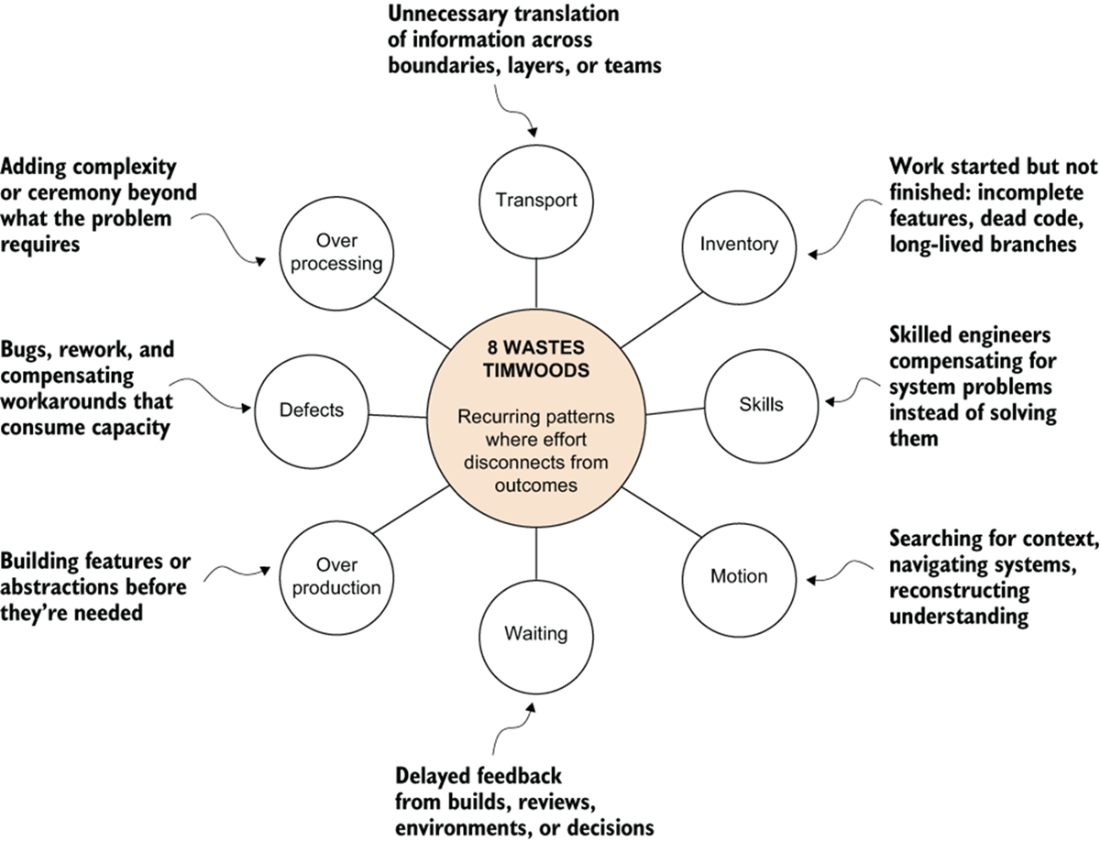
A visual map pairs TIMWOODS categories with examples from day-to-day software development. section 2.4
