Embodiment is the idea that cognition depends on a physical body and practical involvement with the world. It cautions against treating fluent imitation as proof of understanding: people and animals learn through perception, movement, action, and consequences, while a system may describe these relations without participating in them. section 1.5.8 section 9.4.3
This concern is not a settled test for intelligence. We recognize intelligence without first knowing an entity’s body, and much human reasoning works through symbols, cultural records, instruments, and education rather than immediate bodily interaction. Artificial systems can also connect perception to action through sensors, movement, and feedback, though this is not human embodiment. section 9.5.3 section 9.5.3
The debate turns on what embodiment contributes:
- Repeated interaction can support world models that help an agent predict outcomes, plan, and adapt. Language models may learn practical and causal patterns from text, but whether these form a stable model of the world remains disputed. section 9.4.3 section 9.4.3
- Embodied agency involves pursuing goals and responding to consequences. An AI system can be built with tools, memory, and external objectives, while critics argue that its goals and stakes remain supplied from outside. section 9.4.3
Description versus participation
A language model may describe how to sit on a chair or why a cup spills. The embodiment question is whether such descriptions amount to practical understanding without interaction with chairs, cups, and their consequences. section 9.4.3
Figure 9.13 Intelligence need not depend only on direct bodily experience. Humans acquire much of their knowledge through symbols, records, instruments, testimony, and education, while artificial systems can be connected to the world through sensors, actions, and feedback without sharing our biological form.
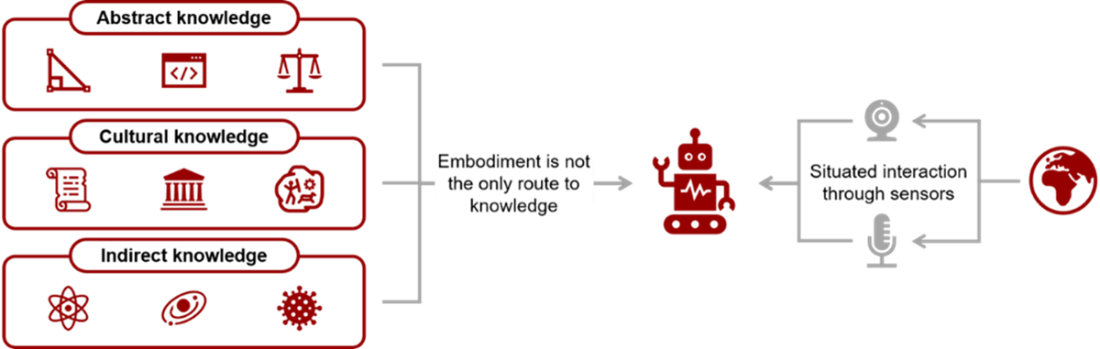
Use the figure to compare learning through symbols and records with artificial systems connected to the world through sensors, actions, and feedback. section 9.5.3
