An emic perspective is the lived experience of someone within a culture. It is gathered through participatory observation: spending time inside everyday practices, noticing shared symbols, and listening to how people experience group interactions. This view matters because formal authority alone does not reveal who influences a collaborative session. section 6.3.1
Use the emic perspective before judging a group from outside. Collect anecdotes and reactions, then contrast them with an etic perspective: an outsider’s conclusion about why those experiences occur. Together, these views make implicit ranking and power dynamics easier to examine without treating first impressions as facts. section 6.3.1
Hesitation in an EventStorming session
During Big Picture EventStorming, someone may fear writing the wrong domain event and wait for another participant to add an example first. That hesitation is an emic account of the session. Recording such stories can reveal how safety, influence, or rank shape participation. section 6.3.1
Figure 6.3 An example map of how to model the organization and capture symbols, anecdotes, and our own thoughts. In reality, this would be a lot bigger, so we like to use online tools where we can easily enlarge the area and collaborate on capturing our observations.
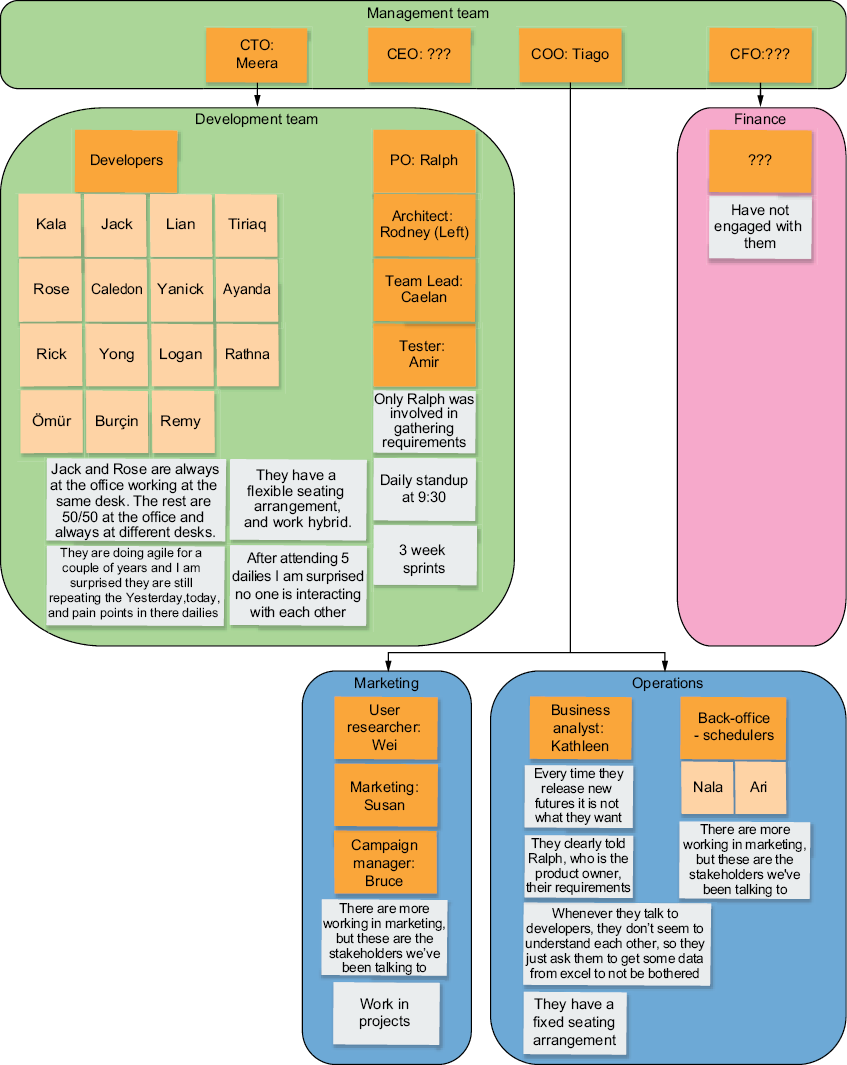
Use an observation map to capture organizational symbols, anecdotes, and reflections collaboratively, creating material for examining lived experience and implicit influence. section 6.3.1
