Emotional comprehension means understanding complex emotions, including their causes, relationships, and consequences. It goes beyond recognizing how someone feels and supports clearer insight into emotional experiences. section 11.1.1
Place emotional comprehension within the four-branch model:
- Perceiving emotions recognizes emotional signals in facial expressions, body language, and vocal cues. section 11.1.1
- Using emotions applies emotional information to thinking, decision-making, prioritization, and problem-solving. section 11.1.1
- Understanding emotions connects emotional states with their causes and consequences. section 11.1.1
- Managing emotions regulates reactions in oneself and supports others with empathy. section 11.1.1
Workplace recognition
A disengaged team member who avoids group activities may be experiencing negative feelings toward work. Irritation, stress, or fatigue can provide clues that require empathetic understanding rather than immediate judgment. section 11.1.1
Figure 11.2 Recognizing positive and negative emotions
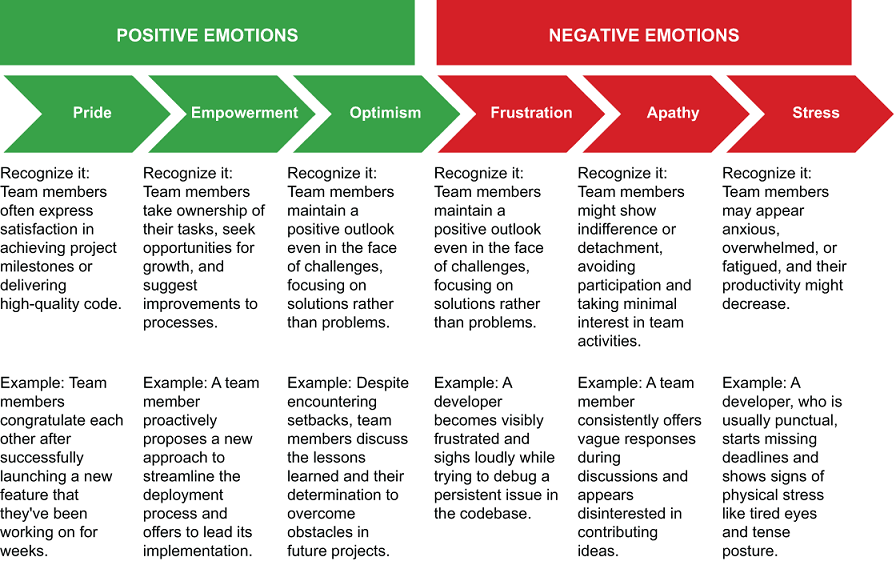
Use the figure to compare common positive and negative emotions with observable signs. section 11.1.1
