Environmental impact measures how digital technology consumes resources and contributes to emissions, waste, and other effects across its operation and lifecycle. Software influences disk space, memory, network traffic, CPU usage, hardware demand, and electricity consumption. section 8.0 section 8.2
Assess environmental impact across several linked sources:
- Operational consumption: computation, storage, data transfer, hardware, and electricity create ongoing costs. section 8.0
- Embodied carbon: manufacturing, transportation, and end-of-life processing create emissions before and after device use. section 8.2.2
- Technological obsolescence: unsupported or inefficient software can make functioning hardware unusable or inadequate. section 8.2.2
- Efficiency: meet acceptable responsiveness with the smallest practical infrastructure, reducing both environmental impact and unnecessary cost. section 8.3
A device can carry most of its impact before use
A smartphone’s manufacturing, transport, and disposal account for roughly three-quarters of its total carbon footprint before it reaches the user. Extending its life through repair, reuse, or repurposing amortizes that embodied cost over more years. Servers show a different balance: their longer operation makes ongoing electricity consumption a larger share of impact. section 8.2.2
Figure 8.1 How sustainable coding fits with clean code and performance
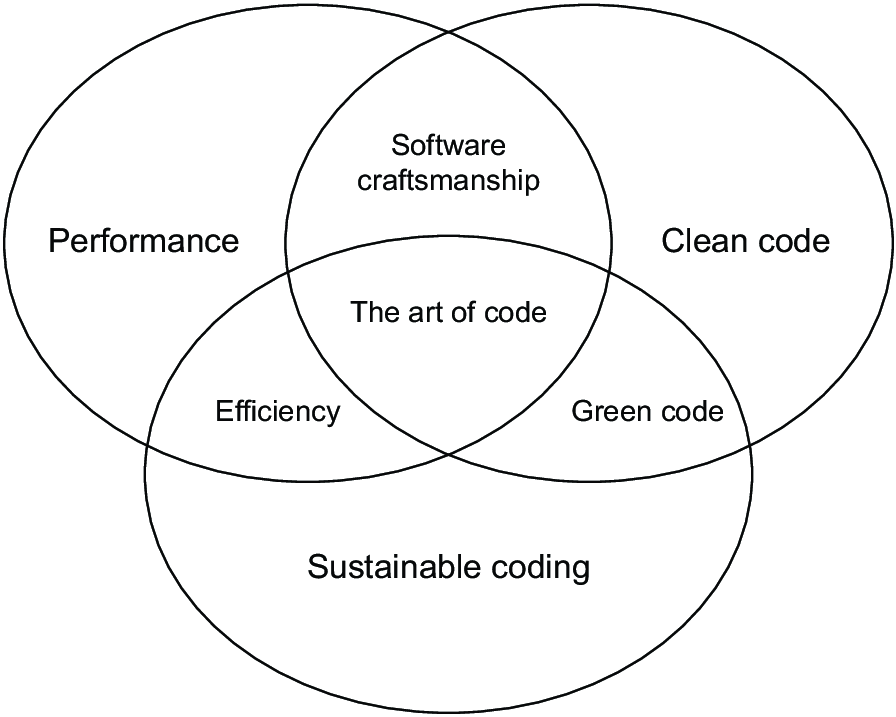
Relate environmental impact to clean code and performance: sustainable coding adds infrastructure and electricity usage as design concerns alongside readability and runtime behavior. section 8.3


