Ethics provides principles for responsible scientific and analytical practice, helping practitioners recognize how data, experiments, and deliverables can affect people, organizations, and society. section 8.0 section 8.1
Ethical analysis asks practitioners to consider:
- How research subjects, including animals, should be treated and which investigative practices should be avoided. section 8.1
- Who benefits from scientific knowledge and whether advances reach people who need them across socioeconomic groups. section 8.1
- How findings or models might be misused and what safeguards can reduce unintended harm. section 8.1
- How sensitive information can be handled, anonymized, and analyzed responsibly. section 8.0
Biased hiring model
Amazon developed a resume-ranking model trained on a decade of hiring data. Because the dataset reflected a male-dominated technology workforce, the model penalized candidates associated with women’s colleges or the word “women.” After attempts to remove the bias, Amazon abandoned the project because the rankings could not be trusted as accurate and reliable. section 8.0
Figure 8.1 The outcomes of scientific discovery can lead society down a path of advancement or collective harm.
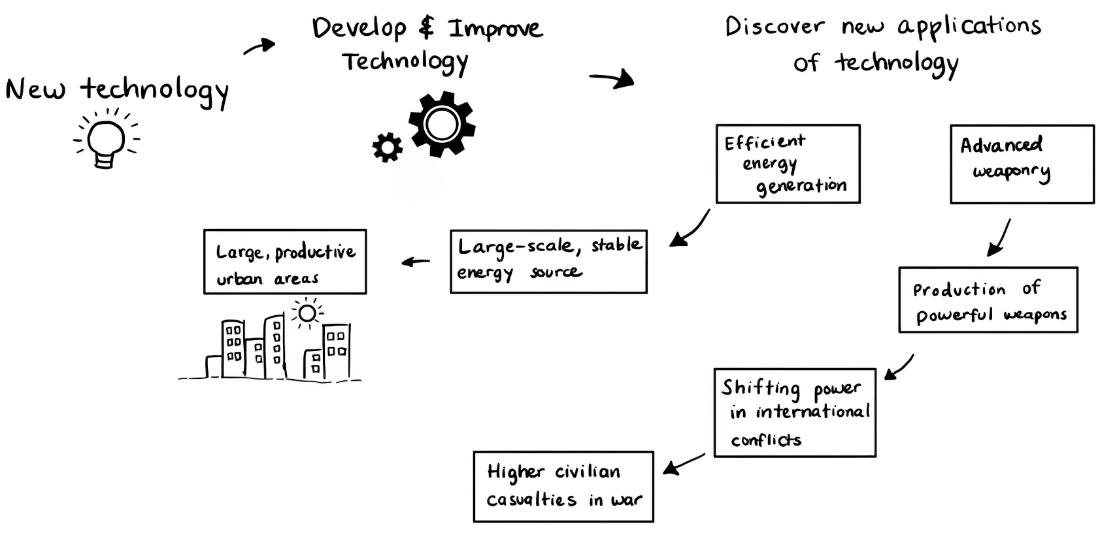
Use the figure to trace how scientific discoveries can produce social advancement or collective harm, depending on their effects and use. section 8.1


