Ethnographic writing records what happens in interviews and participatory observation while helping a facilitator resist premature judgment. Its practical value is not perfect neutrality: noting personal reactions prevents them from quietly steering attention away from group patterns. section 6.3.1
Use field notes as a short reflection practice:
- Capture observed patterns, symbols of power, and anecdotes during or immediately after an interaction. section 6.3.1
- Write down your own emotions and shadows rather than trying to suppress them. section 6.3.1
- Revisit those notes later for inner reflection and to prepare facilitation work. section 6.3.1
When delivery speed becomes status
If operations repeatedly contact the people who can quickly provide information, record that repeated behavior as a possible symbol of power. Also note any frustration, admiration, or assumptions it triggers in you before interpreting the pattern with the group. section 6.3.1
Figure 6.3 An example map of how to model the organization and capture symbols, anecdotes, and our own thoughts. In reality, this would be a lot bigger, so we like to use online tools where we can easily enlarge the area and collaborate on capturing our observations.
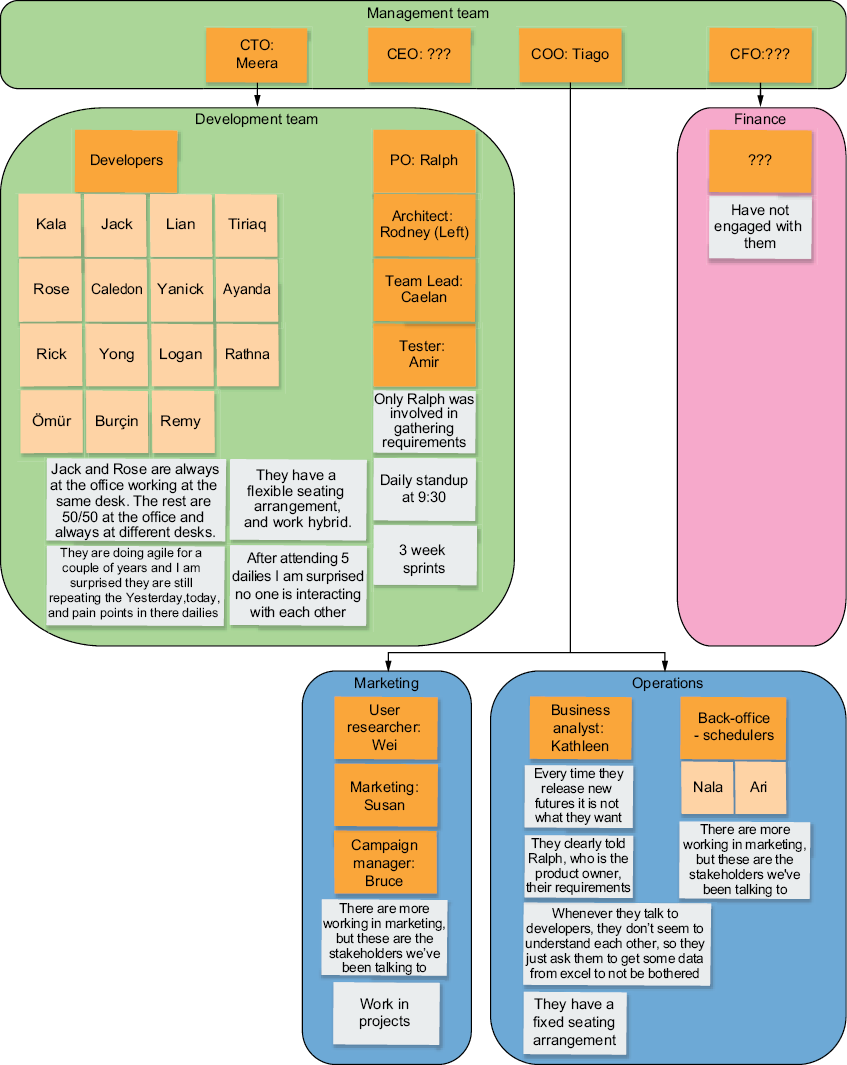
Use a shared organization map to keep symbols, anecdotes, observations, and personal thoughts visible as distinct captured material for later reflection. section 6.3.1
