An evaluation period lets a candidate experience a prospective role before making a formal commitment. Managers assess outcomes and gather feedback to support a thoughtful decision for both sides. section 2.2.4
A practical evaluation period can combine:
- A defined trial plan that preserves the candidate’s current role while adding responsibilities from the prospective role. section 2.2.4
- Real work involving critical projects, cross-functional partners, leadership, and one-on-one sessions. section 2.2.4
- Feedback and outcome assessment that reveal strengths and areas for improvement before commitment. section 2.2.4
David’s 90-day trial
David retained his senior-engineer role while taking on expanded engineering-manager responsibilities. He managed critical projects, worked with cross-functional partners, and practiced one-on-one sessions with peers. section 2.2.4
Figure 2.3 Four-step framework for evaluating whether an engineer will make a good EM. At the end of the last stage, you can evaluate based on experience and feedback gathered during the various steps.
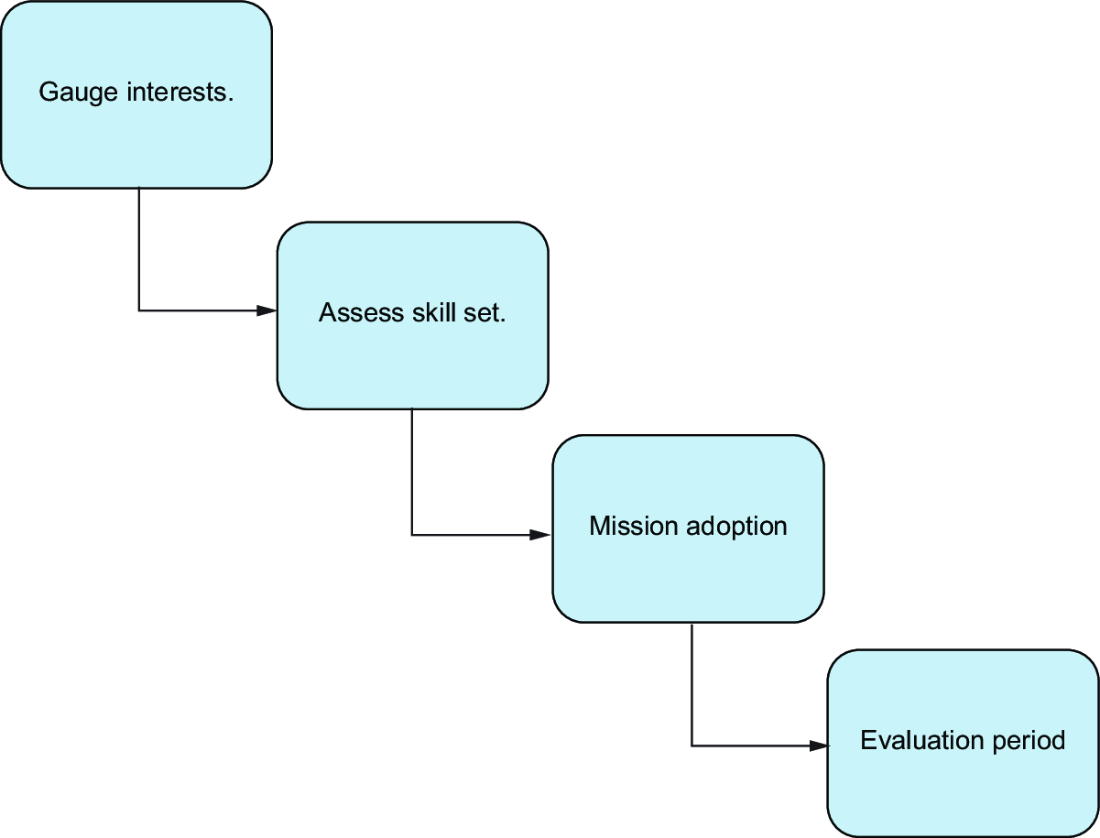
Use the four-step framework to evaluate an engineer through experience and feedback gathered across the transition. section 2.2.4
