Evolutionary adaptation is an inherited characteristic or change that improves an organism’s fit with its environment. Natural selection favors individuals whose traits help them survive and reproduce, spreading those traits through later generations. section 4.1
Adaptation happens across generations rather than by an organism changing magically. Offspring inherit combinations of parental genes, while small genetic differences can produce visible traits that environments favor. section 4.1
Peppered moths
Peppered moths were originally mostly light-colored, helping them camouflage against light surfaces. Pollution darkened those surfaces, making light moths easier for predators to see. Darker moths blended in better, survived longer, reproduced more, and passed their color-related genetic information to successors. Over time, the darker variant became common. section 4.1
Figure 4.2 The evolution of the peppered moth
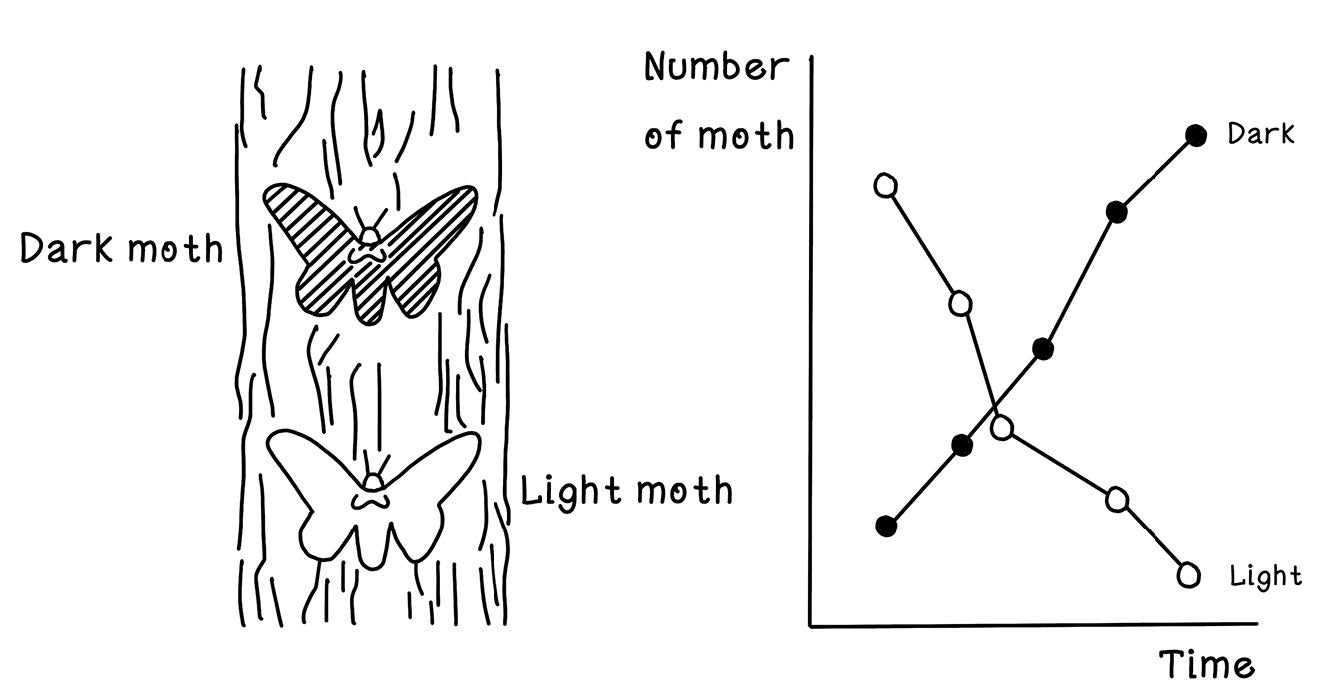
Trace how environmental change shifts the frequency of light and dark peppered moth variants across generations. section 4.1
