An explanatory statistical model describes how predictors relate to an outcome, emphasizing interpretability, effect direction, strength, and statistical evaluation. It supports recommendations and strategic decisions rather than primarily optimizing predictions for new cases. section 9.3.1 section 9.4
The modeling objective should follow stakeholder needs: a team seeking the factors contributing to conversions needs an explanatory deliverable, while a team estimating each person’s conversion likelihood needs a predictive one. section 9.3
Explanatory modeling typically requires:
- Grounding predictor selection in strong theoretical and logical justification. section 9.3.1
- Explaining each predictor’s relationship with the outcome, including its importance, direction, shape, and expected effect. section 9.3.1
- Using domain expertise because stakeholders may interpret explanatory results causally. section 9.3.1
- Checking assumptions such as linearity, normality, homoscedasticity, and residual independence before relying on results. section 9.4
Questions an explanatory model can address
Examples include recommending actions for patients with diabetes and chronic kidney disease, selecting educational programs to improve test scores, and assessing whether webinar participation relates to increased product usage. section 9.3.1
Figure 9.36 Slides showing the summary of methods and results that document conclusions about individual input variables.
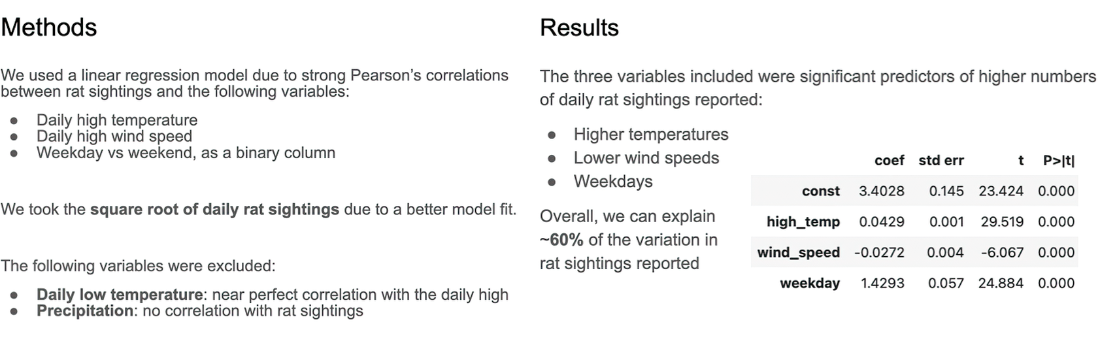
Use the results-summary slides to document methods, findings, and conclusions about individual input variables for stakeholder communication. section 9.3.1
