Independent variable
An independent variable is an input or explanatory variable used to model, explain, or predict variation in an outcome, without necessarily causing it.

Effective Data Analysis
A predictor is an input variable whose relationship with an outcome is represented in a statistical model.
- How it is used
- Uses independent variables to formulate hypotheses, design experiments, and model outcomes for decisions.
- How deep it goes
- Works through experimental controls, regression coefficients, model fitting, and diagnostic checks, including collinearity and residuals.
- Examples
- Uses tutoring and test scores, house prices, and weather predictors of daily rat sightings.
- What you can do after
- Apply it via statsmodels to fit and evaluate a regression using selected predictors and an outcome.
Read how Effective Data Analysis explains independent variable →
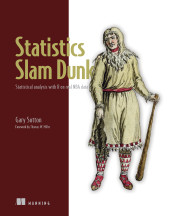
Statistics Slam Dunk
A predictor variable is an explanatory variable whose values are used to predict or account for variation in a response variable.
- How it is used
- Uses predictors to explain or predict NBA wins and postseason qualification through regression and ANOVA models.
- How deep it goes
- Defines predictors, screens them with correlations, fits models, interprets coefficients, and checks multicollinearity and diagnostics.
- Examples
- Uses NBA hustle statistics, especially deflections, to model regular-season wins and compares a Miami Heat prediction with actual wins.
- What you can do after
- Apply it via R to select predictors, fit regression or ANOVA models, and interpret their estimated influence on an outcome.
Read how Statistics Slam Dunk explains independent variable →

Financial AI in Practice
A measurable input variable or derived attribute supplied to a statistical or machine-learning model.
- How it is used
- Supplies predictive signals for market direction, fraud detection, and credit decisions.
- How deep it goes
- Works through technical and cross-asset feature construction, with practical examples of real-time and graph-based inputs.
- Examples
- Uses ETF momentum and rolling correlations, transaction velocity, and news-derived policy tone as features.
- What you can do after
- Apply feature engineering via TA-Lib and pandas to create technical indicators and cross-asset signals.
Read how Financial AI in Practice explains independent variable →

Timeless Algorithms, The Foundational Ideas
A feature is an input attribute whose values are considered by a predictive model when making predictions.
- How it is used
- Treats an input attribute as a quantity used to explain or predict a response or split observations toward predictions.
- How deep it goes
- Defines the feature through regression notation and illustrates its roles in regression, tree splits, and one-dimensional classification.
- Examples
- Uses regression inputs, income or credit history for tree splits, and temperature for safe-or-unsafe classification.
- What you can do after
- Evaluate/understand how a model uses an input attribute to estimate a response, split observations, or classify cases.
Read how Timeless Algorithms, The Foundational Ideas explains independent variable →
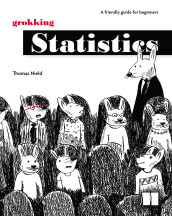
Grokking Statistics
An independent variable is a predictor or input variable whose relationship with an outcome is modeled.
- How it is used
- Uses predictor or input variables to model and predict an outcome in linear and logistic regression.
- How deep it goes
- Defines the variable and illustrates its modeling role, but stops short of deriving regression mathematics or estimation algorithms.
- Examples
- Uses temperature and sports-drink sales, plus hours without a nap and toddler meltdowns.
- What you can do after
- Evaluate predictor choices and interpret modeled relationships without treating correlation as causation or extrapolating beyond observed data.
Read how Grokking Statistics explains independent variable →
Also covered in
- Demand Forecasting Best Practices
- Data Without Labels
- Machine Learning for Tabular Data: XGBoost, Deep Learning, and AI
- Causal Inference for Data Science
- Privacy-Preserving Machine Learning
- Math for Web Design
What to know first
- normal distributionA normal distribution is a continuous probability distribution with a symmetric, bell-shaped density determined by its mean and variance.
- anomalyAn anomaly is an observation, data state, or behavior that substantially deviates from an expected or prevailing pattern or condition.
- probabilistic modelA probabilistic model is a mathematical representation of uncertain variables, relationships, or outcomes using probability distributions.
- statistical significanceStatistical significance is a judgment that observed data are sufficiently inconsistent with a specified null hypothesis under a statistical test and chosen criterion.
Related concepts
- linear regressionused by · Linear regression is a statistical method that models a numeric response as a linear function of one or more predictor variables with fitted parameters.
- logistic regressionused by · Logistic regression is a statistical classification model that estimates class probabilities by applying a logistic or softmax function to a linear combination of input features.
- AI modelused by · An AI model is a computational system that learns or encodes patterns to map inputs to outputs such as predictions, classifications, or generated content.
- external factorincludes · An external factor is a condition outside an organization’s or process’s direct control that can influence objectives, operations, outcomes, or performance.
- feature storeused by · A feature store is a system for managing and serving machine-learning features for use in model training and inference.
Questions about independent variable
What is independent variable?
An independent variable is an input or explanatory variable used to model, explain, or predict variation in an outcome, without necessarily causing it.
Which Manning books explain independent variable?
Effective Data Analysis, Statistics Slam Dunk, Financial AI in Practice, Timeless Algorithms, The Foundational Ideas and Grokking Statistics.
What should I know before learning independent variable?
Manning books that teach independent variable usually introduce normal distribution, anomaly, probabilistic model and statistical significance first.
What kinds of independent variable are there?
Kinds of independent variable include external factor.
What is independent variable also called?
Independent variable is also called predictors or explanatory variables.
These guides are generated from the text of Manning books by Manning's knowledge graph and link to the sections they draw on. The full books are available on liveBook and at manning.com.