liveBook · Manning

Expressive power

As explained in Machine Learning Algorithms in Depth

Model capacity is the range and complexity of functions that a model architecture can represent.

Expressive power describes the range and complexity of functions a model architecture can represent. In practice, model capacity is adjusted to avoid underfitting while controlling overfitting: choose a model complex enough to explain the data, but prefer simpler models when they explain it well. section 7.4 section 10.1

For a multilayer perceptron, adjust capacity by changing its architecture:

  • Increase the number of layers or hidden units per layer when the model underfits or has insufficient validation accuracy. section 10.1
  • When overfitting, use weight decay, early stopping, or dropout to encourage simpler models or improve generalization. section 10.1
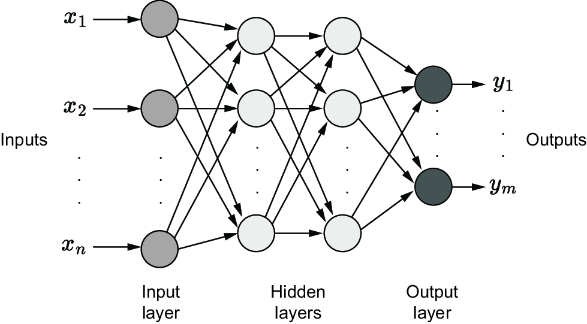
Figure 10.1 MLP architecture
figure

Use the MLP architecture diagram to locate the layers and hidden units that can be varied to change capacity. section 10.1


How Machine Learning Algorithms in Depth covers it

How deep it goes
Explains capacity through MLP layer and unit choices, then links those choices to regularization; gives no formal function-class derivation.
Examples
Uses MLP layer and hidden-unit counts as capacity choices, and weight decay, early stopping, and dropout as regularizers.
What you can do after
Diagnose underfitting and increase MLP layers or hidden units, or address overfitting with weight decay, early stopping, or dropout.
How it connects
Connects model capacity to underfitting, overfitting, regularization, model selection, and generalization.

Also explained in

Compare how 10 books explain expressive power →

Related concepts

This explainer was generated by Manning's knowledge graph from the text of Machine Learning Algorithms in Depth. The section links point to the parts of the book it draws on.






