A fact table records numeric information about business processes or events that matter for analysis, such as sales transactions, clicks, page views, or customer activities. It forms the center of a star schema and connects to dimension tables describing related entities and attributes. section 11.4.2 section 11.5
Designing a fact table requires identifying an important organizational process, clarifying what each fact means to stakeholders, and choosing dimensions that make analysis easier. Denormalization combines relevant sources into readable tables, reducing joins and calculations for common queries. section 11.4.2
Use these questions when shaping a fact table:
- Which normalized tables represent actions or events rather than business entities? section 11.4.3
- Which measures and foreign keys describe each event, and how will they connect to dimension tables? section 11.4.2 section 11.4.3
- Do the proposed facts and dimensions match stakeholder needs, organizational priorities, and expected analytical queries? section 11.4.2 section 11.4.3
Figure 11.21 Star schemas have fact tables at the center connected to dimensions with related attributes.
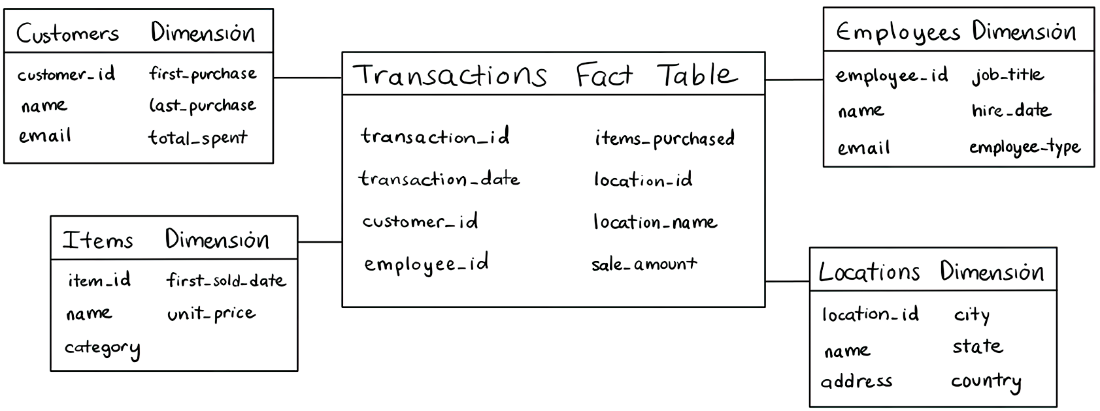
Use the star-schema diagram to see fact tables at the center with connected dimensions containing related attributes. section 11.4.2

