Could a professor hand out copies of a painting for an art history lecture? Could someone sell T-shirts bearing the same image? Copyright gives creators exclusive rights to works of expression, but those rights are not absolute. Fair use is the legal doctrine that can permit use of copyrighted material without the copyright holder’s permission. section 4.11
Under the US Copyright Act of 1976, fair use depends on four factors. One is the purpose and character of the use: nonprofit or educational use is more likely to qualify than commercial use. A use may also be transformative if it fundamentally changes the work and serves a purpose different from simply consuming or enjoying the original. None of these descriptions makes every use in a category automatically fair. section 4.11
Figure 4.6 The four factors that determine fair use of copyrighted materials [47]
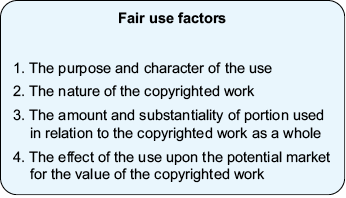
The figure brings together the four factors used to assess fair use. section 4.11
Parody and permission
Courts have typically considered parody fair use. “Weird Al” Yankovic’s comic rewritings of copyrighted songs illustrate the distinction between what fair use may permit and what a creator chooses to do: he says he still seeks permission to maintain relationships with the original writers. section 4.11
Fair use is also central to disputes over copyrighted works used to train generative AI. Licenses offer another route for allowing reuse, sometimes with conditions such as attribution or noncommercial use. Whether fair use or licensing resolves disputes over AI training remains contested; neither is a blanket answer to every use of creative work or code. section 4.11 section 4.12
