liveBook · Manning

Transformative use

As explained in Introduction to Generative AI, Second Edition

Transformative use is use of copyrighted material that adds a new element or purpose that fundamentally changes the character of the original work.

When a comic rewrites a copyrighted song with new lyrics, does the result use the original in a fundamentally different way? In US copyright law, transformative use adds a new element that changes the character of a work and uses it for a purpose different from the original’s consumption or enjoyment. section 4.11

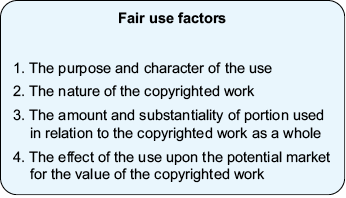
Transformative use falls under the first fair use factor: the purpose and character of the use. It is not the only consideration. Fair use also depends on the nature of the copyrighted work, the amount used, and the effect on its market. Companies developing large language models rely on transformative use as a defense, but its relevance does not settle every copyright question. section 4.11

Figure 4.6 The four factors that determine fair use of copyrighted materials [47]
A white text on a blue background

AI-generated content may be incorrect.

Compare the four factors considered in fair use. section 4.11
How Introduction to Generative AI, Second Edition covers it

How deep it goes
Defines transformative use within the four-factor fair use framework without resolving specific language model claims.
Examples
Uses comedic rewrites of copyrighted songs to illustrate uses that raise fair use questions.
What you can do after
Evaluate or understand how a change in purpose or character relates to the broader fair use assessment.
How it connects
Connects transformative use to copyright law, fair use, and large language models.

Related concepts

This explainer was generated by Manning's knowledge graph from the text of Introduction to Generative AI, Second Edition. The section links point to the parts of the book it draws on.