liveBook · Manning

Fault isolation

As explained in Bootstrapping Microservices, Second Edition: With Docker, Kubernetes, GitHub Actions, and Terraform

Fault isolation is the containment of a failure within one component so that it has minimal effect on other components or users.

Fault isolation contains a failure within one component so it has minimal effect on users and the rest of the application. In a microservices system, the gateway can stop a failing service from propagating errors to the frontend, allowing the application to continue in a degraded state. section 11.4.5

Implement fault isolation with safeguards that limit waiting, repeated failure, and resource consumption:

  • Set timeouts so unresponsive internal or external requests abort quickly instead of waiting indefinitely. section 11.4.6
  • Use retries for potentially temporary failures, while bounding attempts and adding a wait between them. section 11.4.6
  • Combine timeouts and retries with circuit breakers and bulkheads to prevent a local failure from overwhelming dependent components. section 11.4.5
  • Return a focused error for the unavailable feature while keeping unrelated application functions available. section 11.4.5

Video upload becomes unavailable

If the video-upload microservice stops responding, an unprotected request can carry the error to the frontend and disrupt the whole service. With gateway safeguards, the fault remains inside the cluster: users see that video upload is unavailable, but can continue using the rest of the application. section 11.4.5
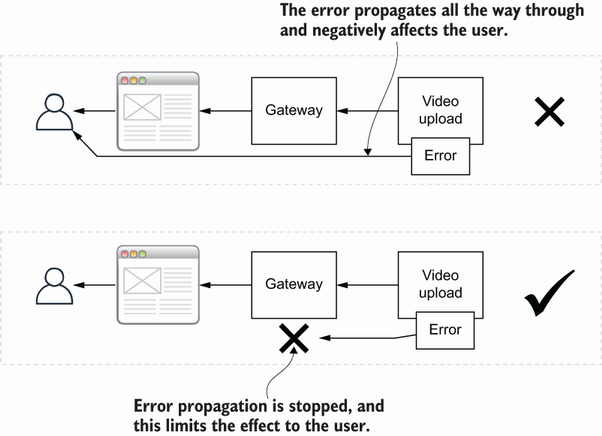
Figure 11.13 Isolating faults within the cluster from the user

Trace the contrast between an error propagating to the user and a gateway containing the fault within the cluster. section 11.4.5


How Bootstrapping Microservices, Second Edition: With Docker, Kubernetes, GitHub Actions, and Terraform covers it

How deep it goes
Explains containment through timeouts, retries, circuit breakers, and bulkheads, with implementation examples for timeouts and retries.
Examples
Uses a failed video-upload service, Dropbox requests, Axios configuration, and a bounded JavaScript retry function.
What it assumes
Assumes internal HTTP requests and microservice architecture while introducing failure handling through concrete request examples.
What you can do after
Operate/configure microservice requests with bounded timeouts, retries, and user-visible degraded behavior.
How it connects
Connects microservices with graceful degradation, fault tolerance, timeouts, retries, circuit breakers, and bulkheads.

Also explained in

Compare how 2 books explain fault isolation →

Related concepts

This explainer was generated by Manning's knowledge graph from the text of Bootstrapping Microservices, Second Edition: With Docker, Kubernetes, GitHub Actions, and Terraform. The section links point to the parts of the book it draws on.