Feature deletion removes a previously implemented capability and records a product decision: what a team sacrifices can matter as much as what it ships. section 6.5
Investigate a deleted feature as a graveyard entry:
- Find commits deleting five or more files from one folder; bulk deletion often signals a removed feature rather than routine cleanup. section 6.5
- Inspect the complete git show diff, including deleted source code, instead of inferring behavior from file names. section 6.5
- Describe the user-facing behavior, then record the commit hash, subject, author, date, and product era. section 6.5
Read the code, not the folder name
A deleted loyalty/ directory might suggest a finished rewards program, but its diff may reveal only an unwired stub. In Ghost's membership pivot, removing the original plugin system and subscribers v1 made room for members, Stripe, and the Portal UI. section 6.5
Figure 6.7 A project advertises what shipped, but its git history also records what was killed. These deletions (a plugin system that never found an audience, an AMP integration Google abandoned, a replaced subscribers v1) show which bets the team walked away from.
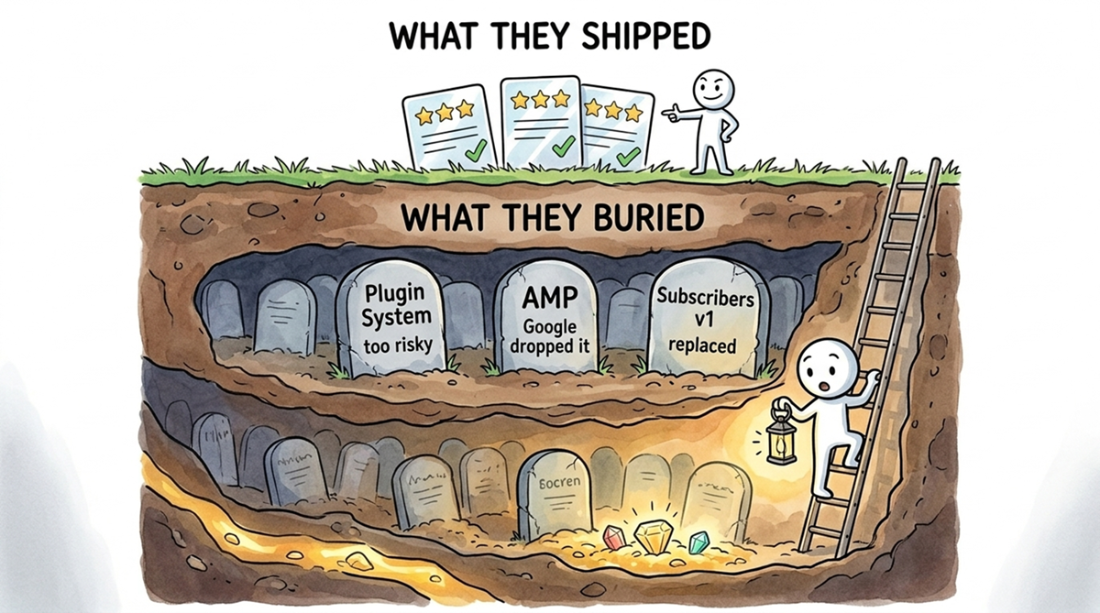
Use the figure to compare shipped additions with the plugin system, AMP integration, and subscribers v1 that teams abandoned. section 6.5
