Reversion rate measures how often a change is undone through revert or corrective commits after introduction. For deleted features, scan the following weeks for commits beginning with `revert:` or `hotfix/`. A quiet log suggests a deliberate cut; many reversions suggest the removal broke something still in use. section 6.5
Interpret the signal alongside two checks:
- Successor: identify what replaced the feature and how long the gap lasted; a strict superset preserves capability, while a long gap or no replacement is a warning. section 6.5
- Deletion discipline: compare the change with the repository’s broader pattern; repeated pruning suggests healthier maintenance than a history that only adds features. section 6.5
Ghost’s AMP removal
Ghost’s AMP removal was followed by a quiet log, indicating that the team cut the integration without triggering corrective work. By contrast, a flurry of reverts would indicate that users or dependent systems still relied on it. section 6.5
Figure 6.7 A project advertises what shipped, but its git history also records what was killed. These deletions (a plugin system that never found an audience, an AMP integration Google abandoned, a replaced subscribers v1) show which bets the team walked away from.
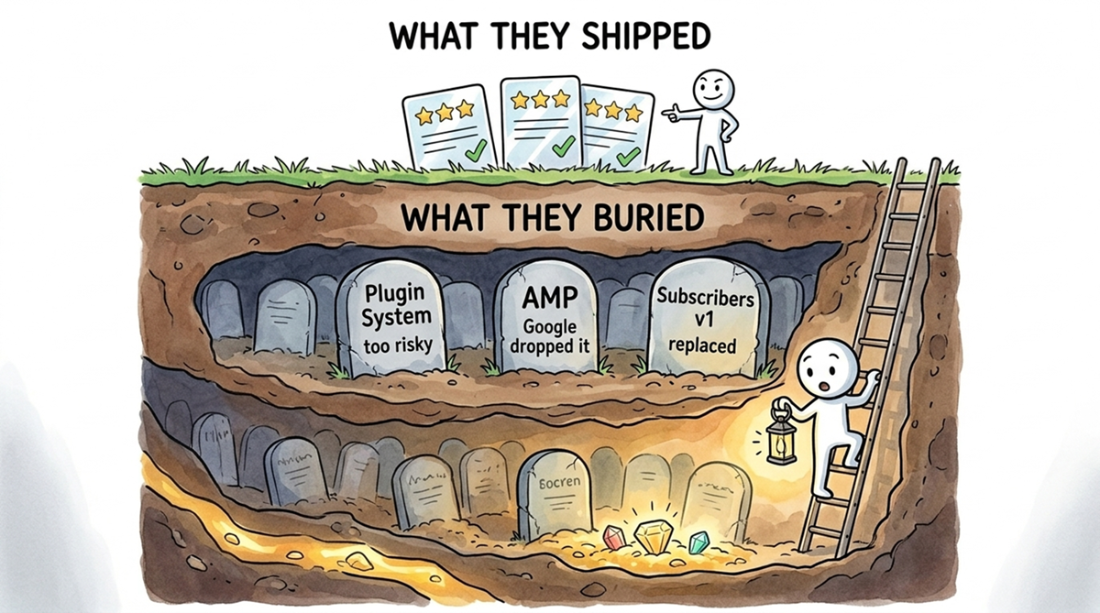
Use the deletion map to connect reversion signals with the strategic bets a project abandoned. section 6.5
