liveBook · Manning

Feature hierarchy

As explained in Machine Learning System Design

A relationship in which a feature is computed from other features or data sources, forming a hierarchy of feature calculations.

A feature hierarchy organizes calculations so that each feature can depend on other features or data sources. Instead of repeatedly querying raw warehouse data, reusable parent features—such as preaggregations—feed child features. This reduces repeated computation and makes dependencies explicit. section 11.4.2

Use the hierarchy to manage feature computation and change:

  • Represent feature lineage as a directed acyclic graph so calculations run in dependency order. section 11.4.2
  • Update child features when a parent implementation changes, including the resulting feature-version updates. section 11.4.2
  • Trace surprising values or outliers back to their sources, simplifying debugging and analysis. section 11.4.2
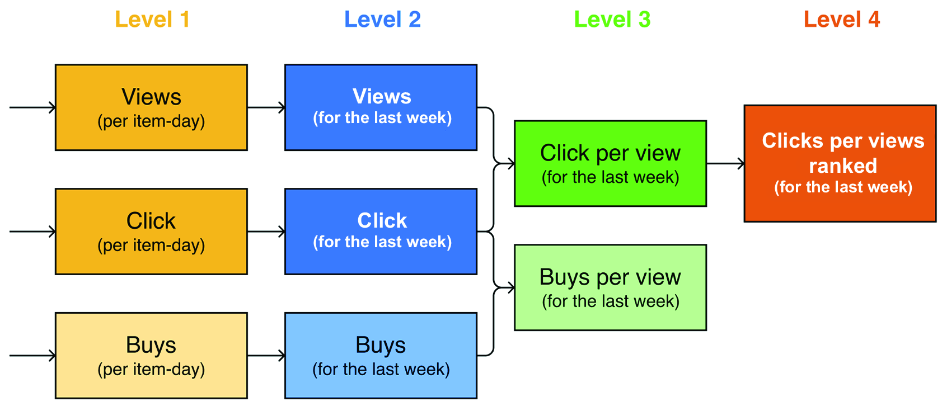
Figure 11.15 A graph of feature dependencies
figure

Explore the dependency graph connecting parent and child features. section 11.4.2

How Machine Learning System Design covers it

How deep it goes
Traces dependencies through a directed acyclic graph, including execution order, child updates, version changes, and debugging.
Examples
Uses preaggregations as parent features and illustrates successive level-one and level-two child features in a dependency graph.
What you can do after
Diagnose/debug feature behavior by tracing calculations to their source data and dependent transformations.
How it connects
Connects feature stores with preaggregation, feature lineage, feature versioning, and data warehouses.

Related concepts

This explainer was generated by Manning's knowledge graph from the text of Machine Learning System Design. The section links point to the parts of the book it draws on.