liveBook · Manning

Feature vector

As explained in Graph Algorithms for Data Science

A feature vector is a vector whose numerical components encode selected characteristics of a data point or node.

A feature vector is a numerical representation of selected characteristics belonging to a data point or node. For user analysis, extracted feature vectors support comparisons between users. section 8.0

Use feature vectors to turn extracted characteristics into relationships between users:

  • Extract features from each user and represent them as a vector. section 8.0
  • Compare pairs of vectors with cosine similarity. section 8.0
  • Construct a similarity network whose connections join users with similar features. section 8.0
  • Apply community detection to identify user segments from densely connected groups. section 8.0
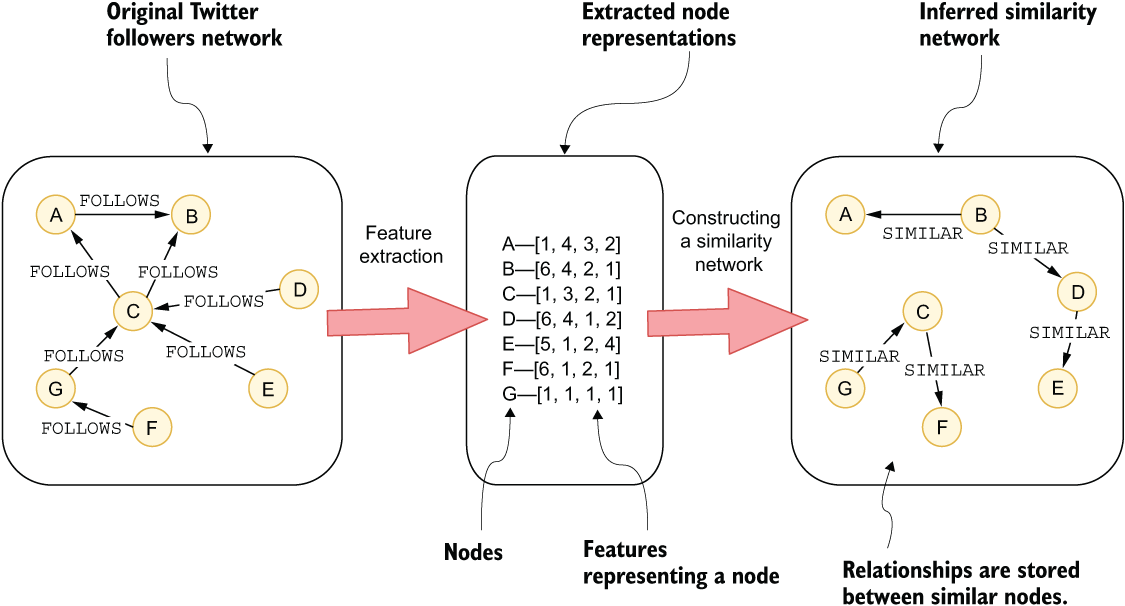
Figure 8.1 Extracting node representations and constructing a similarity network based on them
08-01

Shows how node representations become a similarity network. section 8.0

How Graph Algorithms for Data Science covers it

How deep it goes
Explains vector use through cosine similarity and network construction, without detailing feature-extraction internals.
Examples
Uses Twitter users, extracted user characteristics, pairwise cosine similarity, and inferred user segments.
What it assumes
Assumes familiarity with representing selected characteristics numerically and comparing nodes in a network.
What you can do after
Apply it via cosine similarity to construct user-similarity networks and support community-based segmentation.
How it connects
Connects feature extraction, cosine similarity, similarity networks, and community detection.

Also explained in

Compare how 2 books explain feature vector →

Related concepts

This explainer was generated by Manning's knowledge graph from the text of Graph Algorithms for Data Science. The section links point to the parts of the book it draws on.
