Financial return is the monetary gain or loss produced by a business activity or investment over a specified period. In strategic planning, it asks whether the market and value-delivery chain can produce acceptable returns. section 17.2.4
Use financial return as the fourth planning stage, after defining the market, purpose, and whole product:
- Identify target market segments. section 17.2.4
- Define the business purpose and objectives. section 17.2.4
- Design programs, products, and services that solve the segment’s needs. section 17.2.4
- Test whether investments can generate acceptable returns in the defined market and value-delivery chain. section 17.2.4
- After market engagement, feed changed assumptions back into the plan. section 17.2.4
Figure 17.1 Pictorial representation of the 10 steps in the creation of a business strategy/plan. (Step 11 is not part of the plan; it is the actions the plan dictates for the first year of operations.) Note that the order in which the steps are taken during plan development is not the same as the order in which they are presented in a document. The numbering shown here is in the order in which the steps are taken in the plan development process.
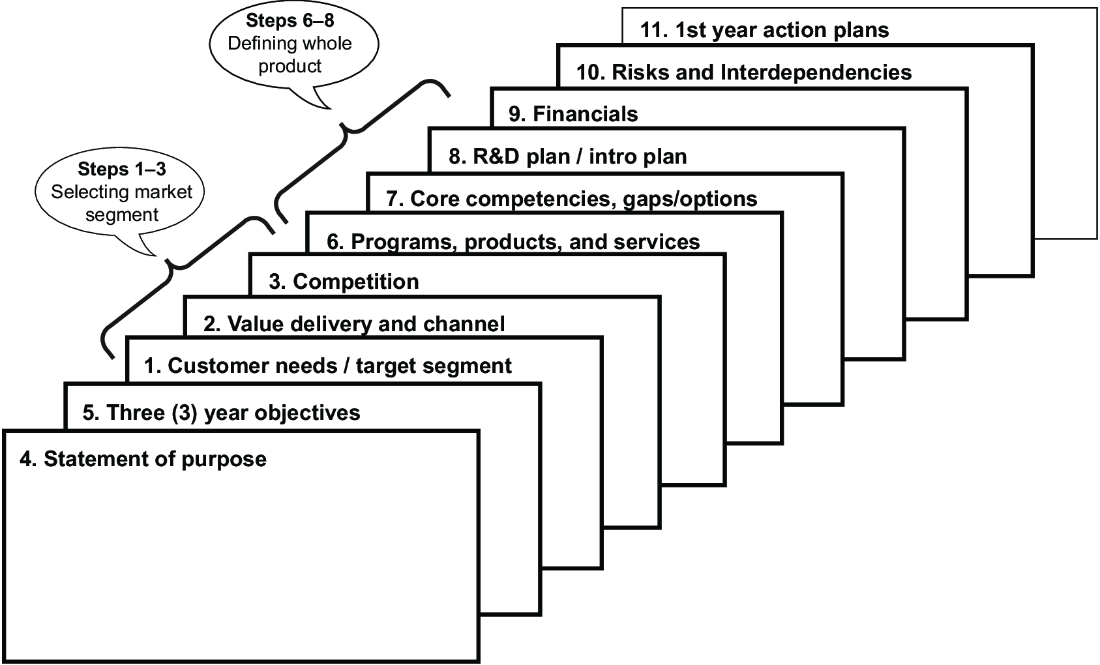
Follow the visual sequence from target market segments through business purpose, whole product, financial returns, risks, and validation. section 17.2.4
