A first slice is a small, end-to-end modernization increment that delivers usable value while testing technology choices, organizational readiness, and the case for further investment. A quarter is a useful delivery target, although identifying and preparing candidates can take several weeks to a quarter. section 16.2
Shape a first slice through progressive discovery and preparation:
- Listen to diverse stakeholders and map the current system, its problems, and emerging future-state product taxonomy. section 16.2.1
- Compare candidate slices by cost, benefit, and complexity, then use a kickstarter workshop to select and plan the preferred option. section 16.2.1
- Form delivery teams early where possible, and reserve time for learning and upskilling before and during delivery. section 16.2.1
- Build only enough internal developer platform capability to deliver the slice, while validating the path to production and extracting reusable patterns afterward. section 16.2.3
A slice that teaches as it delivers
One initiative can explore a user-facing change while another investigates an internal platform, provided both create different learning opportunities. Platform and software engineers can work together through planning, standups, and mob programming, then turn the resulting patterns into playbooks and golden paths. section 16.2 section 16.2.3
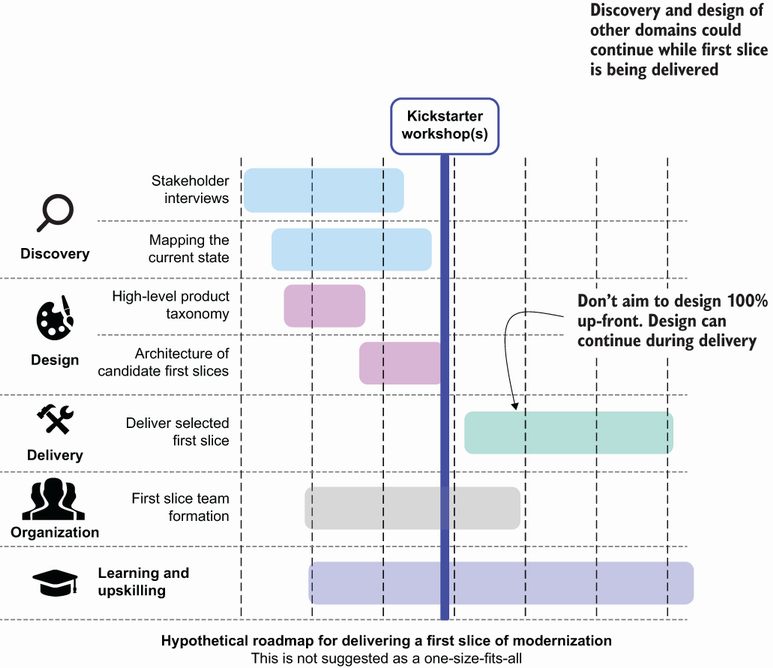
Use the hypothetical roadmap to visualize discovery, option selection, team preparation, learning, and delivery within an evolutionary modernization sequence. section 16.2.1
