liveBook · Manning

Flat network

As explained in Google Anthos in Action

A flat network architecture is a network design in which participating clusters share a common network address space or network fabric.

A flat network places all resources using one VPC on the same network. In a small GCP environment, this simplifies administration and lets resources communicate without additional connection configuration, subject to security rules. section 10.1.1

Control connectivity at multiple layers:

  • Use VPC firewalls at the network layer. section 10.1.1
  • Use Kubernetes NetworkPolicies inside the Kubernetes dataplane. section 10.1.1
  • Use Anthos Service Mesh authentication and authorization policies at the service-mesh layer. section 10.1.1

Small GCP environment

A company keeps several teams and Anthos resources in one GCP project and one VPC. The shared flat network reduces network administration, but growth can expose VPC limits and prevent a multiproject design. section 10.1.1
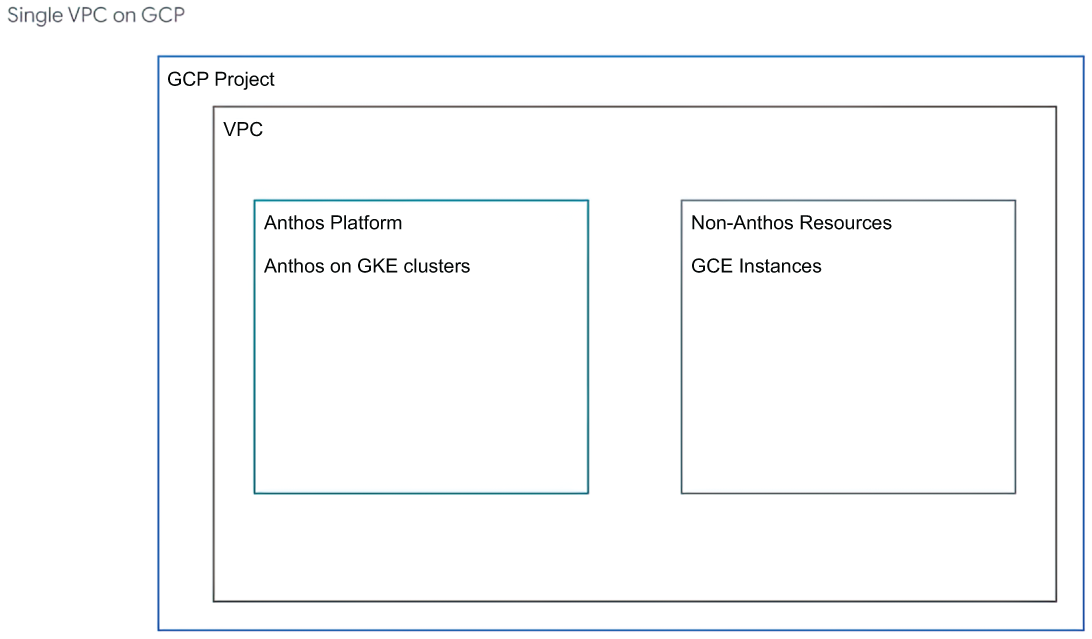
Figure 10.2 Single VPC architecture in GCP
10-02

Shows the single-VPC architecture that produces a flat network in GCP. section 10.1.1

How Google Anthos in Action covers it

How deep it goes
Explains topology, security layers, and scaling limitations without detailing VPC quota values or multi-VPC implementation.
Examples
Uses a single GCP project and VPC serving multiple teams and Anthos resources as the concrete deployment pattern.
What it assumes
Assumes familiarity with GCP projects, VPCs, Anthos, Kubernetes, and service meshes.
What you can do after
Evaluate whether a single-VPC design fits an environment and select layered controls for permitted communication.
How it connects
Connects VPC firewalls, Kubernetes NetworkPolicies, Anthos Service Mesh, shared VPCs, peered VPCs, and multiple VPCs.

Related concepts

This explainer was generated by Manning's knowledge graph from the text of Google Anthos in Action. The section links point to the parts of the book it draws on.