A flat split divides an aggregate forecast into lower-level periods or entities using equal proportions. It is simple and keeps forecasts aligned across aggregation levels, but it may not match the decisions that operations must make. section 5.2 section 5.3.1
Use a flat split cautiously when:
- A monthly forecast is divided into equal weekly or daily buckets. section 5.2
- A country-level forecast is spread across warehouses without reflecting their distinct demand patterns. section 5.3.1
- Inventory is deployed weekly by warehouse, while planning remains monthly by market; the split can conceal a mismatch between forecasts and decisions. section 14.4.1
A monthly forecast split by week
Suppose demand is forecast at 400 units for a month. A flat split assigns 100 units to each of four weeks. That allocation is easy to calculate, but it ignores promotions, seasonal timing, warehouse differences, and other patterns that may make the weeks unequal. A historical split can instead use past ratios, while a granular forecast can model the relevant weeks or warehouses directly. section 5.2 section 5.3.1
Figure 5.1 Aggregation and disaggregation techniques: top-down, middle-out, and bottom-up
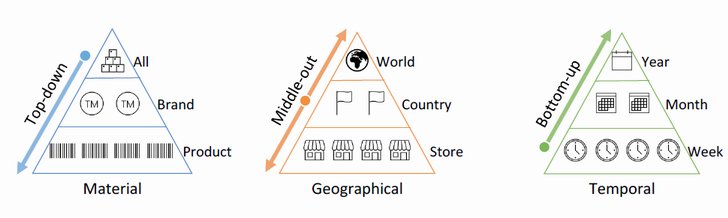
Compare flat top-down splitting with bottom-up aggregation and middle-out forecasting across different hierarchy levels. section 5.2
