Unclear, oversized, or inconsistent changes create review delays and rework. Flow protection prevents defects, variability, and waste from entering the delivery flow, rather than relying on downstream fixes. section 3.4.3
In software, flow protection shapes work before it reaches review and integration. Specs constrain what gets built, standard work reduces fragmented patterns, and reviews catch non-compliance before changes merge. section 3.4.3 section 4.6
Use distinct controls for distinct sources of disruption:
- Specify what must be true before generating code; include explicit constraints such as “Never” statements. section 4.6
- Document the current best way of working to reduce pattern fragmentation, and improve standards as patterns emerge. section 4.6
- Review against standards, waste, and value. Block merges for objective failures; treat style preferences as suggestions. section 4.6
A calmer review pipeline
When AI-assisted changes arrive with clear intent, constrained scope, and explicit decisions, reviewers spend less effort reconstructing requirements. Smaller, more predictable changes reduce stalled reviews and rework. section 3.4.3
Figure 3.9 Standard work filters AI output, protecting flow and preventing rework later.
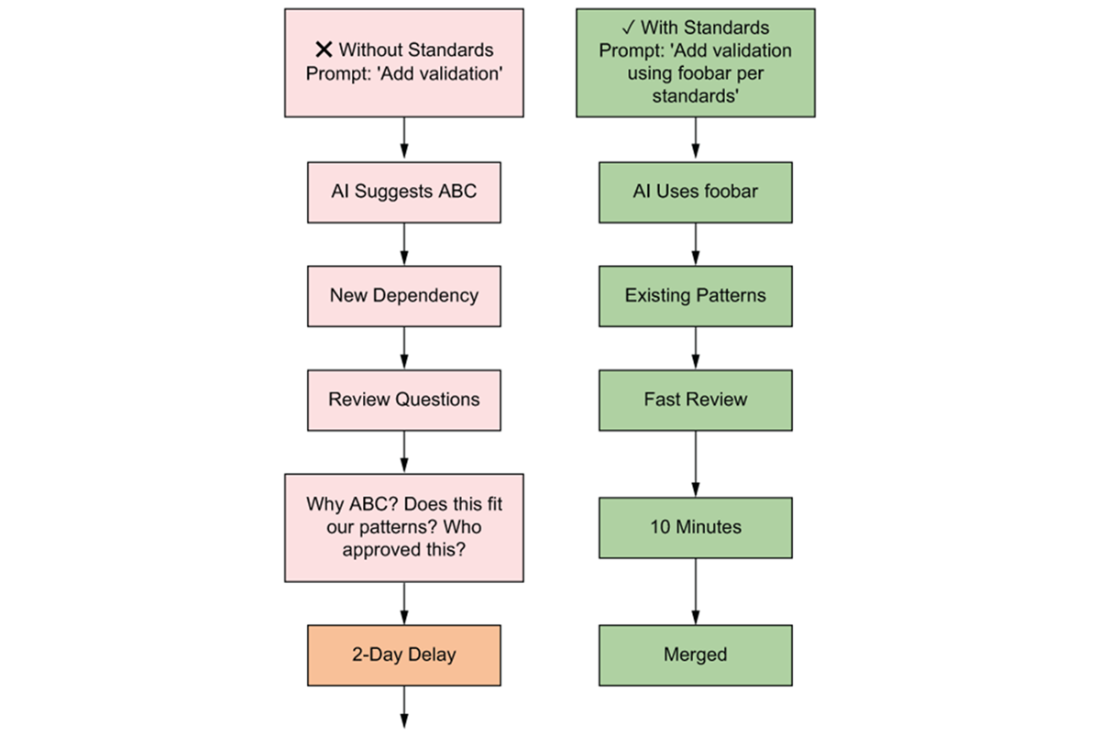
A figure illustrates standard work filtering AI output to protect flow and prevent later rework. section 3.4.3
