TNIK (TRAF2- and NCK-interacting kinase) is a candidate therapeutic target in idiopathic pulmonary fibrosis. It participates in inflammatory and fibrotic signaling downstream of TNF-alpha and Wnt, while genetic and expression evidence connects it with fibrotic disease. section 13.3.1
Target-selection evidence combined biological relevance with practical drug-discovery considerations:
- Few publications linked TNIK to pulmonary fibrosis, and no selective small-molecule inhibitors existed. section 13.3.1
- The kinase domain appeared amenable to small-molecule inhibition because its ATP-binding pocket was sufficiently distinct to support selectivity. section 13.3.1
- Human experts made the final selection after computational scoring, considering strategic fit and technical feasibility. section 13.3.1
Evidence in pulmonary fibrosis
TNIK was upregulated in idiopathic pulmonary fibrosis patient tissue, and variants near the TNIK locus were associated with fibrotic diseases. These findings complemented pathway and network analyses that highlighted chronic inflammation and extracellular-matrix remodeling. section 13.3.1
Figure 13.7 The four stages of the rentosertib program. Multi-omics data and literature flow through PandaOmics to a scored target list; Chemistry42 generates and optimizes candidates against a multi-objective reward; experimental readouts feed back to refine the models; clinical development follows. Sections 13.3.1 through 13.3.4 walk through each stage.
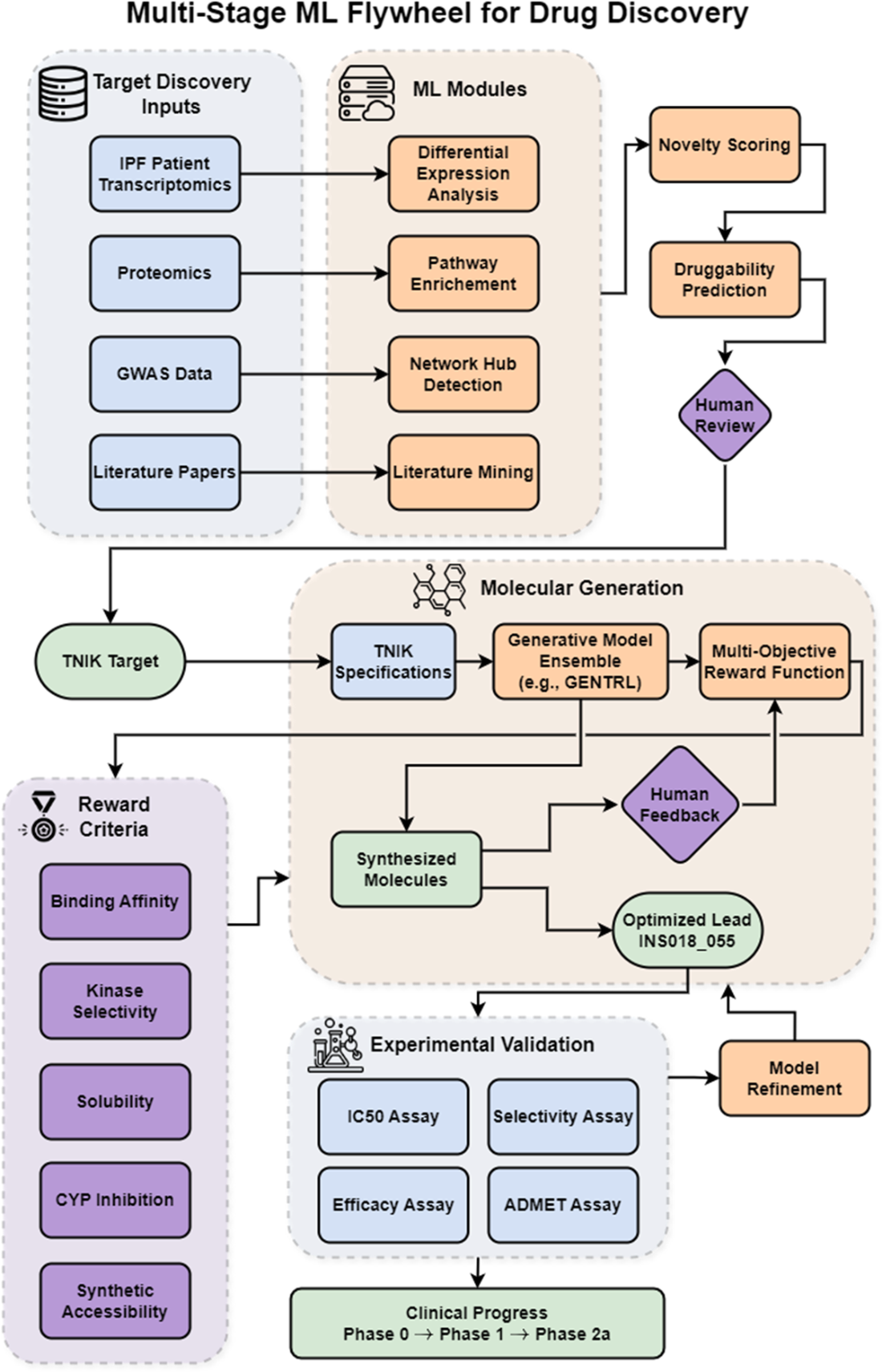
Places TNIK at the target-validation stage before de novo molecular design, optimization, experimental feedback, and clinical development. section 13.3.1
