Gambling monetizes assets through chance, gut feelings, or perceived signs rather than structured analysis. Cognitive bias can make random events look meaningful and encourage impulsive buying or selling. section 1.3
Distinguish gambling from more structured approaches:
- Investing pursues long-term wealth through critical thinking, research, and disciplined decisions. section 1.3 section 4.6
- Trading targets short-term price fluctuations and carries greater risk because decisions occur more frequently. section 1.3
- Gambling begins when feelings outweigh critical thinking, research, and a defensible investment thesis. section 4.0
From impulse to process
Treating a market pattern as a sign of a life-changing investment exemplifies gambling. A more disciplined process researches an idea, plans the decision, executes it, reflects on results, and adjusts. section 1.3 section 4.0
Figure 1.1 A survey of the tools and techniques covered in this book, including pointers to the chapters that focus on the relevant domains
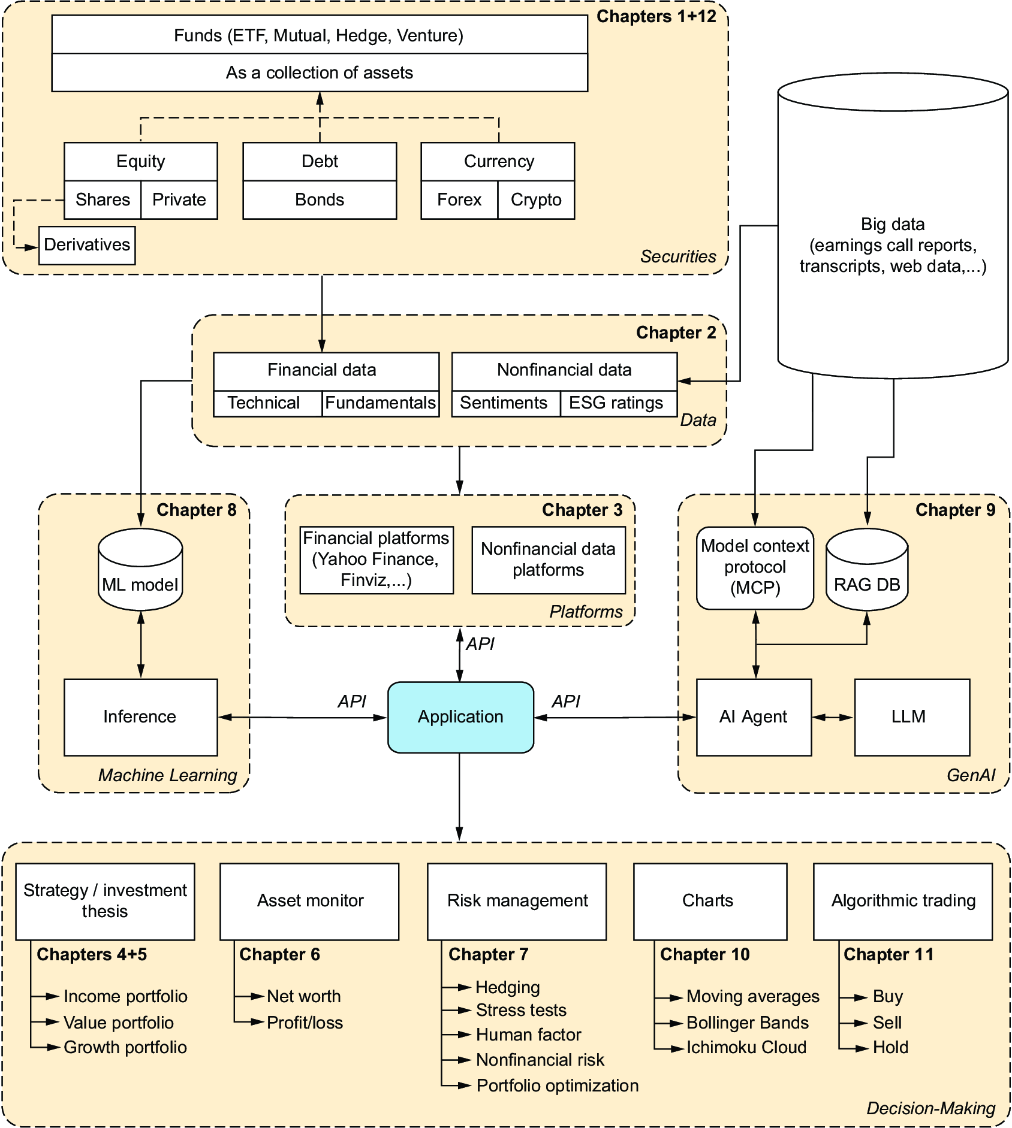
Use the survey of financial tools and analytical techniques to locate methods that replace gambling-like speculation with evidence-based decision support. section 1.3
