Gateway Load Balancing Protocol (GLBP) is a Cisco-proprietary first hop redundancy protocol. It supplies a redundant default gateway while distributing traffic among routers on one subnet, using per-host load balancing. section 19.2.3 section 19.0
GLBP organizes gateway redundancy and forwarding as follows:
- Elects one Active Virtual Gateway (AVG), which assigns up to four Active Virtual Forwarders (AVFs). The AVG can also forward traffic. section 19.2.3
- Uses one virtual IP address but gives each AVF a unique virtual MAC address. section 19.2.3
- Answers ARP requests with AVF virtual MAC addresses in round-robin order, distributing hosts between forwarders. section 19.2.3
- Uses multicast 224.0.0.102 for hello messages; AVG preemption is disabled by default, while AVF preemption is enabled. section 19.2.3
Two-router LAN
With R1 as the AVG and R2 as another AVF on 10.0.0.0/24, the AVG assigns half the hosts to R1’s virtual MAC and the remainder to R2’s. Both hosts use the same virtual gateway IP, 10.0.0.1. section 19.2.3
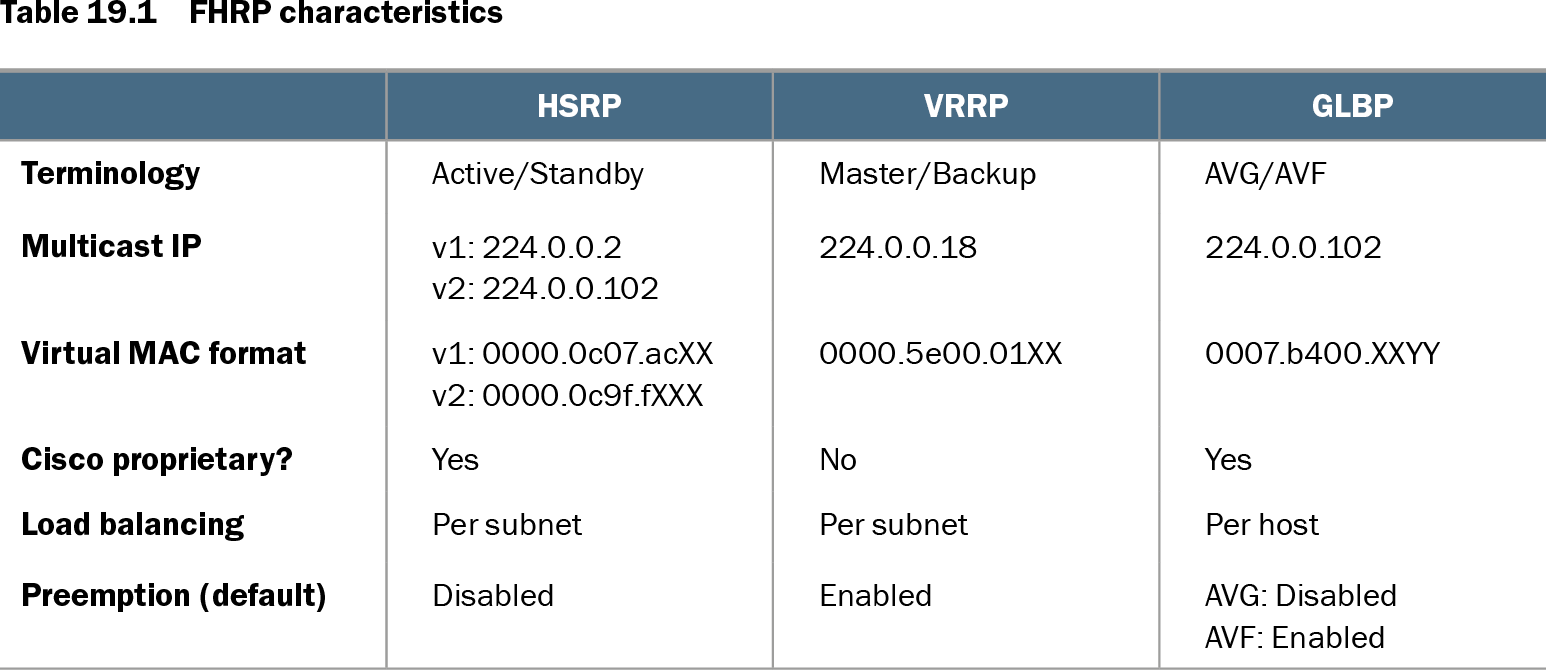
Table 19.1 FHRP characteristics (view table figure)
| HSRP |
VRRP |
GLBP |
|
|---|---|---|---|
| Terminology |
Active/Standby |
Master/Backup |
AVG/AVF |
| Multicast IP |
v1: 224.0.0.2 v2: 224.0.0.102 |
224.0.0.18 |
224.0.0.102 |
| Virtual MAC format |
v1: 0000.0c07.acXX v2: 0000.0c9f.fXXX |
0000.5e00.01XX |
0007.b400.XXYY |
| Cisco proprietary? |
Yes |
No |
Yes |
| Load balancing |
Per subnet |
Per subnet |
Per host |
| Preemption (default) |
Disabled |
Enabled |
AVG: Disabled AVF: Enabled |
Compare GLBP with HSRP and VRRP by terminology, multicast address, virtual MAC format, ownership, load-balancing scope, and preemption defaults. section 19.2