A generic subdomain has extremely low business differentiation potential. It represents utility IT: functionality that is broadly standardized rather than a source of competitive advantage. Classify it alongside core and supporting subdomains by considering business differentiation and model complexity. section 10.2 section 10.5
Use the classification to guide strategic choices:
- Prefer SaaS, open-source, or off-the-shelf solutions where they meet the need, instead of investing scarce internal capacity in commodity functionality. section 10.3.9 section 10.5
- Place the subdomain on a Core Domain Chart with business differentiation and model complexity, then discuss the result collaboratively with business, product, technology, and domain experts. section 10.2 section 10.5
- Revisit the classification over time because a subdomain can move between generic, supporting, and core as its strategic importance changes. section 10.5
When a generic capability becomes strategic
Slack began as an internal chat system for Tiny Speck’s video game project. After the project failed, the chat system became a product. This black swan core pattern shows why an apparently generic capability may occasionally justify an in-house option when rare future differentiation seems plausible. section 10.3.9
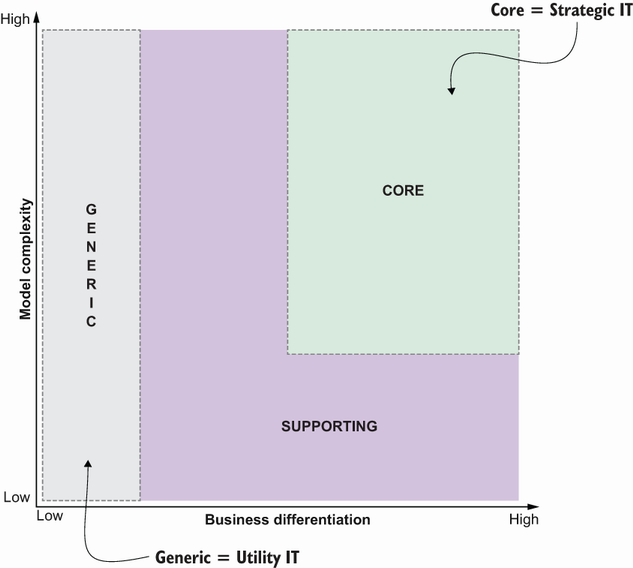
Use the blank Core Domain Chart to compare subdomains by differentiation and complexity and align investment decisions. section 10.2
