A GitHub-hosted runner provides the managed runtime for a GitHub Actions job: it executes job steps, returns outcomes and logs, and can upload artifacts or cache data. GitHub maintains the operating system, runner software, and preinstalled tools, including security updates, so workflows can start without operating runner infrastructure. section 5.0 section 5.4
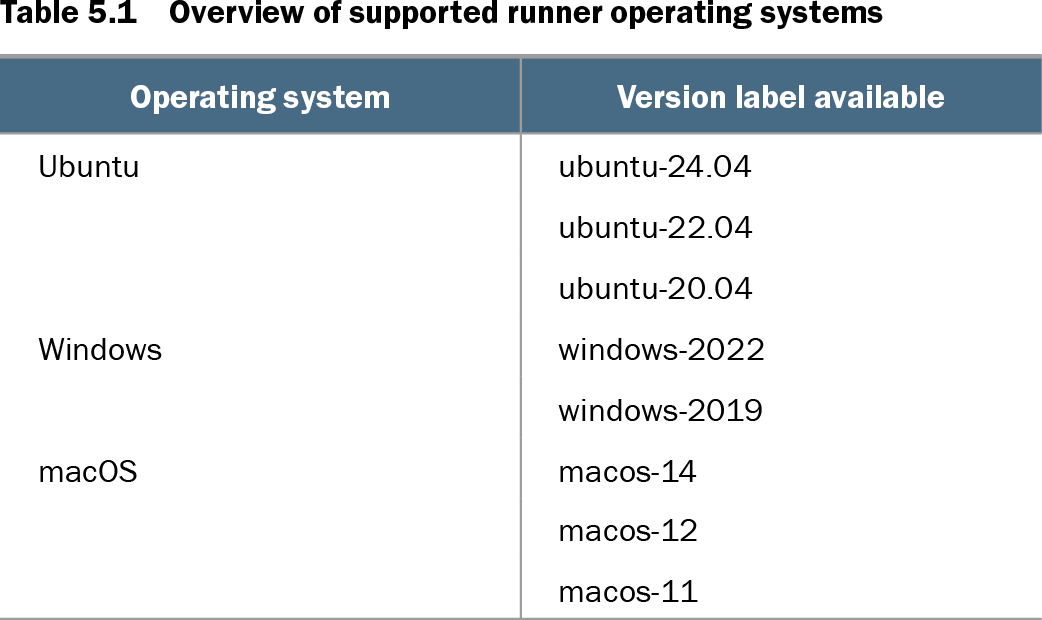
Select a hosted environment with a runner label such as ubuntu-latest, windows-latest, or macos-latest, or use an operating-system version label when a workflow depends on a particular version. The latest labels can change meaning; image rollouts, deprecation notices, and the exact image version are visible through runner-image information and job logs. section 5.5 section 5.4
Choose and govern hosted runners with these constraints in mind:
- Use Linux, Windows, or macOS according to the workflow’s required shell, tools, and platform behavior; default hardware differs by operating system. section 5.16 section 5.9
- Budget for job duration: hosted runners are billed by minutes rounded up, while Windows consumes minutes at twice the Linux rate and macOS at ten times the rate. section 5.16 section 1.4.4
- Use larger hosted runners when CPU- or RAM-intensive jobs exceed default capacity, where available. section 5.16 section 5.9
- Use self-hosted runners when a required hosting region or data residency cannot be met by GitHub-hosted runners. section 5.9 section 1.4.2
Private Azure connectivity
GitHub can host Linux or Windows runners inside an Azure virtual network you configure. Link a runner group to the prepared network and its inbound and outbound rules so jobs can reach private resources while GitHub continues managing the virtual machines and installed software. section 5.12
Table 5.1 Overview of supported runner operating systems (view table figure)
| Operating system |
Version label available |
|---|---|
| Ubuntu |
ubuntu-24.04 |
| ubuntu-22.04 |
|
| ubuntu-20.04 |
|
| Windows |
windows-2022 |
| windows-2019 |
|
| macOS |
macos-14 |
| macos-12 |
|
| macos-11 |
Compare the available Ubuntu, Windows, and macOS version labels before pinning a workflow to a specific hosted image. section 5.5