A growth strategy coordinates expansion through markets, customers, products, services, or capabilities. It helps reveal where architecture may limit growth and where modernization can support it. section 3.1.2
Four broad strategies combine existing or new products with existing or new markets:
- Market penetration increases share in existing markets by improving existing products and services. section 3.4
- Market development adapts existing products and services for new markets. section 3.2.3
- Product development builds and develops products and services for new markets. section 3.4
- Diversification builds new products for new markets. section 3.4
Growth strategies can coexist within one organization. Ansoff’s Matrix is best used as a conversation starter, not as a rigid classification, while architecture and team design respond to the capabilities each strategy requires. section 3.2 section 3.2.3
Travel refunds during the pandemic
A European travel company handled small refund volumes manually with spreadsheets. During the pandemic, refunds increased by orders of magnitude, exposing architecture and process limits that had previously remained acceptable. section 3.2.3
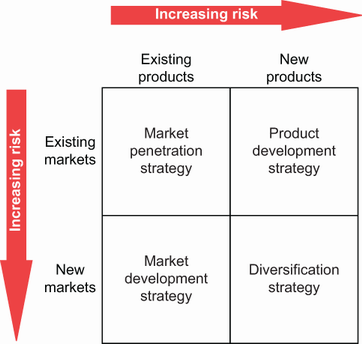
Use Ansoff’s Matrix to map whether growth relies on existing or new products and markets, then discuss the modernization implications. section 3.2
