Hedging is a risk-management technique that offsets potential losses by taking an opposing position in a related asset. Like insurance, it can reduce the effect of a severe downturn, but it also sacrifices some potential gains and cannot remove risk entirely. section 1.4 section 7.4
The practical mindset resembles defensive programming: assume something may fail, measure the exposure, and prepare for an adverse outcome rather than trusting favorable market expectations. section 7.4
Derivatives provide several ways to construct a hedge:
- Options: buy a put to protect a stock position against price declines. section 7.4.1
- Futures: lock in a future buying or selling price, reducing exposure to adverse price movements. section 7.4.1
- Swaps: exchange cash flows or currencies to reduce interest-rate or foreign-exchange risk. section 7.4.1
Protecting a stock position with a put
Pedro owns ACME stock bought at $100 per share before an earnings call. He buys a put allowing him to sell at $95. If ACME remains above $95, the option functions like an insurance premium; if it falls below $95, the put limits his selling price and reduces the loss. section 7.4.1
Figure 1.4 Comparison of returns of stocks, bonds, and cryptocurrency (generated by ChatGPT)
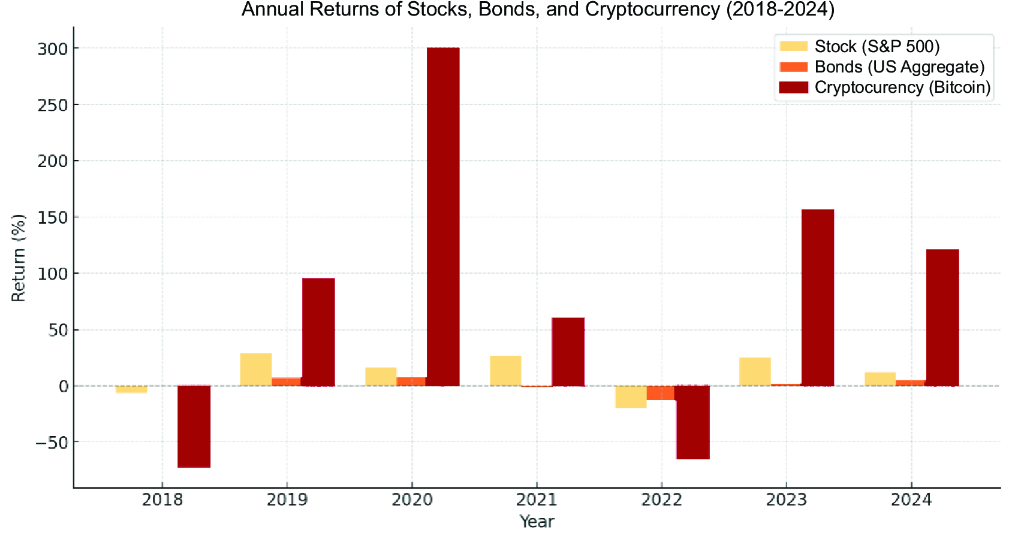
Compare stock, bond, and cryptocurrency returns before selecting assets solely by past performance; hedging addresses the downside of that choice. section 1.4
