Hot Standby Router Protocol (HSRP) is a Cisco-proprietary first hop redundancy protocol. It lets multiple Cisco routers present one virtual default gateway to hosts, so a standby router can forward traffic automatically when the active router fails. section 19.2.1 section 19.0
Key behavior includes:
- Elects one active router and one or more standby routers; the active router forwards traffic for the virtual IP address. section 19.2.1
- Uses multicast hello messages to maintain neighbor relationships and detect an active-router failure. section 19.4
- Keeps the virtual IP and virtual MAC unchanged during failover, making the transition transparent to end hosts. section 19.4
- Disables preemption by default, so a recovered router does not automatically retake the active role unless preemption is configured. section 19.2.1
- Supports per-subnet load balancing by making different routers active for different subnets. section 19.4
Basic HSRPv2 configuration
Configure both routers with the same virtual IP and group. Give R1 the higher priority and enable preemption: R1 uses 10.0.0.2, R2 uses 10.0.0.3, and both share virtual IP 10.0.0.1. The resulting states are R1 Active with priority 105 and R2 Standby with priority 100. HSRPv2 uses multicast 224.0.0.102 and a virtual MAC beginning 0000.0c9f.f. section 19.3 section 19.2
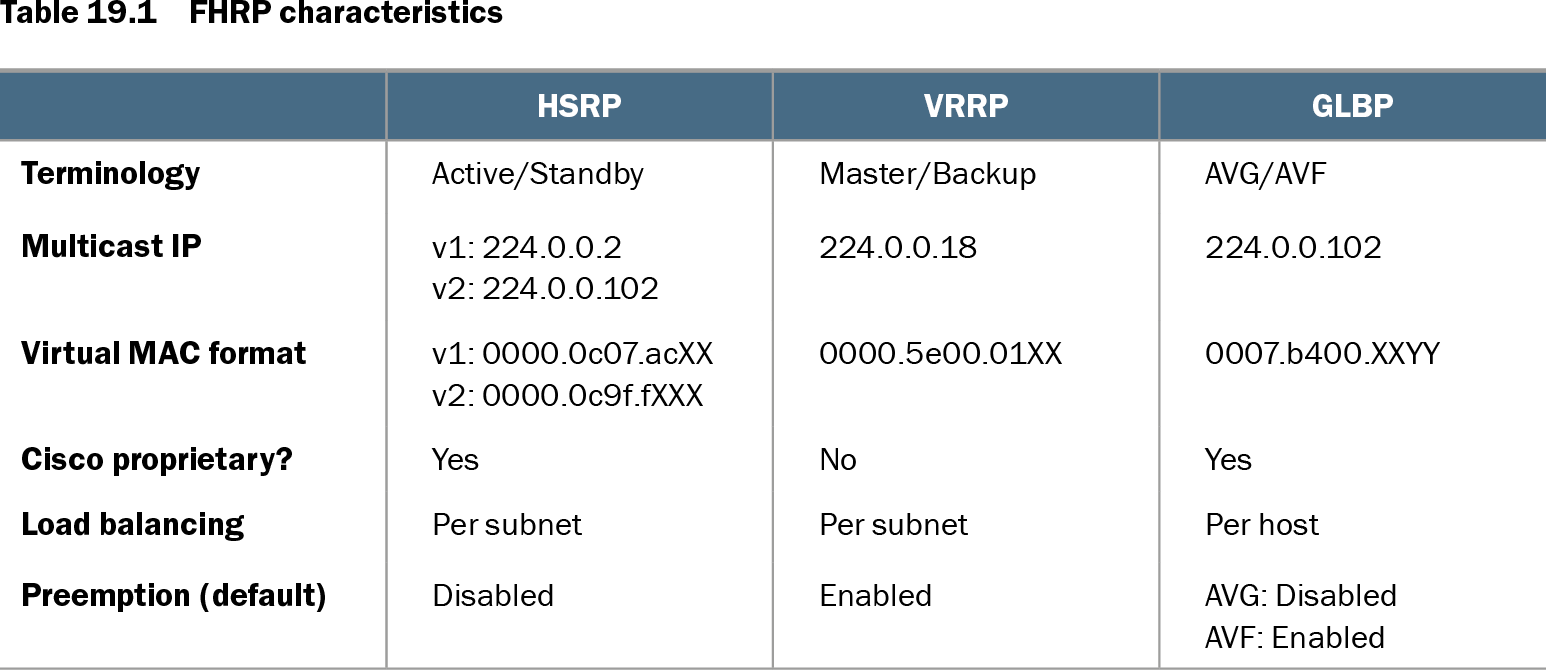
Table 19.1 FHRP characteristics (view table figure)
| HSRP |
VRRP |
GLBP |
|
|---|---|---|---|
| Terminology |
Active/Standby |
Master/Backup |
AVG/AVF |
| Multicast IP |
v1: 224.0.0.2 v2: 224.0.0.102 |
224.0.0.18 |
224.0.0.102 |
| Virtual MAC format |
v1: 0000.0c07.acXX v2: 0000.0c9f.fXXX |
0000.5e00.01XX |
0007.b400.XXYY |
| Cisco proprietary? |
Yes |
No |
Yes |
| Load balancing |
Per subnet |
Per subnet |
Per host |
| Preemption (default) |
Disabled |
Enabled |
AVG: Disabled AVF: Enabled |
Compare HSRP with VRRP and GLBP by terminology, multicast address, virtual MAC format, vendor status, load-balancing method, and default preemption behavior. section 19.2