Virtual Router Redundancy Protocol (VRRP) is an industry-standard first hop redundancy protocol. Multiple routers provide a shared virtual default gateway, so a router failure can occur without changing the gateway used by LAN hosts. section 19.2.2 section 19.0
Key VRRP characteristics include:
- Elects one master router and designates other routers as backup routers. section 19.2.2
- Enables preemption by default, allowing the appropriate higher-priority router to retake the master role. section 19.2.2
- Uses multicast address 224.0.0.18 for VRRP hello messages. section 19.2.2
- Uses virtual MAC format 0000.5e00.01XX, where XX identifies the VRRP group. section 19.2.2
- Supports load balancing across subnets, but not efficient load balancing within one subnet. section 19.2.2
Vendor interoperability
When a Cisco router and a Juniper router must provide a redundant default gateway for one LAN, they use VRRP because VRRP is not vendor-proprietary. section 19.2.2
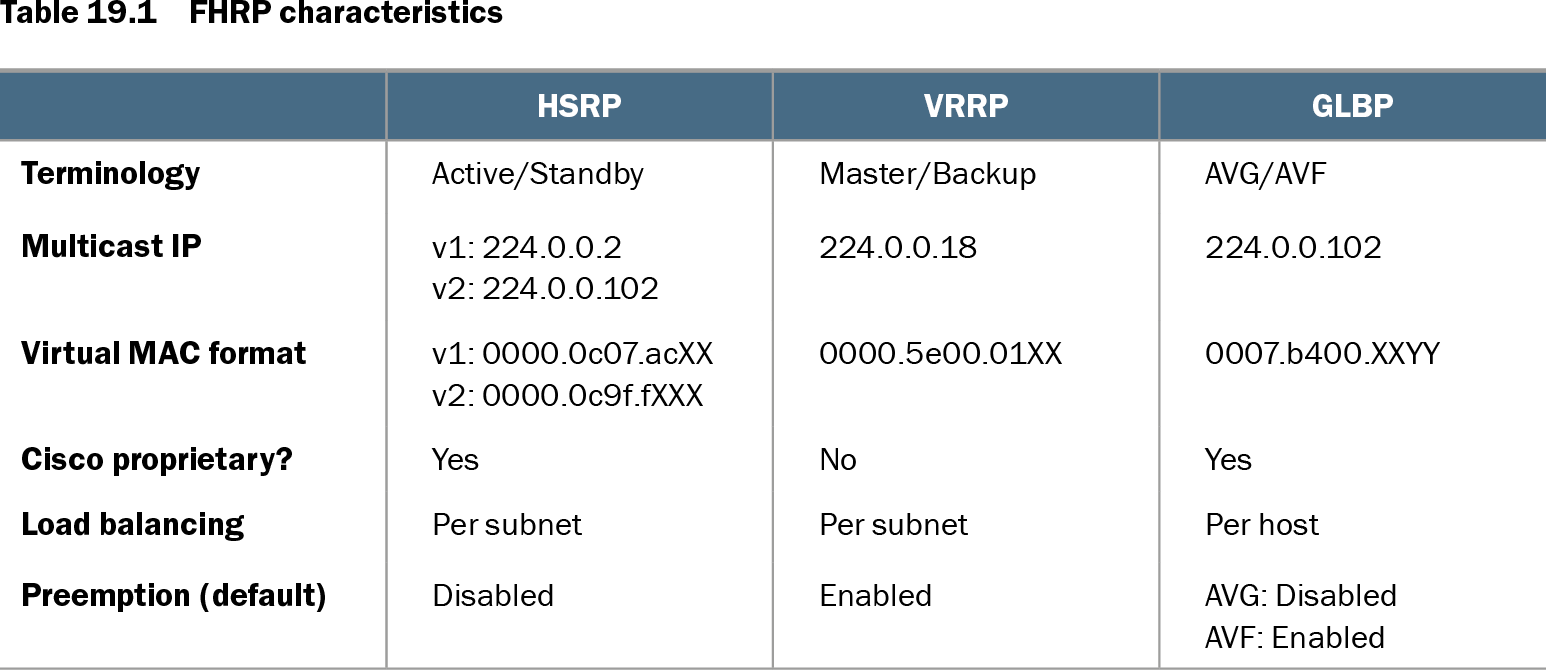
Table 19.1 FHRP characteristics (view table figure)
| HSRP |
VRRP |
GLBP |
|
|---|---|---|---|
| Terminology |
Active/Standby |
Master/Backup |
AVG/AVF |
| Multicast IP |
v1: 224.0.0.2 v2: 224.0.0.102 |
224.0.0.18 |
224.0.0.102 |
| Virtual MAC format |
v1: 0000.0c07.acXX v2: 0000.0c9f.fXXX |
0000.5e00.01XX |
0007.b400.XXYY |
| Cisco proprietary? |
Yes |
No |
Yes |
| Load balancing |
Per subnet |
Per subnet |
Per host |
| Preemption (default) |
Disabled |
Enabled |
AVG: Disabled AVF: Enabled |
Compare VRRP with HSRP and GLBP by terminology, multicast address, virtual MAC format, vendor status, load balancing, and preemption. section 19.2