A hotfix is an urgent, targeted change released to restore production functionality. In infrastructure, implement it as code (IaC), identify it with a standardized emergency commit message, and use the delivery pipeline to test and deploy it quickly. section 7.1.4
Use a hotfix workflow that preserves speed without losing operational control:
- Isolate the corrective change and keep its scope narrow. section 7.1.4
- Encode the fix in IaC, validate it with automated pipeline tests, and standardize the emergency commit marker. section 7.1.4
- Bypass manual approval only for the emergency path; retain review for major or new changes. section 7.1.4
- For a module hotfix, release a new fixed version or temporarily reference a branch, then reconcile the main module afterward. section 7.1.5
Restoring a stopped application
When an application stops running on a server, encode the restoration in IaC, mark the commit as an emergency, and let the tested pipeline deploy it without waiting for manual approval. A module-based fix can instead be isolated in a new version or branch. section 7.1.4 section 7.1.5
Figure 7.7 A standard or emergency change can have an initial peer review before your delivery pipeline automatically pushes it to production.
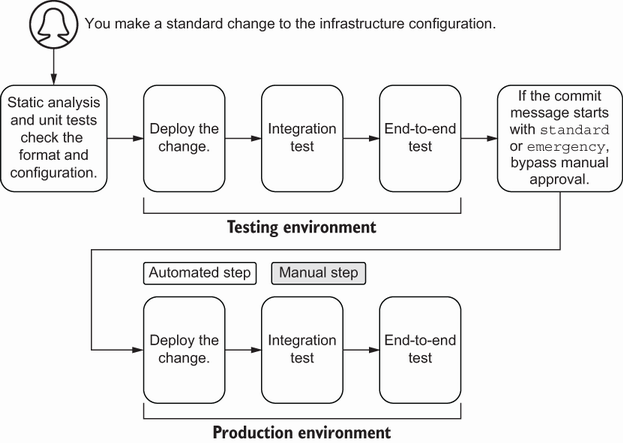
Use the delivery-flow figure to compare initial peer review, automated testing, approval bypass, and production deployment for standard and emergency changes. section 7.1.4
