Technical documentation records how a product or software system works so people can find reliable answers. Developers use it to understand a codebase and maintain it; project managers, QA engineers, and other stakeholders use it to understand design and functionality. Unlike a start-to-finish training guide, product documentation is usually organized by feature or product so readers can look up a specific question. section 5.0 section 2.1.5
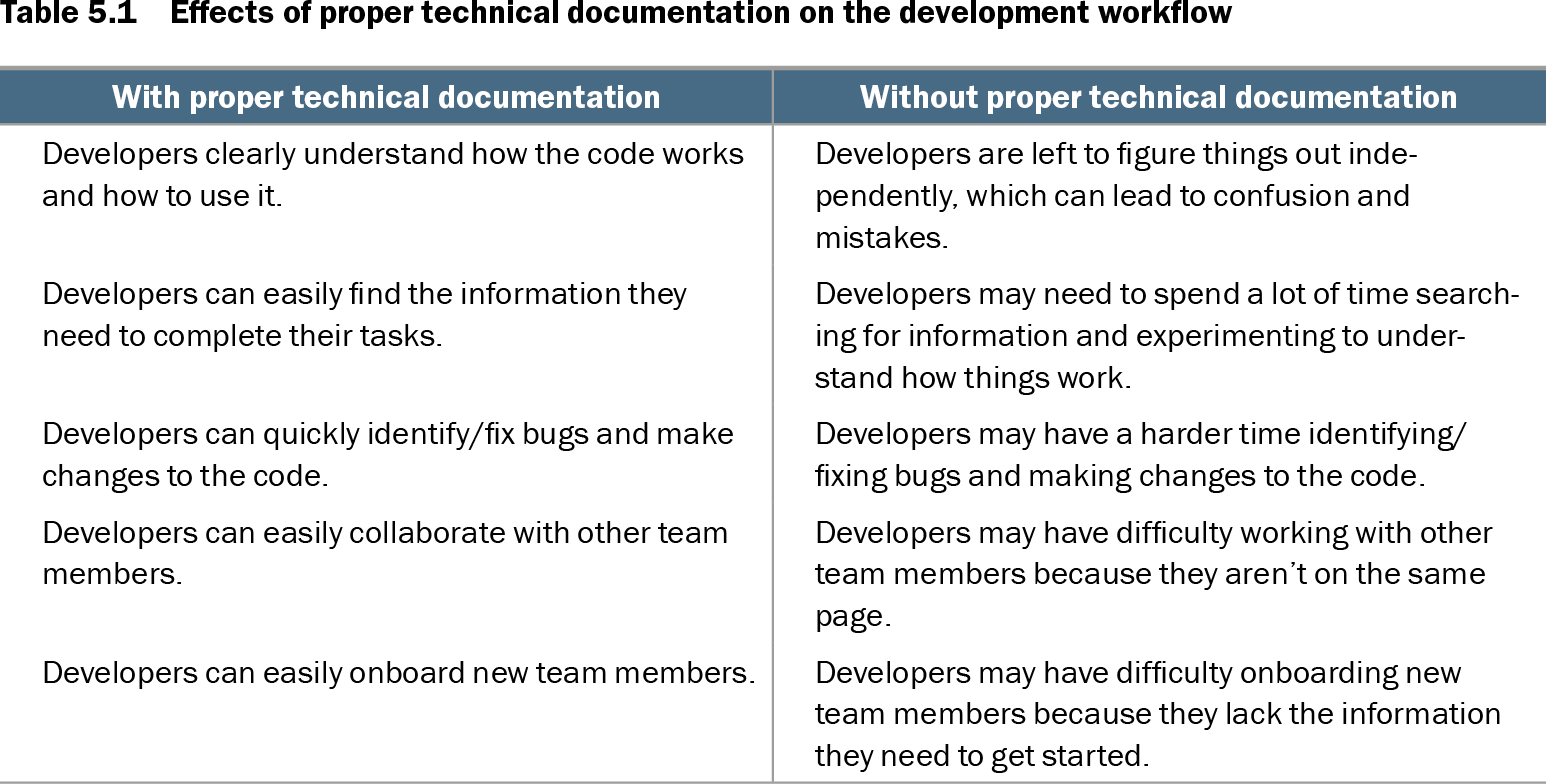
Table 5.1 Effects of proper technical documentation on the development workflow (view table figure)
| With proper technical documentation |
Without proper technical documentation |
|---|---|
| Developers clearly understand how the code works and how to use it. |
Developers are left to figure things out independently, which can lead to confusion and mistakes. |
| Developers can easily find the information they need to complete their tasks. |
Developers may need to spend a lot of time searching for information and experimenting to understand how things work. |
| Developers can quickly identify/fix bugs and make changes to the code. |
Developers may have a harder time identifying/fixing bugs and making changes to the code. |
| Developers can easily collaborate with other team members. |
Developers may have difficulty working with other team members because they aren’t on the same page. |
| Developers can easily onboard new team members. |
Developers may have difficulty onboarding new team members because they lack the information they need to get started. |
Compare everyday development work with and without documentation: finding answers, fixing bugs, collaborating, and onboarding become harder when each developer must figure things out independently. section 5.1
Give the team a useful reference, not just a collection of notes:
- Document coding standards, development workflow, and deployment processes. Make them easy for the team to access, and invite feedback as practices change. section 5.1.1
- Include onboarding essentials: the project architecture, coding standards, tools, communication channels, and steps for reviewing, testing, and deploying code. section 5.1.3
- Break information into small, searchable chunks with headings, lists, diagrams, and examples. Write plainly so a busy reader can scan for the answer. section 5.2.1
- Keep instructions specific but short. Use a style guide for consistent wording and formatting, then proofread before publishing. section 5.3.3 section 5.3.4 section 5.5.3
When answers live in conversations
Without product documentation, users of one developer platform repeatedly asked its small team about features through Discord. A central reference gave users a place to find answers and helped the team avoid rewriting the same responses. In another workplace, teams found overlapping APIs; they compiled them, merged similar ones, and assigned responsibility for updating API documentation when changes occurred. section 5.5.1
Treat documentation as ongoing work. Record the reasons and tradeoffs behind technical decisions so they are not lost when the code changes or people leave. Regularly test instructions, seek feedback, and publish updates as the codebase evolves. Outdated guidance can cause the confusion and mistakes it was meant to prevent. section 5.1.2 section 5.4