Engineer mode is the practice of building a correct mental model before generating code. Step back from individual functions and trace how the system works as a whole, such as a request moving from a user click to the database. Coder mode leaves merged code; engineer mode leaves an explanation you could sketch for a teammate. section 1.2
AI makes syntax, boilerplate, API calls, and single-file implementation cheap. It does not replace the judgment needed to understand connections between files, predict change impact, or weigh design trade-offs. That architectural work remains the scarce part of development. section 1.2.1
Use engineer mode to turn AI from a code generator into an analytical partner:
- Ask “Explain X to me” before asking AI to build X. section 1.3.2
- Request a one-sentence explanation, a diagram, and an alternative approach with trade-offs. section 1.6
- Challenge confident answers, verify claims, and treat mistakes as practice for architectural judgment. section 1.6
- Prefer durable understanding over a working feature that creates comprehension debt. section 1.3.2
Figure 1.4 A developer stands at a fork. One path descends to "coder mode," where they say, "build X for me," outsource understanding, and find the ground crumbling. The other path climbs to "engineer mode," where they say, "explain X to me," and build a mental model with each step. The same person, using the same AI, gets two different outcomes depending on which mode they choose.
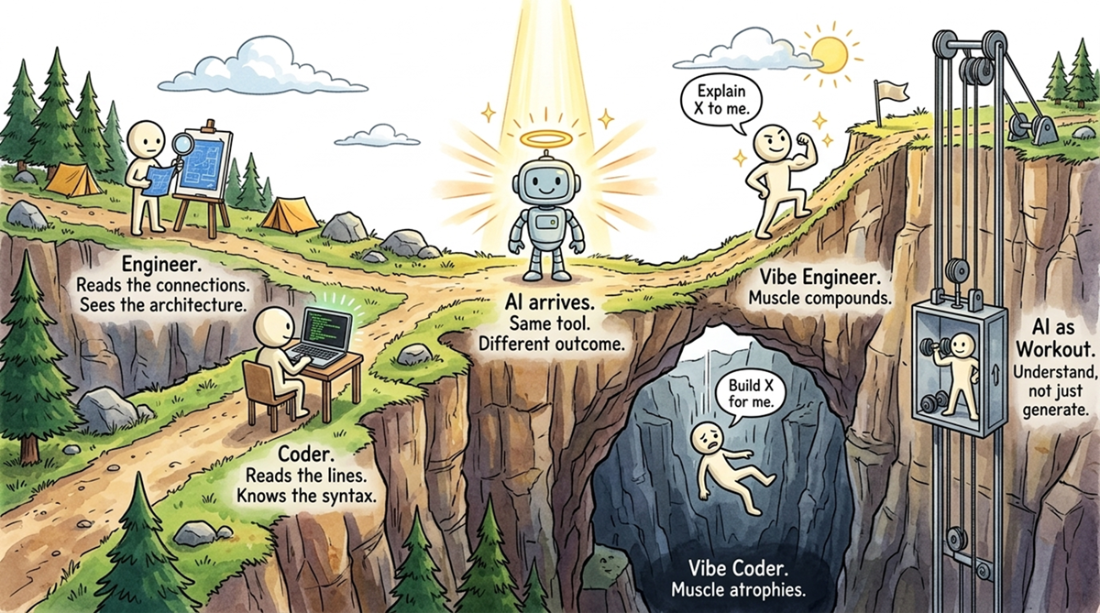
Compare the two prompts and outcomes: “Build X for me” outsources understanding, while “Explain X to me” develops a mental model. section 1.3.2
