Artificial intelligence
Artificial intelligence is the field of computing concerned with creating systems that perform tasks associated with intelligence, such as learning, reasoning, perception, and decision-making.

Inside AI
Artificial intelligence is the field of computational methods that perform tasks associated with human intelligence, such as learning, reasoning, perception, and decision-making.
- How it is used
- Frames AI as a tool for business and human needs, with emphasis on realistic project goals and risk.
- How deep it goes
- Explains learning approaches and project considerations through examples, while assessing limitations and proposed improvements rather than providing implementation details.
- Examples
- Illustrates AI with labeled fruit recognition, fraud prevention, medical applications, and robotic pizza production.
- What you can do after
- Evaluates AI opportunities against practical limitations, risks, and project requirements.

WordPress Power Toolkit: Harness AI to build next-level websites
Artificial intelligence is the field of building computational systems that perform tasks associated with human intelligence, such as reasoning, language understanding, and content generation.
- How it is used
- Supports website creation and improvement through research, content work, visual ideas, and design critique.
- How deep it goes
- Explains natural-language prompting, revision, and four AI domains in practical terms; does not develop their technical internals.
- Examples
- Uses website-assistant roles and a recipe-site home-page critique to make AI assistance concrete.
- What you can do after
- Apply it via AI tools to request website help, refine responses, and judge what to use.

AI for Everyday IT
Artificial intelligence is the field of creating computational systems that perform tasks associated with human intelligence, such as perception, reasoning, language processing, and decision-making.
- How it is used
- Supports IT professionals in applying AI to routine technical, communication, and management work.
- How deep it goes
- Defines basic AI terminology and develops practical applications through workplace examples rather than model internals.
- Examples
- Uses suspicious email headers, SQL query construction, and outage-report writing as workplace examples.
- What you can do after
- Apply it via Microsoft 365 Copilot to examine email source information for signs of phishing.
Read how AI for Everyday IT explains artificial intelligence →
Machines that Think
The field of creating computational systems that perform tasks associated with human intelligence.
- How it is used
- Frames artificial intelligence as both a question about machine understanding and a practical issue for organizational judgment.
- How deep it goes
- Surveys historical approaches and philosophical arguments, then weighs modern capabilities against their limitations without implementation detail.
- Examples
- Uses medical explanations and AlphaFold protein-structure predictions to contrast fluent output with applications in scientific exploration.
- What you can do after
- Evaluate and understand AI capabilities in context, distinguishing observable performance from claims of understanding and considering appropriate oversight.
Read how Machines that Think explains artificial intelligence →

Effective Data Analysis
Artificial intelligence is the field of creating computational systems that perform tasks associated with human intelligence, such as reasoning, perception, language use, and generation.
- How it is used
- Situates AI in analytics workflows and organizational decision-making, with attention to efficiency and responsible use.
- How deep it goes
- Defines AI and generative AI and discusses practical risks without detailing model implementation.
- Examples
- Uses support-ticket categorization and a machine-learning hiring system to illustrate automation and potential bias.
- What you can do after
- Evaluate AI opportunities and risks in analytical and organizational work.
Read how Effective Data Analysis explains artificial intelligence →
Learn AI Data Engineering
Artificial intelligence is the field of creating computational systems that perform tasks associated with human intelligence, such as reasoning, learning, perception, and decision-making.
- How it is used
- Applies AI to automate and enrich data-engineering workflows while keeping humans responsible for judgment and validation.
- How deep it goes
- Explains applied selection, embedding, validation, costs, and fallbacks rather than model architectures or AI theory.
- Examples
- Uses sentiment-labelled articles, nested JSON, messy subscription codes, entity resolution, time transformations, and product-page extraction.
- What you can do after
- Apply it via APIs and coding companions to enrich pipelines, extract structured data, and validate AI-generated results.
Read how Learn AI Data Engineering explains artificial intelligence →

Data-Driven Cybersecurity
Artificial intelligence is the field of computing concerned with building systems that perform tasks commonly associated with human intelligence, such as inference and generation.
- How it is used
- Uses AI to detect threats, anticipate risks, support response, and turn security observations into decisions.
- How deep it goes
- Defines AI, distinguishes traditional from generative approaches, and outlines a security workflow without a deep dive into AI or statistics.
- Examples
- Illustrates AI through a healthcare threat-detection investment, automated security responses, and a synthetic-data analysis pipeline.
- What you can do after
- Evaluate/understand AI-assisted security results by comparing detection and response gains with false alarms, data quality, and human oversight.
Read how Data-Driven Cybersecurity explains artificial intelligence →

"Looks Good to Me"
The field of computing concerned with systems that perform tasks requiring capabilities associated with human intelligence.
- How it is used
- Deploys AI as a fast, consistent first-pass assistant while humans make final code-review decisions.
- How deep it goes
- Explains benefits, limitations, and adoption guidance but stops short of specifying a particular implementation or evaluation protocol.
- Examples
- Uses AICodeReview, CodeRabbit, PR feedback, security warnings, recurring code smells, and hallucinated code fixes as examples.
- What you can do after
- Apply AI-assisted reviews cautiously, validate findings, preserve independent review, and focus human effort on higher-stakes concerns.
Read how "Looks Good to Me" explains artificial intelligence →

Deep Learning with R, Third Edition
Artificial intelligence is the field of building systems that perform tasks associated with human intelligence, such as reasoning, perception, language use, and decision-making.
- How it is used
- Frames AI as the broad field encompassing both rule-based systems and learning approaches.
- How deep it goes
- Defines AI, distinguishes its major approaches, and surveys historical cycles and future prospects.
- Examples
- Uses rule-based chess programs, question-answering chatbots, and protein-structure prediction to illustrate AI.
- What you can do after
- Evaluate and understand AI approaches and distinguish practical progress from short-term hype.
Read how Deep Learning with R, Third Edition explains artificial intelligence →
The Complete Obsolete Guide to Generative AI
The field concerned with computational systems that perform tasks associated with human intelligence, such as generating language or making inferences.
- How it is used
- Frames AI as a productivity and decision-support tool for research, business operations, investing, and hiring.
- How deep it goes
- Surveys practical applications, economic effects, and governance concerns rather than model internals or implementation steps.
- Examples
- Uses laptop research, customer-support chatbots, hiring assessments, investment platforms, and AI-driven startups as concrete cases.
- What you can do after
- Evaluate/understand where AI can accelerate work while recognizing verification, bias, transparency, and accountability requirements.
Read how The Complete Obsolete Guide to Generative AI explains artificial intelligence →

Acing the CCNA Exam: Volume 2 Advanced Networking and Security
Artificial intelligence is the field of computational methods that perform tasks requiring capabilities associated with human intelligence, such as learning, prediction, and reasoning.
- How it is used
- Frames artificial intelligence as a foundation for machine learning, predictive analysis, content generation, and network automation.
- How deep it goes
- Defines AI, ML, learning types, and predictive or generative applications, but stops short of algorithmic internals.
- Examples
- Uses labeled cat-and-dog images, traffic forecasting, predictive maintenance, capacity planning, and security threat prediction.
- What you can do after
- Evaluate AI categories and apply their network-operation use cases to forecasting, maintenance, capacity, security, and automation.

Build High Value Software Systems
Artificial intelligence is the field of computational methods that perform tasks associated with human perception, reasoning, learning, or goal-directed action.
- How it is used
- Positions AI as a developer productivity tool within the software delivery loop, rather than a substitute for alignment, validation, or feedback.
- How deep it goes
- Develops practical delegation, prompting, review, and maintenance criteria, without explaining AI model internals.
- Examples
- Uses an underspecified registration-validation prompt, a delayed feature delivery, and a faulty API cache to show downstream costs.
- What you can do after
- Practice/perform bounded AI delegation and review generated work for invented decisions, maintainability, and downstream effort.
Read how Build High Value Software Systems explains artificial intelligence →

First-Party Data Activation
Artificial intelligence is the field of computing concerned with systems that perform tasks requiring capabilities associated with human intelligence.
- How it is used
- Uses artificial intelligence to turn marketing data into predictions and recommendations and to assess first-party data solutions.
- How deep it goes
- Explains predictive feature use and marketing workflow integration at a decision-making level, while deferring deeper generative AI discussion.
- Examples
- Illustrates AI through churn prediction, product recommendations, and campaign timing based on engagement data.
- What you can do after
- Evaluate AI capabilities and model integration when choosing a first-party data solution.
Read how First-Party Data Activation explains artificial intelligence →

Lead Developer Career Guide
The field of computing concerned with systems that perform tasks requiring capabilities such as language understanding, generation, or reasoning.
- How it is used
- Applies artificial intelligence to technical documentation, development workflows, user support, and career exploration.
- How deep it goes
- Describes workplace applications and named tools but stops short of explaining AI algorithms, model internals, or implementation.
- Examples
- Names Grammarly, ChatGPT, Inkeep, and WriterAI as tools for writing, explanation, search, and documentation assistance.
- What you can do after
- Apply artificial intelligence through Grammarly, ChatGPT, Inkeep, or WriterAI for writing and documentation tasks.
Read how Lead Developer Career Guide explains artificial intelligence →
Build AI Drug Discovery Pipelines
Artificial intelligence is the field of computational methods for performing tasks that ordinarily require aspects of human intelligence, such as learning and reasoning.
- How it is used
- Frames machine learning as a computational approach for recognizing effective drug molecules from examples.
- How deep it goes
- Defines AI and machine learning, distinguishes related categories, and illustrates training and testing without supplying implementation details.
- Examples
- Uses decision trees, flocking algorithms, A* path-finding, dog photographs, and effective drug molecules as examples.
- What you can do after
- Evaluate/understand how AI, machine learning, and deep learning relate and how example-based training supports drug-molecule recognition.
Read how Build AI Drug Discovery Pipelines explains artificial intelligence →
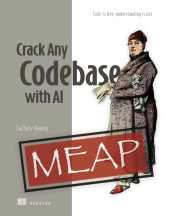
Crack Any Codebase with AI
Artificial intelligence is the field of building computational systems that perform tasks requiring capabilities such as reasoning, language understanding, or pattern recognition.
- How it is used
- Deploys AI to accelerate coding, build mental models, verify claims, and reverse-engineer product intent.
- How deep it goes
- Distinguishes prompting modes and verification practices, but stops short of explaining AI model internals.
- Examples
- Uses coder-versus-engineer mode, fabricated methods, codebase verification, and Cal.com product reconstruction as examples.
- What you can do after
- Apply AI via explanation-first prompts, verify its claims against code, and derive product understanding from implementation.
Read how Crack Any Codebase with AI explains artificial intelligence →

Deep Learning with Python, Third Edition
Computer systems that perform tasks associated with human intelligence, used here in a broad modern sense that the text argues is often closer to automation.
- How it is used
- Frames AI as the umbrella field for automating human intellectual tasks and organizing machine learning, deep learning, and other approaches.
- How deep it goes
- Defines AI historically and comparatively, but stops short of detailed implementation of individual AI methods.
- Examples
- Uses hardcoded chess programs, spreadsheets, chatbots, autonomous driving, and protein-structure prediction as examples.
- What you can do after
- Evaluate/understand whether a system belongs to AI and distinguish rule-based automation from learning-based methods.
Read how Deep Learning with Python, Third Edition explains artificial intelligence →

Troubleshooting Java, Second Edition
Artificial intelligence is the field of computing concerned with systems that perform tasks requiring capabilities associated with human intelligence.
- How it is used
- Uses AI tools to generate troubleshooting starting points and accelerate investigation of Java application problems.
- How deep it goes
- Explains prompting and diagnostic use, but does not examine AI algorithms or model internals.
- Examples
- Uses ChatGPT prompts, a legacy bug scenario, and thread-dump evidence to illustrate investigation.
- What you can do after
- Apply it via ChatGPT or similar tools to find troubleshooting starting points and interpret application behavior faster.
Read how Troubleshooting Java, Second Edition explains artificial intelligence →

AI-Powered Search
Artificial intelligence is the capability of a computer program to perform tasks that previously required human intelligence.
- How it is used
- Defines computer capabilities that support search, including matching documents, ranking relevance, and improving query understanding.
- How deep it goes
- Defines AI broadly and distinguishes machine-learning from rules-based systems, but stops short of detailed algorithmic implementation.
- Examples
- Uses self-driving cars, autonomous robots, human-like feedback, web search, product search, enterprise search, and generative AI context retrieval.
Read how AI-Powered Search explains artificial intelligence →

Grokking Statistics
The field concerned with building systems that perform tasks associated with human intelligence, such as reasoning, perception, and learning.
- How it is used
- Supports model building, statistical analysis, Python generation, and career work when used deliberately and verified.
- How deep it goes
- Distinguishes generative AI tools and practical uses but stops short of explaining model internals.
- Examples
- Uses Gemini misidentification and failed AI reverse-image search to demonstrate why verification matters.
- What you can do after
- Apply it via AI assistants for code and analysis, then verify outputs and label uncertain claims as hypotheses.
Read how Grokking Statistics explains artificial intelligence →

Data Without Labels
The field of computing concerned with creating systems that perform tasks associated with human intelligence, such as reasoning, perception, language use, and learning.
- How it is used
- Positions AI as a practical computing field for building systems that emulate intelligence and improve decisions, efficiency, and communication.
- How deep it goes
- Defines AI, traces its shift from symbolic to data-driven methods, and stops short of detailed algorithm implementation.
- Examples
- Uses self-driving cars, chatbots, translation, speech-to-text, virtual assistants, recommendation systems, and prompt-based content generation.
- What you can do after
- Apply it via Python, TensorFlow, and Keras to understand data-driven systems and evaluate practical AI applications.
Read how Data Without Labels explains artificial intelligence →

The Art of AI Product Development
Artificial intelligence is the field of computational methods that perform tasks associated with human intelligence, such as reasoning, prediction, and language understanding.
- How it is used
- Frames AI as a product capability for solving customer problems, improving operations, and creating measurable business value.
- How deep it goes
- Explains AI through product applications, probabilistic behavior, system interdependencies, opportunity selection, and safeguards rather than technical derivations.
- Examples
- Uses marketing refinement, automated support, smart search, agentic chatbots, new app-building services, and chatbot failure scenarios.
- What you can do after
- Evaluate AI opportunities, prototype suitable features, communicate limitations, and plan safeguards and iterative improvement.
Read how The Art of AI Product Development explains artificial intelligence →
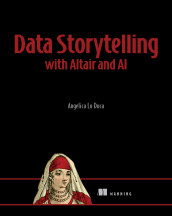
Data Storytelling with Altair and AI
Artificial intelligence is the field of computing concerned with systems that perform tasks requiring capabilities associated with human intelligence.
- How it is used
- Positions AI as the conceptual foundation for using generative tools in data storytelling.
- How deep it goes
- Defines intelligent agents and maps AI’s subfields, but stops short of detailed AI fundamentals or implementation internals.
- Examples
- Uses ChatGPT for text, DALL-E for images, and GitHub Copilot for code within data-storytelling work.
- What you can do after
- Apply it by situating generative AI tools within the wider AI hierarchy and data-storytelling workflow.
Read how Data Storytelling with Altair and AI explains artificial intelligence →

Investing for Programmers
AI is the field of creating computational systems capable of tasks associated with human intelligence, such as learning and reasoning.
- How it is used
- Uses computational analysis to generate financial-asset insights for investment and trading decisions.
- How deep it goes
- Positions AI within an investment workflow but stops short of explaining models, implementation, or model evaluation.
- Examples
- Uses securities data, financial platforms, public information, analytical methods, and an investment-process survey.
- What you can do after
- Evaluate financial information with AI-generated insights while retaining responsibility for investment decisions.
Read how Investing for Programmers explains artificial intelligence →

Grokking Machine Learning
Artificial intelligence is the field concerned with computer systems making decisions or solving problems autonomously.
- How it is used
- Frames autonomous computer decision-making as the broad category that contains machine learning.
- How deep it goes
- Defines AI in plain language, distinguishes it from machine learning, and illustrates its scope with practical applications.
- Examples
- Uses autonomous driving, route finding, patient diagnosis, movie recommendation, and car-buying decisions as examples.
- What you can do after
- Evaluate/understand how artificial intelligence differs from machine learning and recognize AI in everyday computer systems.
Read how Grokking Machine Learning explains artificial intelligence →
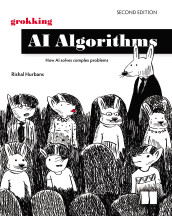
Grokking AI Algorithms, Second Edition
The field concerned with creating computational systems that perform tasks associated with human intelligence, such as reasoning, learning, and autonomous decision-making.
- How it is used
- Frames AI as a practical toolkit for solving complex problems autonomously across software, perception, language, and decision-making.
- How deep it goes
- Builds intuition about definitions, data, problem types, algorithms, and historical progression without detailing individual implementations.
- Examples
- Uses games, medical image analysis, artwork generation, autonomous driving, chatbots, and historical milestones as concrete examples.
- What you can do after
- Evaluate AI systems by their autonomous usefulness in solving complex problems rather than by one rigid definition.
Read how Grokking AI Algorithms, Second Edition explains artificial intelligence →

Fight Fraud with Machine Learning
Artificial intelligence is the field concerned with computational systems that perform tasks requiring capabilities associated with human intelligence.
- How it is used
- Frames artificial intelligence as the foundation for automated fraud detection beyond fixed rules.
- How deep it goes
- Defines artificial intelligence broadly, then explains machine learning and deep learning without descending into model internals.
- Examples
- Uses phishing emails, spam filtering, fraudulent online transactions, card payments, identity theft, and suspicious bitcoin transactions.
- What you can do after
- Build fraud-detection systems by combining fixed rules, classical machine learning, and deep learning models.
Read how Fight Fraud with Machine Learning explains artificial intelligence →

Authorization in Action
Artificial intelligence is the field of computing concerned with systems that perform tasks requiring capabilities associated with human intelligence, such as pattern analysis and language processing.
- How it is used
- Supports authorization-policy design, runtime analysis, and governance without replacing deterministic enforcement.
- How deep it goes
- Explains alternative policy expressions and runtime comparison, but stops short of making authorization decisions or governance judgments.
- Examples
- Uses a document-access exception and comparisons between intended policies and production decision logs.
- What you can do after
- Diagnose authorization mismatches and explore policy alternatives while retaining human control over design and governance.
Read how Authorization in Action explains artificial intelligence →

Financial AI in Practice
Artificial intelligence is the capability of computational systems to perform tasks that typically require human intelligence.
- How it is used
- Frames AI as a dual-use capability in financial fraud: institutions use it for detection and prevention, while adversaries use it to scale attacks.
- How deep it goes
- Positions AI as a fraud-defense opportunity and threat, but stops before detailing models or implementation.
- Examples
- Names AI-generated phishing emails, synthetic identities, and complex fraud schemes as adversarial uses.
- What you can do after
- Understand how AI can help protect financial systems and how adversaries can exploit it.
Read how Financial AI in Practice explains artificial intelligence →
Also covered in
- LLMs in Production
- Python Workout, Second Edition
- Claude at WorkIn early access (MEAP)
- How Large Language Models Work
- Local Image GenerationIn early access (MEAP)
- Data for All
- Understanding AIIn early access (MEAP)
- Digital Twins in Action
- Deep Learning with PyTorch, Second Edition
- Grokking AI Applications
- Generative AI in Action
- The AI Pocket Book
What to know first
- language modelA language model is a computational model that represents patterns in linguistic sequences to assign probabilities, predict, generate, or evaluate language.
- ChatGPTChatGPT is OpenAI’s conversational AI service, which lets users interact with generative AI models and related tools through natural-language prompts.
- conversational aiConversational AI is artificial intelligence that enables software systems to interpret user input and interact with users through natural-language dialogue.
- machine learningMachine learning is a field of computational methods in which systems learn patterns or relationships from data to make predictions, decisions, or other outputs.
Related concepts
- machine learningincludes · Machine learning is a field of computational methods in which systems learn patterns or relationships from data to make predictions, decisions, or other outputs.
- natural language processingincludes · Natural language processing is the field of computing concerned with computational methods for analyzing, interpreting, transforming, and generating human language in text or speech.
- code reviewuses · Code review is the systematic examination of source code or proposed changes to assess correctness, quality, risks, or conformance to requirements or standards.
- large language modelincludes · A large language model is a machine-learning model trained on extensive text data to process and generate natural language.
- dependencykind of · A dependency is a component, resource, or prerequisite that another software component or activity relies on to function, build, or proceed.
- generative modelingincludes · Generative modeling is a machine-learning approach that learns patterns or a data distribution to generate new samples resembling the data.
Questions about artificial intelligence
What is artificial intelligence?
Artificial intelligence is the field of computing concerned with creating systems that perform tasks associated with intelligence, such as learning, reasoning, perception, and decision-making.
Which Manning books explain artificial intelligence?
Inside AI, WordPress Power Toolkit: Harness AI to build next-level websites, AI for Everyday IT, Machines that Think, Effective Data Analysis, Learn AI Data Engineering, Data-Driven Cybersecurity, "Looks Good to Me" and 21 more.
What should I know before learning artificial intelligence?
Manning books that teach artificial intelligence usually introduce language model, ChatGPT, conversational ai and machine learning first.
What kinds of artificial intelligence are there?
Kinds of artificial intelligence include machine learning, natural language processing, large language model and generative modeling.
What is artificial intelligence a kind of?
Artificial intelligence is a kind of dependency. A dependency is a component, resource, or prerequisite that another software component or activity relies on to function, build, or proceed.
What is artificial intelligence also called?
Artificial intelligence is also called AI or machine intelligence.
These guides are generated from the text of Manning books by Manning's knowledge graph and link to the sections they draw on. The full books are available on liveBook and at manning.com.