Artificial intelligence (AI) is the effort to build systems that perform tasks, solve problems, or make decisions that would otherwise require human intelligence. Many AI systems use algorithms and past data to find patterns and apply them to new situations. Whether those patterns remain useful—and fair—matters as much as the system’s speed. section 8.2.2 section 12.5
The term covers several approaches, but not every automated system is AI:
- Machine learning, natural language processing, and deep learning can all contribute to AI systems that make decisions from past data. section 12.4
- Generative AI creates new content, such as text or code, from patterns in existing data. section 12.5
- Automation can also use simple predefined rules; using an automated workflow alone does not make it AI. section 8.2.2
Figure 8.4 An automated system for categorizing data can employ anything from simple rules to sophisticated machine learning algorithms.
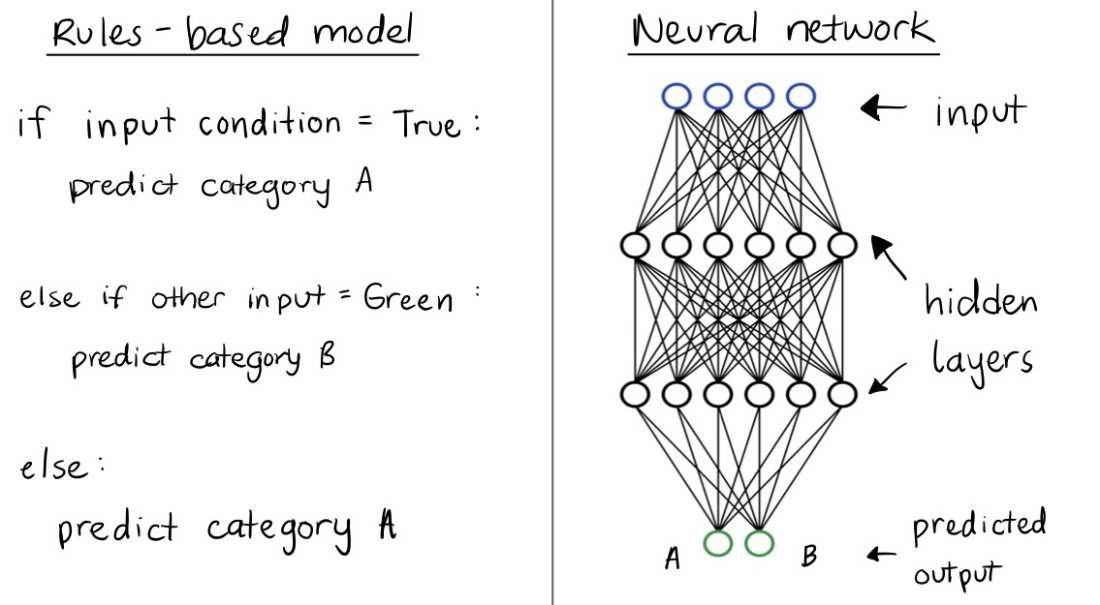
The figure places simple rules and machine learning on the same spectrum of ways to automate categorization, clarifying why automation and AI should not be treated as synonyms. section 8.2.2
Sorting customer-support tickets
A support team receives hundreds of tickets each day and assigns each a priority and a type before routing it to a team member. Automating that work could reduce repetitive triage. Before relying on the results, the team should check whether its rules or learned patterns create unintended disadvantages for groups of customers. section 8.2.2
AI can help analysts and organizations work faster, but apparent objectivity is no guarantee of an accurate or equitable decision. Systems trained on human decisions may reproduce bias; generative systems can also produce convincing misinformation. Start with the decision or workflow that needs improvement, then assess the system’s outputs, affected people, and limitations before expanding its use. section 8.2.2 section 12.4 section 12.4.2






















