Artificial intelligence (AI) can assist authorization work by translating access intent into policy alternatives and explaining complex decisions. It accelerates exploration, but people still choose rules for clarity, maintainability, and alignment with organizational authority. section 17.2.2
One request, several policy designs
For the request “Deny Kate access to this document, but don’t affect other customers,” AI might suggest a specific forbid policy, a narrower permit policy, or an unless exception. Each can produce the immediate result, but each expresses authority differently. Human judgment selects the clearest and most maintainable design. section 17.2.2
AI also helps compare intended policy behavior with runtime authorization outcomes. By analyzing decision logs alongside policies, it can surface mismatches, surprises, and edge cases for reviewers. The authorization engine remains deterministic: policy, data, and context produce the decision, while governance teams decide whether that behavior is acceptable. section 17.3 section 17.6
Figure 17.3 Design-time intent versus runtime reality. Authorization policies are created to express intent at design time, while their effects are revealed through observed decisions at runtime. Comparing these two perspectives (how policies were intended to work and how they actually behave in production) helps teams identify mismatches, unexpected outcomes, and areas that need governance review.
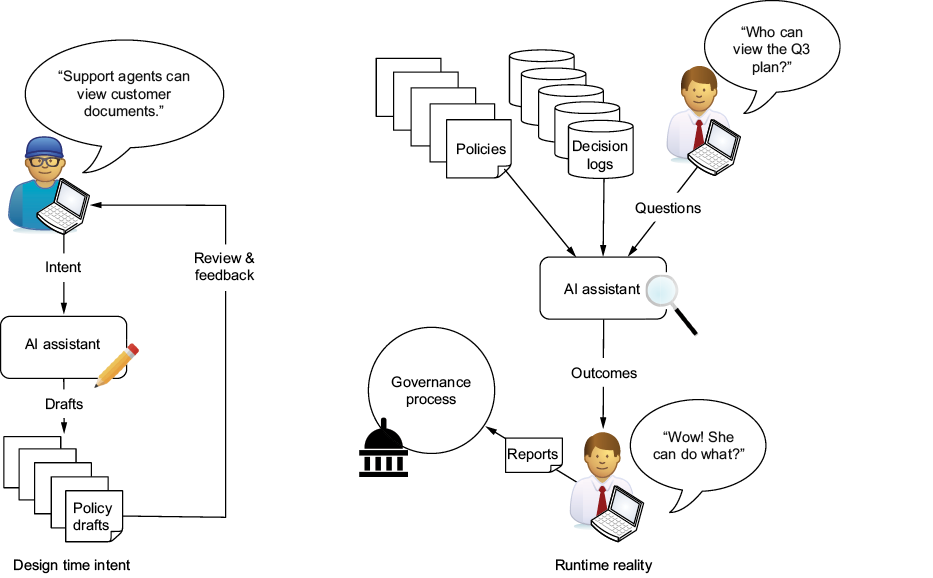
Compare design-time policy intent with observed runtime decisions to identify mismatches and governance questions. section 17.3






















