Machine learning
Machine learning is a field of computational methods in which systems learn patterns or relationships from data to make predictions, decisions, or other outputs.

Optimization Algorithms: AI techniques for design, planning, and control problems
Machine learning is the computational study of methods that improve predictions or decisions by learning patterns from data or experience.
- How it is used
- Applies machine learning to produce solutions, configure algorithms, or guide combinatorial optimization searches.
- How deep it goes
- Defines learning through task, experience, and performance, then develops optimization applications and neural-network training; defers reinforcement learning.
- Examples
- Illustrates object recognition from vehicle images and penguin species classification using physical measurements.
- What you can do after
- Apply neural-network training via PySwarms to a penguin classification problem.

Build AI Drug Discovery Pipelines
Machine learning is a computational approach that learns patterns or predictive functions from data rather than relying solely on explicitly programmed rules.
- How it is used
- Applies machine learning to prioritize compounds and predict properties within drug-discovery and virtual-screening workflows.
- How deep it goes
- Explains training through loss, cost and parameter updates, and walks through model development while leaving production deployment and maintenance out of scope.
- Examples
- Uses cardiotoxicity prediction and hERG blocking to illustrate a ligand-based classification project.
- What you can do after
- Apply it via Scikit-Learn to train and evaluate a linear classifier, tune hyperparameters, and save the model for use on other data.
Read how Build AI Drug Discovery Pipelines explains machine learning →

Inside AI
Machine learning is a computational approach in which models learn patterns from data to perform tasks without being explicitly programmed for every case.
- How it is used
- Uses machine learning to examine predictive applications and the limits of data-driven decisions.
- How deep it goes
- Explains learned associations and validation through a clinical failure, without detailing model implementation.
- Examples
- Illustrates it with COVID-19 chest scans, pneumonia triage, and retail demand forecasting.
- What you can do after
- Evaluate predictions by considering data context, clinical consequences, and the need for expert validation.

Grokking Machine Learning
Machine learning is a field of artificial intelligence in which computers make decisions based on data rather than solely on explicitly specified rules.
- How it is used
- Uses data to help computers make decisions and predictions across tasks such as spam detection, diagnosis, and recommendations.
- How deep it goes
- Defines machine learning and outlines its decision-making framework and branches without detailing the algorithms.
- Examples
- Uses rain prediction, pet and email labels, house prices, spam detection, image recognition, recommendations, and diagnosis as examples.
- What you can do after
- Understand how data can support predictions and decisions, and distinguish learning types by their data and tasks.
Read how Grokking Machine Learning explains machine learning →

Natural Language Processing in Action, Second Edition
Machine learning is a computational approach in which algorithms derive patterns or behavior from data rather than relying solely on explicitly programmed rules.
- How it is used
- Uses machine learning to recognize text patterns and support chatbot and sentiment-analysis pipelines.
- How deep it goes
- Explains data-driven learning through comparisons with handcrafted rules, while deferring detailed model implementation.
- Examples
- Illustrates greeting recognition with regular expressions and sentiment scoring with labeled statements and Twitter hashtags.
- What you can do after
- Evaluate data-driven NLP against handcrafted rules while recognizing dataset quality and response reliability limitations.
Read how Natural Language Processing in Action, Second Edition explains machine learning →
Grokking Machine Learning, Second Edition
A computational technique in which systems learn patterns from data to make predictions or decisions without being explicitly programmed for every case.
- How it is used
- Applies data-based decision making to prediction, classification, grouping, recommendation, diagnosis, and other repeated data tasks.
- How deep it goes
- Defines data-driven decisions, models, algorithms, and the remember-formulate-predict process before later algorithms develop their own procedures.
- Examples
- Uses spam emails, house and stock prices, image recognition, recommendations, chatbots, self-driving cars, medical diagnosis, and market segmentation.
- What you can do after
- Evaluate/understand how past data becomes a model that predicts a new case through remember-formulate-predict.
Read how Grokking Machine Learning, Second Edition explains machine learning →

Deep Learning with R, Third Edition
Machine learning is an approach in which computer systems improve their performance on tasks by learning from data or experience rather than relying solely on explicitly programmed rules.
- How it is used
- Uses machine learning as the foundation for understanding deep learning and structuring projects from problem definition through deployment.
- How deep it goes
- Explains learning through inputs, expected outputs, feedback, and representations, then outlines problem framing, evaluation, and deployment.
- Examples
- Uses tagged vacation photos and speech transcripts to illustrate training, and fraud detection and photo search to illustrate project framing.
- What you can do after
- Evaluate and understand learning-based approaches, frame tasks around available data, and recognize the need for model evaluation.
Read how Deep Learning with R, Third Edition explains machine learning →
Demand Forecasting Best Practices
Machine learning is a computational approach in which models learn patterns from data to make predictions or decisions.
- How it is used
- Generates demand-forecast baselines from historical demand and demand drivers, reducing manual planning work.
- How deep it goes
- Defines supervised demand forecasting, contrasts statistical models, and details evaluation, interpretability, and launch pitfalls without model construction.
- Examples
- Uses seasonal versus non-seasonal products, weather and promotions, and a 2018–2022 training versus 2023 test split.
- What you can do after
- Evaluate/understand machine-learning demand forecasts by selecting objectives, testing fairly, benchmarking results, and interpreting scenarios cautiously.
Read how Demand Forecasting Best Practices explains machine learning →

The Art of AI Product Development
Machine learning is a field of artificial intelligence in which systems learn patterns from data to make predictions or decisions.
- How it is used
- Supports data-driven product decisions through prediction, classification, and personalization.
- How deep it goes
- Explains numerical preprocessing and contrasts learned models with rules, without detailing model-training mechanics.
- Examples
- Uses fashion recommendations, one-hot word encoding, and demand forecasting to illustrate applications and inputs.
- What you can do after
- Evaluate whether learned models or rules fit a product problem, and communicate forecast uncertainty to customers.
Read how The Art of AI Product Development explains machine learning →

Advanced Algorithms and Data Structures
Machine learning is a computational technique in which mathematical models infer characteristics or patterns of a system from data.
- How it is used
- Uses machine learning to frame clustering as a way to discover groups in unlabeled customer data.
- How deep it goes
- Defines learned models and training-feedback types, then connects them to clustering and gradient descent without deriving a general training procedure.
- Examples
- Illustrates learning with customer segmentation, object detection, price estimation, chess, robotics, and clustering algorithms.
- What you can do after
- Apply it via k-means or DBSCAN to group an unlabeled dataset, while choosing between implementation and an available library.
Read how Advanced Algorithms and Data Structures explains machine learning →
Delivering Machine Learning Projects: From design to deployment
Machine learning is the computational approach of learning models from data through algorithms rather than specifying all model rules manually.
- How it is used
- Frames machine learning as a way to deliver models that address team-scale business problems.
- How deep it goes
- Defines learning and inference, compares machine and human model building, and sketches delivery without detailing individual algorithms.
- Examples
- Uses a bike-store sales and inventory project and a dog-versus-cat model to illustrate business decisions and approximate inference.
- What you can do after
- Evaluate how data, user needs, model handling, and ethical risks affect an ML project.
Read how Delivering Machine Learning Projects: From design to deployment explains machine learning →
Fight Fraud with Machine Learning
Machine learning is the computational approach of learning predictive or decision-making behavior from data rather than specifying all behavior explicitly.
- How it is used
- Supports scalable fraud decisions by learning from past fraud data when manually specified rules cannot keep up.
- How deep it goes
- Introduces labeled feature-to-output learning, binary classification, feature engineering, and deep-learning contrast without detailing individual algorithms.
- Examples
- Uses dog-versus-cat images, phishing emails, spam filtering, and online transactions to illustrate learned decisions.
- What you can do after
- Evaluate/understand when ML or rules suit fraud detection, including trade-offs in scale, interpretability, and latency.
Read how Fight Fraud with Machine Learning explains machine learning →
Data-Driven Cybersecurity
A machine learning algorithm enables a system to learn patterns from data and make predictions or decisions without explicitly programmed rules.
- How it is used
- Supports proactive threat detection and risk forecasting by finding patterns and anomalies in security data.
- How deep it goes
- Names model families and security applications, while deferring a deep dive into statistics and AI.
- Examples
- Uses a financial institution’s before-and-after detection dashboard and a healthcare executive presentation with response-time and investment figures.
- What you can do after
- Evaluate/understand it by checking detection gains against business goals, data quality, and model reliability.
Read how Data-Driven Cybersecurity explains machine learning →
Investing for Programmers
Machine learning is a field of computing in which algorithms learn patterns from data to make predictions or decisions.
- How it is used
- Deploys machine learning to extract financial insights and support investment decisions, especially within narrowly defined analytical use cases.
- How deep it goes
- Defines supervised and unsupervised learning and discusses market limitations, but stops short of detailed algorithm internals.
- Examples
- Demonstrates labeled stock-direction prediction and one-year NVIDIA forecasts generated from yfinance data.
- What you can do after
- Evaluate/understand when financial machine learning can provide narrow insights and when market volatility makes forecasts risky.
Read how Investing for Programmers explains machine learning →
Hidden Influences
A computational approach in which models use data and interactions to learn patterns for generating predictions or recommendations.
- How it is used
- Uses machine learning to explain how recommender systems learn from interactions and how models can help classify content.
- How deep it goes
- Explains learning through examples, preference updates, and layered representations, while noting that embeddings and individual recommendations can be hard to interpret.
- Examples
- Illustrates learning with spam filtering, engagement with followed accounts, and classification of policy-related posts.
- What you can do after
- Evaluate and understand how learned recommendations reflect observed interactions, can miss interests, and may be difficult to explain.
First-Party Data Activation
Machine learning is a computational approach in which models learn patterns from data to make predictions or decisions.
- How it is used
- Supports predictive marketing decisions and personalization using patterns in customer data.
- How deep it goes
- Explains marketing applications and architectural placement at a decision-making level, without model-building details.
- Examples
- Illustrates retail retention through purchase frequency, email engagement, adjusted send times, and personalized subject lines.
- What you can do after
- Evaluate how machine learning predictions can inform retention, recommendations, and campaign timing.
Read how First-Party Data Activation explains machine learning →

Acing the CCNA Exam: Volume 2 Advanced Networking and Security
Machine learning is a computational technique in which systems learn patterns from data to make predictions or decisions without being explicitly programmed for each case.
- How it is used
- Applies data-driven learning to network automation, performance improvement, security analysis, and operational decision-making.
- How deep it goes
- Defines ML, distinguishes learning types, and connects applications to networking without detailing algorithms, configuration, or implementation internals.
- Examples
- Uses labeled cat-and-dog images, clustering, traffic forecasting, predictive maintenance, capacity planning, and security threat prediction.
- What you can do after
- Evaluate/understand how learning types and ML applications support predictive analysis and automation in network operations.
Read how Acing the CCNA Exam: Volume 2 Advanced Networking and Security explains machine learning →

Math and Architectures of Deep Learning
A paradigm for learning a parameterized mapping from inputs to outputs by training on data rather than by writing explicit step-by-step rules.
- How it is used
- Frames classification and estimation as learned input-to-output transformations rather than explicit programs.
- How deep it goes
- Develops function approximation, parameterized architectures, training, inference, geometry, and expressive power, while deferring vectors and matrices.
- Examples
- Uses a cat brain with hardness and sharpness to produce threat scores and three behavioral decisions.
- What you can do after
- Evaluate/understand how training data determines model weights for later inference on classification or estimation tasks.
Read how Math and Architectures of Deep Learning explains machine learning →
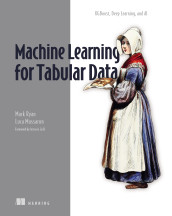
Machine Learning for Tabular Data: XGBoost, Deep Learning, and AI
A field of computing in which algorithms learn patterns from data to make predictions or decisions.
- How it is used
- Applies classical predictive methods to business-oriented tabular-data problems and compares them with deep learning.
- How deep it goes
- Explains feature engineering and evaluates simplicity, transparency, and efficacy, without deriving model mathematics.
- Examples
- Uses New York City Airbnb price classification and a local real-estate time-on-market prediction scenario.
- What you can do after
- Evaluate/understand classical machine learning versus deep learning using simplicity, transparency, and efficacy for tabular problems.
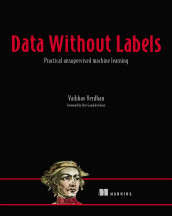
Data Without Labels
An algorithm that enables a computer system to learn patterns or behavior from data or interaction rather than being explicitly programmed for every outcome.
- How it is used
- Uses historical data to find patterns and support decisions about defined business problems.
- How deep it goes
- Defines the technique and distinguishes four learning approaches, while deferring algorithm internals and mathematical foundations to further treatment.
- Examples
- Illustrates recommendations with online shopping and travel offers, and contrasts learning approaches through prediction, segmentation, and autonomous navigation.
- What you can do after
- Apply it via Python to investigate a defined business problem, prepare data, and select an appropriate learning approach.

Deep Learning with Python, Third Edition
A class of methods that learn to map inputs to outputs by searching for useful representations and rules from example data and feedback.
- How it is used
- Introduces learning from examples as an alternative to handcoding rules for tasks such as image tagging.
- How deep it goes
- Explains training feedback and data representations conceptually, without specifying a training algorithm.
- Examples
- Uses human-tagged vacation photos and RGB versus HSV image representations to illustrate learning and task-specific encoding.
- What you can do after
- Understand how examples and feedback guide a model toward task-specific outputs.
Read how Deep Learning with Python, Third Edition explains machine learning →

AI-Powered Search
Machine learning is a subset of artificial intelligence that trains models on data to perform tasks based on patterns learned from that data.
- How it is used
- Uses machine learning to automate search configuration and improve relevance across the search pipeline.
- How deep it goes
- Defines machine learning through learning from data and outlines search applications, while deferring automated ranking implementation.
- Examples
- Uses manually tuned synonym lists and field weights to illustrate search configuration that machine learning can help automate.
- What you can do after
- Evaluate and understand where machine learning can automate relevance features and other search tasks.

Outlier Detection in Python
Machine learning is the computational approach of learning patterns or predictive relationships from data rather than specifying all rules explicitly.
- How it is used
- Frames data-driven prediction and pattern discovery, especially unsupervised outlier detection across tabular and time-series records.
- How deep it goes
- Defines supervised, unsupervised, and deep learning, then connects methods to algorithms and practical detection workflows without detailed theory.
- Examples
- Uses labeled animal images, fraud records, sensor readings, network activity, and astronomical observations as motivating examples.
- What you can do after
- Apply machine learning via Python, NumPy, pandas, scikit-learn, and PyOD to develop and evaluate detection solutions.
Read how Outlier Detection in Python explains machine learning →
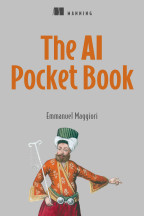
The AI Pocket Book
A field that builds systems that learn patterns from data to perform tasks.
- How it is used
- Creates LLMs and other AI systems by learning model parameters from data rather than specifying every behavior manually.
- How deep it goes
- Explains architecture, parameters, training, learning types, and explainability, but stops short of training algorithms or mathematical derivations.
- Examples
- Uses LLM next-token prediction, embedding construction, PyTorch layers, and product-purchase or machine-replacement predictions as examples.
- What you can do after
- Evaluate/understand how data, architectures, parameters, and training produce models, while recognizing when explainability limits their use.

How Large Language Models Work
Machine learning is the field of building computational systems that improve their performance on tasks by deriving patterns or rules from data rather than receiving all rules explicitly.
- How it is used
- Frames machine learning as the foundation for understanding how large language models derive capabilities from data.
- How deep it goes
- Explains learning through examples, algorithm design, scaling, embeddings, and trade-offs, but defers detailed mathematical and operational mechanics.
- Examples
- Uses cat-image classification, convolutional and recurrent networks, XGBoost, language embeddings, similarity plots, clustering, and outlier detection.
- What you can do after
- Apply it via embeddings and algorithms that group similar texts or identify unusual ones.
Read how How Large Language Models Work explains machine learning →

Grokking AI Algorithms, Second Edition
Machine learning is the field of building systems that learn patterns or behavior from data rather than relying solely on explicitly programmed rules.
- How it is used
- Uses data patterns to support predictions, decisions, and understanding of relationships.
- How deep it goes
- Defines three learning approaches and covers data preparation and implementations of linear regression and decision-tree learning.
- Examples
- Illustrates pattern-based rent estimation with apartment features and contrasts labeled fruit examples with grouping similar fruits.
- What you can do after
- Builds linear regression and decision-tree learning algorithms for prediction and classification from scratch.
Read how Grokking AI Algorithms, Second Edition explains machine learning →

Starting Data Analytics with Generative AI and Python
Machine learning is the computational use of algorithms that learn patterns from data to make predictions, classifications, or decisions.
- How it is used
- Turns structured language data into learned patterns or predictions for sentiment analysis and other text-mining tasks.
- How deep it goes
- Explains practical model use while deferring deep mechanics such as matrix multiplication.
- Examples
- Uses sentiment analysis across social media, websites, emails, company documents, and academic publications as application contexts.
- What you can do after
- Apply machine learning to sentiment analysis through pretrained models, libraries, pipelines, and the Hugging Face platform.
Read how Starting Data Analytics with Generative AI and Python explains machine learning →
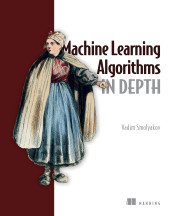
Machine Learning Algorithms in Depth
An algorithm that learns rules or predictive relationships from data rather than receiving all task instructions explicitly.
- How it is used
- Frames learning rules from data as an alternative to supplying every task instruction explicitly.
- How deep it goes
- Defines a supervised mapping and derives average misclassification loss, but does not specify an optimizer or implement a complete model here.
- Examples
- Contrasts learned rules with sorting instructions and uses stock-price prediction, data clusters, and a training–testing diagram.
- What you can do after
- Evaluate/understand it to select algorithms, explain results, troubleshoot models, and adapt algorithms to new situations.
Read how Machine Learning Algorithms in Depth explains machine learning →
Grokking AI Applications
An area of artificial intelligence in which machines learn patterns or behavior autonomously from data rather than following only fixed rules.
- How it is used
- Frames machine learning as the mechanism that lets AI learn autonomously from data and supports generative AI.
- How deep it goes
- Defines three learning types and staged language-model training, but stops short of detailed algorithm internals.
- Examples
- Uses customer-purchase prediction, toy-shape grouping, child color learning, walking by trial and error, and ChatGPT training.
- What you can do after
- Evaluate/understand how data-driven prediction differs from fixed rules and how ChatGPT combines learning stages.
Read how Grokking AI Applications explains machine learning →

Vibe Engineering
Machine learning is the field and set of computational methods in which models learn patterns from data to make predictions or decisions.
- How it is used
- Uses machine learning to frame business prediction problems within LLM-assisted data science.
- How deep it goes
- Introduces dataset selection and prediction inputs while deferring detailed machine learning and deep learning explanations.
- Examples
- Compares real and synthetic medicine datasets and specifies drug-price prediction features.
- What you can do after
- Evaluate/understand dataset suitability and the inputs to a drug-price prediction problem.
Transfer Learning for Natural Language Processing
A field of computing in which algorithms learn patterns or transformations from data rather than being explicitly programmed for every scenario.
- How it is used
- Positions learning from data as an alternative to hand-coded rules and connects it to natural language processing.
- How deep it goes
- Explains learning through input-output pairs, loss functions, hypothesis sets, and decision boundaries without a worked implementation.
- Examples
- Uses positive and negative sentence labels and an arc-shaped decision boundary to illustrate classification.
- What you can do after
- Understand how training data, a loss function, and a hypothesis set guide learning toward generalization.
Read how Transfer Learning for Natural Language Processing explains machine learning →
Machine Learning Platform Engineering
Machine learning is the computational discipline of learning patterns from data to make predictions or decisions.
- How it is used
- Deploys learned patterns to solve business problems through prediction or decision-making systems.
- How deep it goes
- Explains the production life cycle and experimentation loops, but stops short of detailed algorithms, backpropagation, or mathematical derivations.
- Examples
- Uses OCR, iterative model evaluation, orchestrated pipelines, and frameworks such as TensorFlow, PyTorch, and scikit-learn.
- What you can do after
- Build reliable ML systems by selecting suitable problems, iterating on data and models, and automating reproducible workflows.
Read how Machine Learning Platform Engineering explains machine learning →
Designing Deep Learning Systems: A guide for software engineers
Machine learning is the field of methods that learn patterns or decision functions from data rather than relying solely on explicitly programmed rules.
- How it is used
- Positions machine learning as both a decision-making technique and a system-development context spanning data, models, infrastructure, and serving.
- How deep it goes
- Traces requirements, data exploration, prototyping, evaluation, and deployment, while stopping short of mathematical or algorithm-internal detail.
- Examples
- Uses a customer-support chatbot that recognizes natural-language intent and matches questions with relevant answers.
- What you can do after
- Build system designs, understand existing designs, and extend machine-learning infrastructure without building every component from scratch.
Read how Designing Deep Learning Systems: A guide for software engineers explains machine learning →
Deep Learning with PyTorch, Second Edition
A class of methods in which systems learn patterns from data to perform tasks without being explicitly programmed with task rules.
- How it is used
- Frames data-driven function fitting as the mechanism by which systems adapt to tasks and produce outputs for new inputs.
- How deep it goes
- Explains parameter optimization, gradients, validation, and PyTorch training mechanics while deferring more powerful neural-network applications.
- Examples
- Uses noisy-data fitting, a thermometer problem, and Kepler’s model-selection story to make data-driven modeling concrete.
- What you can do after
- Build a simple learning algorithm, optimize parameters with PyTorch, and evaluate generalization using validation data.
Read how Deep Learning with PyTorch, Second Edition explains machine learning →
Data Storytelling with Altair and AI
Machine learning is a subfield of artificial intelligence in which computers learn patterns from examples or data to improve performance and make predictions or decisions.
- How it is used
- Frames machine learning as the practical foundation for understanding deep learning and generative AI.
- How deep it goes
- Explains labeled data, feature extraction, training, parameter optimization, and prediction, without developing implementation details.
- Examples
- Uses fashion assessment, image classification, sentiment analysis, spam detection, and speech recognition as concrete applications.
- What you can do after
- Apply machine learning by preparing labeled examples, extracting features, training a model, and predicting unseen cases.
Read how Data Storytelling with Altair and AI explains machine learning →
Learn AI-Assisted Python Programming, Second Edition
Machine learning is a field of artificial intelligence in which systems infer patterns from data to make predictions or decisions.
- How it is used
- Uses labeled examples and extracted features to predict categories for new objects.
- How deep it goes
- Defines supervised learning and demonstrates feature-based prediction, without covering model internals or advanced methods.
- Examples
- Uses authorship identification with book texts, author labels, writing features, and book signatures.
- What you can do after
- Apply labeled examples and measurable features to predict the category of a new object.
Read how Learn AI-Assisted Python Programming, Second Edition explains machine learning →

WordPress Power Toolkit: Harness AI to build next-level websites
Machine learning is a branch of artificial intelligence in which computational systems learn patterns or behaviors from data rather than being explicitly programmed for every outcome.
- How it is used
- Explains how artificial intelligence can pursue goals by learning behaviors and strategies rather than relying entirely on direct programming.
- How deep it goes
- Defines self-teaching and illustrates it through Go, but stops short of explaining training procedures or algorithm internals.
- Examples
- Uses AlphaGo Zero’s rule-only training and championship Go matches to demonstrate original, effective machine strategies.
- What you can do after
- Supports understanding how systems can discover effective strategies that humans did not explicitly provide.

Introduction to Generative AI, Second Edition
Machine learning is the computational use of algorithms that learn patterns from data to improve performance on tasks.
- How it is used
- Frames machine learning as the general method behind useful task improvement and natural language processing.
- How deep it goes
- Defines three learning paradigms and gives historical context, but stops short of implementation details or mathematical treatment.
- Examples
- Uses language translation, the Turing test, ELIZA, and the three-way learning comparison as concrete illustrations.
- What you can do after
- Evaluate/understand how learning signals shape tasks and why conversational fluency does not prove reasoning.
Read how Introduction to Generative AI, Second Edition explains machine learning →

Web Components in Action
Machine learning is a field in which computational models learn patterns from data to perform tasks such as classification or prediction.
- How it is used
- Deploys trained models in browser features such as hand tracking while hiding implementation complexity behind Web Components.
- How deep it goes
- Defines training and browser inference, then stops short of detailed model internals.
- Examples
- Uses hand-image recognition, a camera-based hand tracker, and a Web Harp integration.
- What you can do after
- Apply it via TensorFlow.js and Handtrack.js to add browser-based hand tracking behind a custom Web Component.
Read how Web Components in Action explains machine learning →

Cyber Threat Hunting
A machine learning algorithm is a computational procedure that learns from input data to generate a model or produce data-driven outputs.
- How it is used
- Deploys machine learning to help threat hunters find anomalous network activity beyond explicit detection logic.
- How deep it goes
- Explains algorithms, models, unsupervised learning, data preparation, features, and interpretation while stopping short of advanced data-scientist training.
- Examples
- Uses network connection events, beaconing to trusted destinations, Dropbox traffic, exchanged bytes, and TLS cipher suites as examples.
- What you can do after
- Apply it via existing Python libraries to prepare data, build unsupervised models, and interpret anomalies during threat hunting.
Causal Inference for Data Science
Machine learning is a field of methods that enables computers to learn patterns or predictive relationships from data.
- How it is used
- Frames machine learning as a prediction tool for forecasting and automated classification, distinct from causal explanation.
- How deep it goes
- Defines supervised prediction, contrasts it with causation, and reaches adjustment formulas and cross-fitting without deriving model internals.
- Examples
- Uses illness prediction, hospital-visit frequency, sales forecasting, spam detection, image recognition, language translation, and autonomous vehicles.
- What you can do after
- Evaluate when predictive models fit a task, recognize causal limitations, and combine models with adjustment formulas when confounders are numerous.
Read how Causal Inference for Data Science explains machine learning →
Knowledge Graphs and LLMs in Action
Machine learning is a field of computing in which models learn patterns from data to make predictions or decisions.
- How it is used
- Supports intelligent advisory systems by extracting predictions, relationships, and actions from knowledge graphs.
- How deep it goes
- Explains graph representations, task categories, embeddings, and trade-offs, but does not provide implementation code or detailed algorithms.
- Examples
- Uses drug repurposing, personalized treatment planning, anomalous-node detection, recommendations, and relationship prediction as applications.
- What you can do after
- Evaluate graph-based ML tasks and choose representations, features, and algorithms for interconnected real-world data.
Read how Knowledge Graphs and LLMs in Action explains machine learning →
Graph Algorithms for Data Science
Machine learning is a computational approach in which models learn patterns from data to perform predictions or other tasks.
- How it is used
- Uses graph positions and roles to increase the predictive capability of machine learning models.
- How deep it goes
- Connects graph structure to prediction but stops short of explaining model training or implementation.
- Examples
- Uses Facebook and Twitter-style user networks, follows, likes, communities, and influential nodes as examples.
- What you can do after
- Evaluate how graph-derived positions and roles can provide information for predictive models.
Read how Graph Algorithms for Data Science explains machine learning →

Generative AI in Action
A scientific discipline in which computers learn patterns from data to make predictions or decisions without being explicitly programmed for each task.
- How it is used
- Provides the foundational toolkit for understanding data engineering, model training, inference, and generative AI applications.
- How deep it goes
- Defines learning, predictions, and decisions, but defers detailed machine-learning mechanisms and mathematics.
- Examples
- Uses spam filtering and e-commerce recommendation systems to illustrate data-driven prediction and decision-making.
- What you can do after
- Evaluate/understand how learned data patterns support predictions, decisions, and generative AI applications.
Read how Generative AI in Action explains machine learning →
Build Your Own Robot: Using Python, CRICKIT, and Raspberry Pi
Machine learning is the computational practice of fitting models to data so they can make predictions or decisions without being explicitly programmed for every case.
- How it is used
- Deploys image and sensor inputs to detect environmental events and drive robotic actions.
- How deep it goes
- Explains trained cascade classifiers and demonstrates a pretrained model, stopping short of broader learning algorithms or mathematical treatment.
- Examples
- Uses OpenCV face detection, Raspberry Pi camera images, pretrained XML models, and a servo-driven face-following camera.
- What you can do after
- Builds a face-detection pipeline with OpenCV and connects detected movement to robotic camera control.
Read how Build Your Own Robot: Using Python, CRICKIT, and Raspberry Pi explains machine learning →

Statistics Every Programmer Needs
Machine learning is the development of computational models that learn patterns or decisions from data rather than relying only on explicitly programmed rules.
- How it is used
- Supports prediction, classification, pattern discovery, and data-informed decisions across practical analytical workflows.
- How deep it goes
- Defines learning, statistical foundations, and model families but stops short of algorithms, formulas, validation procedures, or implementation steps.
- Examples
- Uses regression, linear and logistic models, decision trees, random forests, forecasting, and classification as representative applications.
- What you can do after
- Apply machine-learning models through Python libraries to support prediction, classification, interpretation, and practical decision-making.
Read how Statistics Every Programmer Needs explains machine learning →
Grokking Statistics
The field and set of methods for learning predictive or descriptive patterns from data.
- How it is used
- Deploys data-driven algorithms primarily for predictive modeling and performance on new data.
- How deep it goes
- Contrasts prediction, tuning, and black-box performance with statistical explanation without detailing algorithm internals.
- Examples
- Uses labeled training and test datasets, regression, model validation, and examples involving bias and generalization.
- What you can do after
- Evaluate predictive models on unseen labeled data and reason about generalization, performance, explainability, and bias.
Financial AI in Practice
A computational approach in which systems learn patterns from data to make predictions or decisions.
- How it is used
- Finds patterns in financial data for predictions and decisions, and filters users before more costly LLM analysis.
- How deep it goes
- Explains pattern discovery and a filtering role, but does not specify training algorithms or model internals.
- Examples
- Uses credit scoring, fraud detection, investment news analysis, and churn-risk screening as financial applications.
- What you can do after
- Operate a traditional ML churn score to filter high-risk users before LLM-based analysis.
Read how Financial AI in Practice explains machine learning →
Machines that Think
A field of artificial intelligence in which systems improve their predictions or generated outputs by learning patterns from data rather than relying only on explicitly programmed rules.
- How it is used
- Frames machine learning as a route beyond fixed rules for handling uncertain, complex situations.
- How deep it goes
- Defines learning as updating internal settings from data and probabilities, but gives no algorithmic or mathematical detail.
- What you can do after
- Understand how data-driven prediction differs from explicit rules and from human learning mechanisms.
Also covered in
- Modern C
- Unit Testing Principles, Practices, and Patterns
- Software Design for Python Programmers
- Lead Developer Career Guide
- The Coder CafeIn early access (MEAP)
- Get Programming: Learn to code with Python
- Grokking Data Structures
- Fast Python: High performance techniques for large datasets
- Privacy-Preserving Machine Learning
- Evaluating AI SystemsIn early access (MEAP)
- Build an Advanced RAG Application (From Scratch)In early access (MEAP)
- Object-Oriented Software Design in C++
What to know first
- language modelA language model is a computational model that represents patterns in linguistic sequences to assign probabilities, predict, generate, or evaluate language.
- artificial intelligenceArtificial intelligence is the field of computing concerned with creating systems that perform tasks associated with intelligence, such as learning, reasoning, perception, and decision-making.
- PythonPython is a high-level, general-purpose, dynamically typed programming language with readable syntax and support for multiple programming paradigms.
- deep learningDeep learning is a machine-learning approach that uses neural networks with multiple computational layers to learn representations from data.
Related concepts
- artificial intelligencekind of · Artificial intelligence is the field of computing concerned with creating systems that perform tasks associated with intelligence, such as learning, reasoning, perception, and decision-making.
- language modelincludes · A language model is a computational model that represents patterns in linguistic sequences to assign probabilities, predict, generate, or evaluate language.
- supervised learningincludes · Supervised learning is a machine-learning approach that learns predictive relationships from examples paired with known target outputs or labels.
- deep learningincludes · Deep learning is a machine-learning approach that uses neural networks with multiple computational layers to learn representations from data.
- reinforcement learningincludes · Reinforcement learning is a machine-learning paradigm in which an agent learns behavior or a decision policy through interaction with an environment and evaluative feedback, such as rewards.
- datauses · Data is recorded or represented information, observations, measurements, or values that can be stored, processed, communicated, or interpreted.
Questions about machine learning
What is machine learning?
Machine learning is a field of computational methods in which systems learn patterns or relationships from data to make predictions, decisions, or other outputs.
Which Manning books explain machine learning?
Optimization Algorithms: AI techniques for design, planning, and control problems, Build AI Drug Discovery Pipelines, Inside AI, Grokking Machine Learning, Natural Language Processing in Action, Second Edition, Grokking Machine Learning, Second Edition, Deep Learning with R, Third Edition, Demand Forecasting Best Practices and 41 more.
What should I know before learning machine learning?
Manning books that teach machine learning usually introduce language model, artificial intelligence, Python and deep learning first.
What kinds of machine learning are there?
Kinds of machine learning include language model, supervised learning, deep learning and reinforcement learning.
What is machine learning a kind of?
Machine learning is a kind of artificial intelligence. Artificial intelligence is the field of computing concerned with creating systems that perform tasks associated with intelligence, such as learning, reasoning, perception, and decision-making.
What is machine learning also called?
Machine learning is also called ML.
These guides are generated from the text of Manning books by Manning's knowledge graph and link to the sections they draw on. The full books are available on liveBook and at manning.com.